Is UV-C a realistic option for tackling coronavirus?
Coronavirus has brought the subject of ‘viruses’ firmly into the public consciousness. Companies offering so-called solutions are springing up like mushrooms.
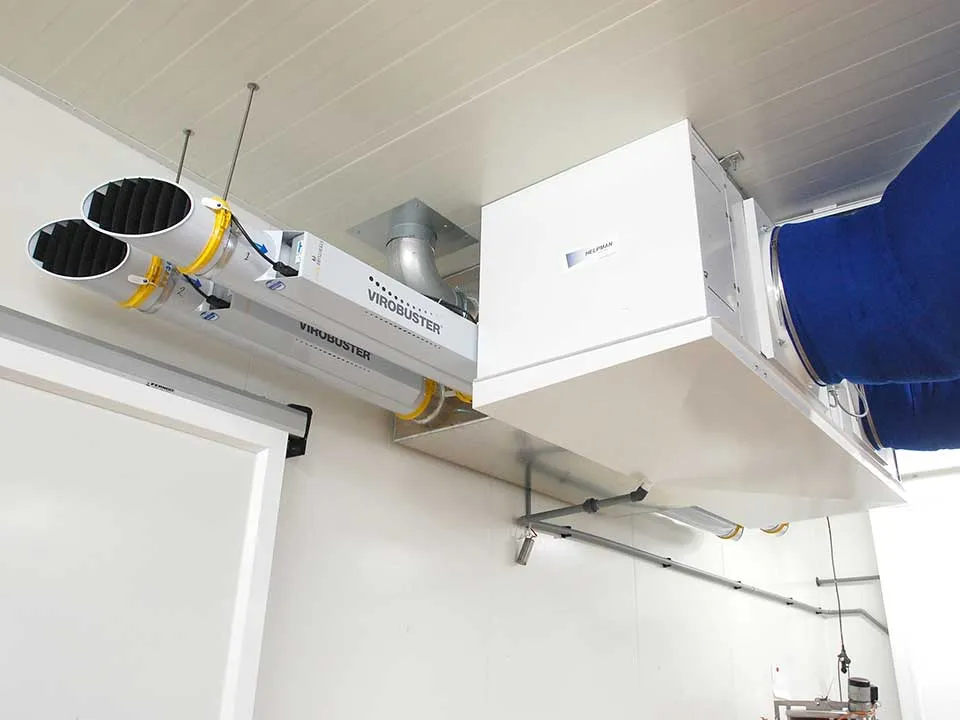
Unfortunately, many of these solutions are ineffective or even dangerous. One exception is Virobuster International GmbH. The company, originally from the Netherlands, has been successfully offering UV-C-based solutions since 2003.
Viruses are DNA/RNA particles that multiply by taking over their host cells. They vary widely in shape and infectivity. Environmental conditions determine whether viruses spread through the air in droplets or aerosols. Because viruses are very small and behave differently from bacteria, both biologically and physically, different measures or hygiene concepts are needed to control them. Viruses also pose other types of challenge, including pandemics and the need for vaccines to be developed continually in response to mutations.
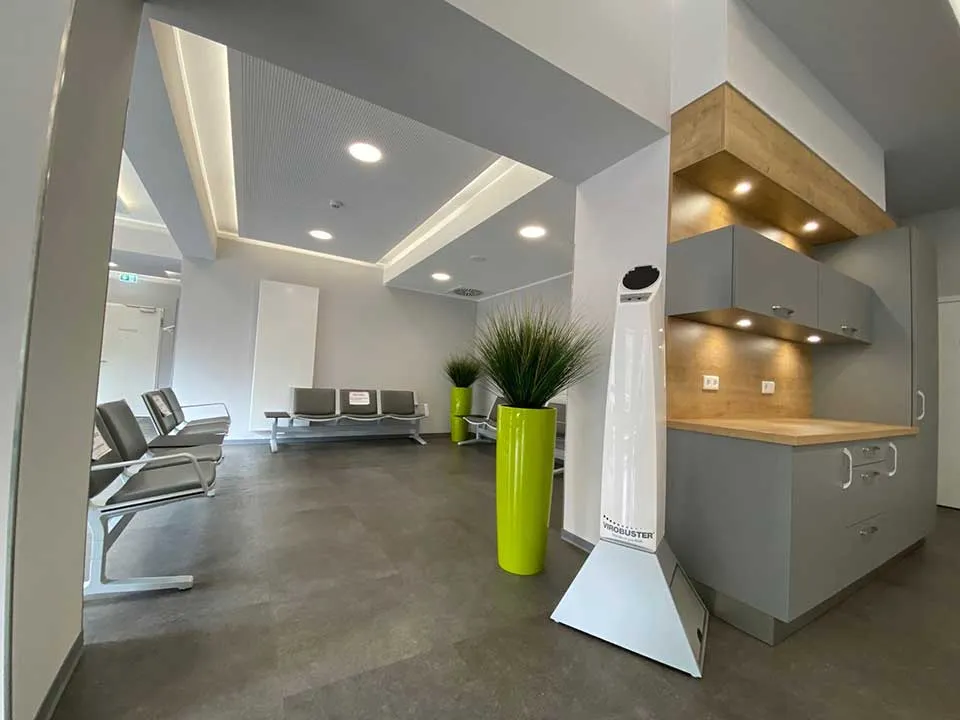
Because viruses have not been taken seriously for years, both literally and figuratively, in areas such as building regulations, the question is whether current measures are sufficient to ensure buildings are safe from viruses. The new approach requires a different mindset. Alongside comfort and safety, the health of buildings must also be considered when constructing new buildings or adapting existing ones. This transition calls for a robust approach from both the building services and construction sectors.
Starting with ‘more ventilation’ is a mistake
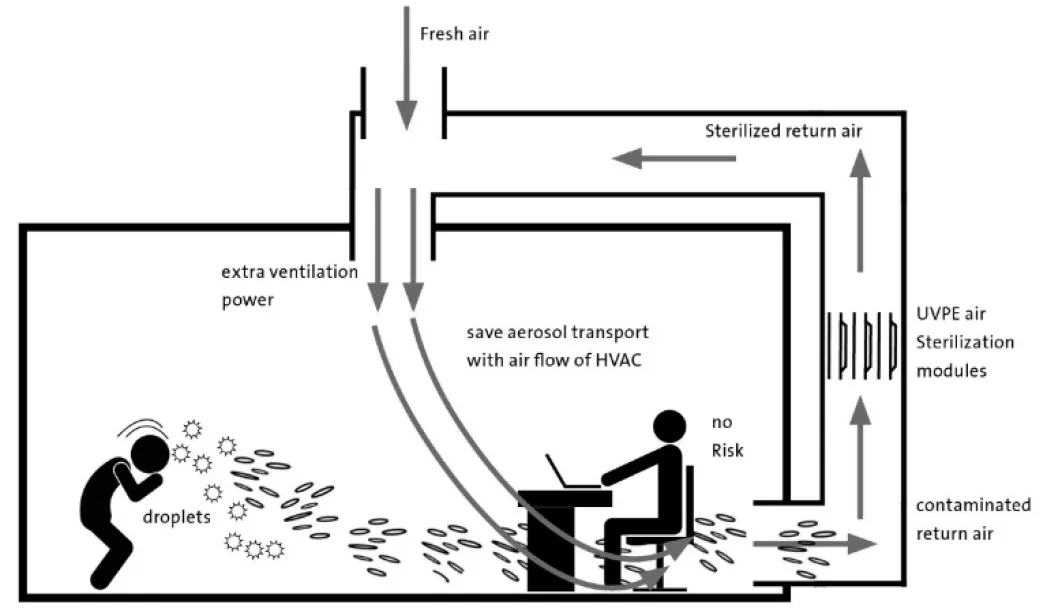
The advice to ‘ventilate more’ also leads to higher ‘air speeds’, increasing the risk of aerosols being carried over greater distances. More ventilation can also disrupt the air balance between different areas of a building, potentially creating dangerous internal airflows. It is therefore safer to manage airflow properly before supplying more air.
Air recirculation, used to save energy, has fallen out of favour in recent decades, but it is worth asking whether this is justified. Direct air recirculation led to an increase in complaints about CO2 and VOCs in buildings. Physically separated supply and exhaust airflows with heat exchangers, such as a rotary heat exchanger, were seen as the solution. From a virological perspective, however, using rotary heat exchangers, for example, creates a false sense of security because they cause air leakage (the ‘carry-over effect’). This can send viruses back into the room. In winter, ‘100% outdoor air ventilation’ is also difficult to justify ecologically and economically. Dry (winter) air can also dry out the mucous membranes and encourage the formation of virus-carrying aerosols. A simpler, less expensive ventilation system without heat exchangers, greater ventilation capacity to prevent CO2 and VOC build-up, and treatment of recirculated air using HEPA or UV-C systems appears to be the solution for achieving the highest levels of comfort, safety and health. UV-C systems offer several practical advantages.
The benefits of UV-C
Viruses can still be infectious after passing through an air conditioning system, and conventional HVAC filters cannot trap viruses, so the use of UV-C or HEPA filters is strongly recommended. Because of the pressure drop and the space required for installation, HEPA filters can only be used to a limited extent in retrofit applications. UV-C systems, by contrast, can be switched off completely, for example to save energy or reduce maintenance, and activated as required based on the level of risk.
UV-C light at 254 nm is recognised as a highly effective and clean technology. It has the potential to disrupt the DNA/RNA of micro-organisms, rendering them non-infectious. Coronavirus can therefore be rendered harmless in the air using UV-C. In addition to open UV-C systems from the 1970s and 1980s, which emitted UV radiation freely into the room without protection, systems designed for installation in HVAC systems were developed in the 1990s. These so-called Ultraviolet Germicidal Irradiation (UVGI) systems were safer than open UV-C, but unfortunately much less effective. One reason was that air passed through them at far too high a speed.
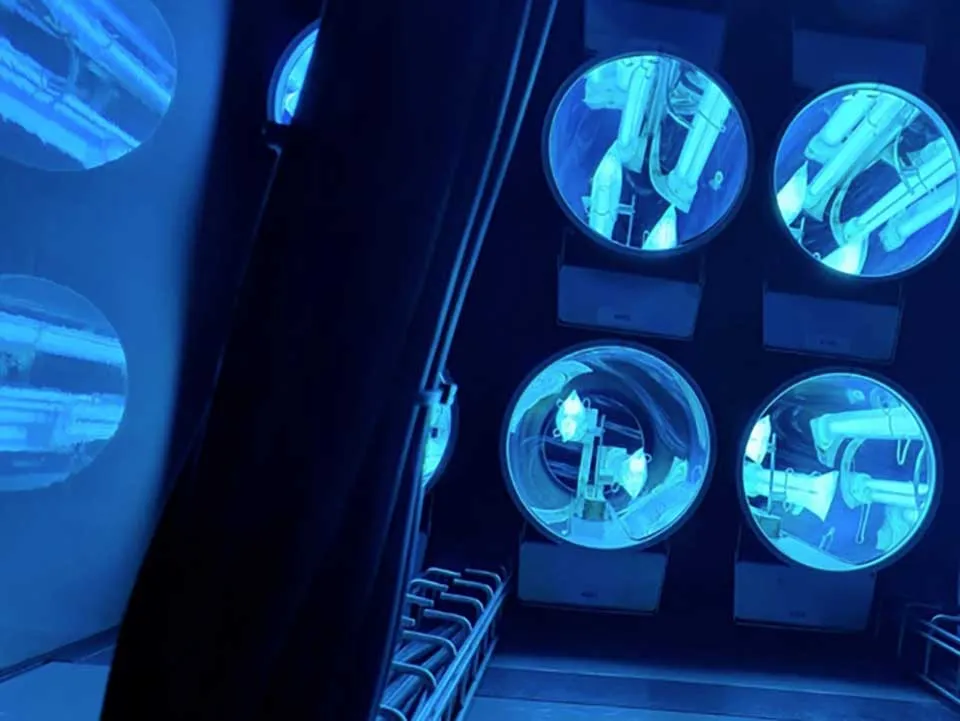
The problem of low effectiveness was recognised in 2003. In response to SARS1 and growing demand for UV-C, a new type of UV-C application was developed that could deliver a sufficient dose. Special Ultra Violet Pathogen Elimination (UVPE) modules force airborne micro-organisms to pass close to the lamps. The use of reflectors to create virtual lamps ensures maximum UV-C intensity.
Established and proven
The effectiveness of UV-C has been known and proven for decades. However, it has never gained much traction outside healthcare and the food industry. Coronavirus has changed that. In the coming years, UVPE will be a good alternative to (HEPA) filters for rendering micro-organisms harmless.
About Virobuster International GmbH
Virobuster was founded in 2002 and initially developed successful solutions for the medical market before entering the food industry and building market. Following its acquisition in 2007, UVPE Steritubes have been manufactured by the German JK Group.
Question about this story? Ask your question
Keep following this
Get an email when a new story is published. No account needed.
- SubjectBuilding services engineering