Make smart use of your energy and choose low-temperature systems
They are now an essential feature of new-build homes and non-residential construction projects.
Climate change and the energy transition are prompting installers to consider how to use energy intelligently and apply low-temperature systems without compromising comfort.
New-build homes and non-residential construction projects are so well insulated that high-temperature heating systems are no longer necessary. Low-temperature heating is more efficient. Underfloor heating also provides consistent, even warmth. Combined with a heat pump, an underfloor heating system can even be used to cool homes and non-residential buildings.
It starts with a good installation plan
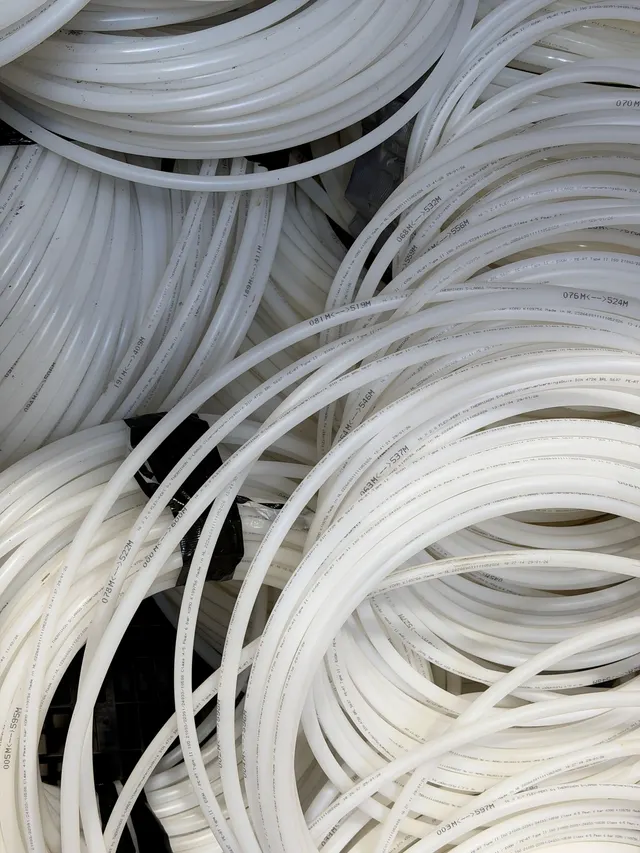
The basis of an underfloor heating system that works well is a heat-loss calculation and an installation plan. A heat-loss calculation specifies the exact output required to meet a home’s heating demand. The heat output of the underfloor heating system naturally depends on the type of screed and floor finish. To calculate the output accurately, we use the so-called R-values, which indicate the thermal resistance of the materials. The results of the heat-loss calculation are incorporated into the installation plan. This plan shows, among other things, the spacing between the underfloor heating pipes. It also calculates the output and the required number of litres per hour for each room.
Choose the right manifold
Selecting the right manifold is essential to achieving the correct heat output from an underfloor heating system. This is in addition to the heat-loss calculation, flow rate, pipe length and diameter, pipe spacing and circuit lengths. The manifold is selected based on the heat source and flow temperature. Water leaves the distribution unit and enters the underfloor heating pipes at a temperature of between 30-50°C. Depending on whether the heat source operates at a high or low temperature, the flow water may need to be blended with cooler water. In this case, mixing manifolds must blend the water to the desired temperature for underfloor heating. Supplying the manifold from the heat source at a lower temperature can therefore save energy.
An underfloor heating system that can both heat and cool requires a composite manifold. Using this type of manifold prevents corrosion, as cooling can cause condensation to form on the manifold.
Composite manifold, the smart choice
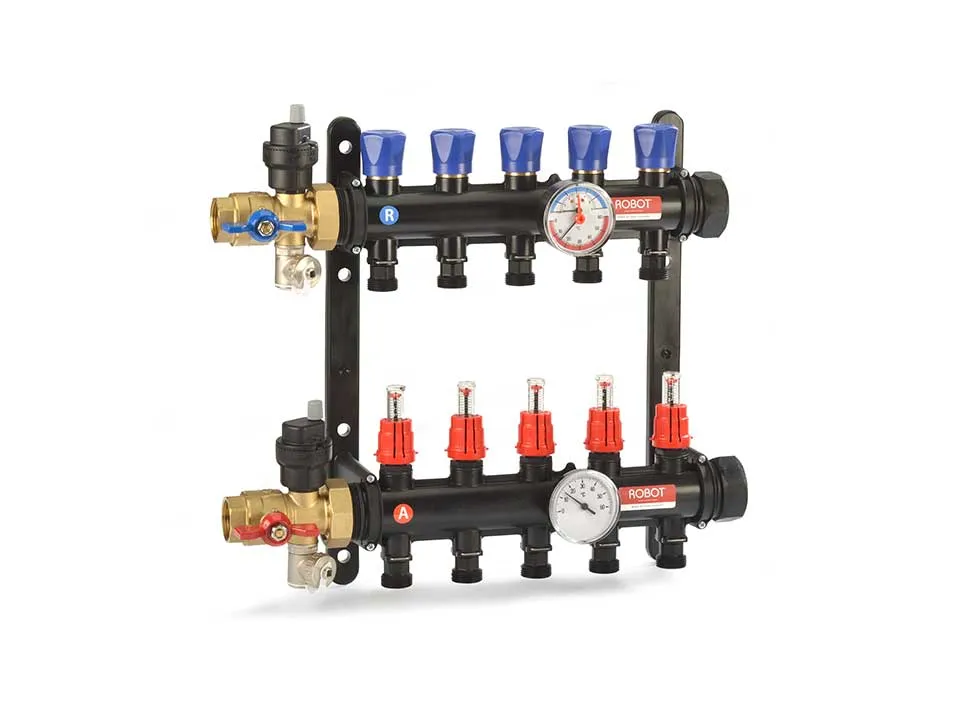
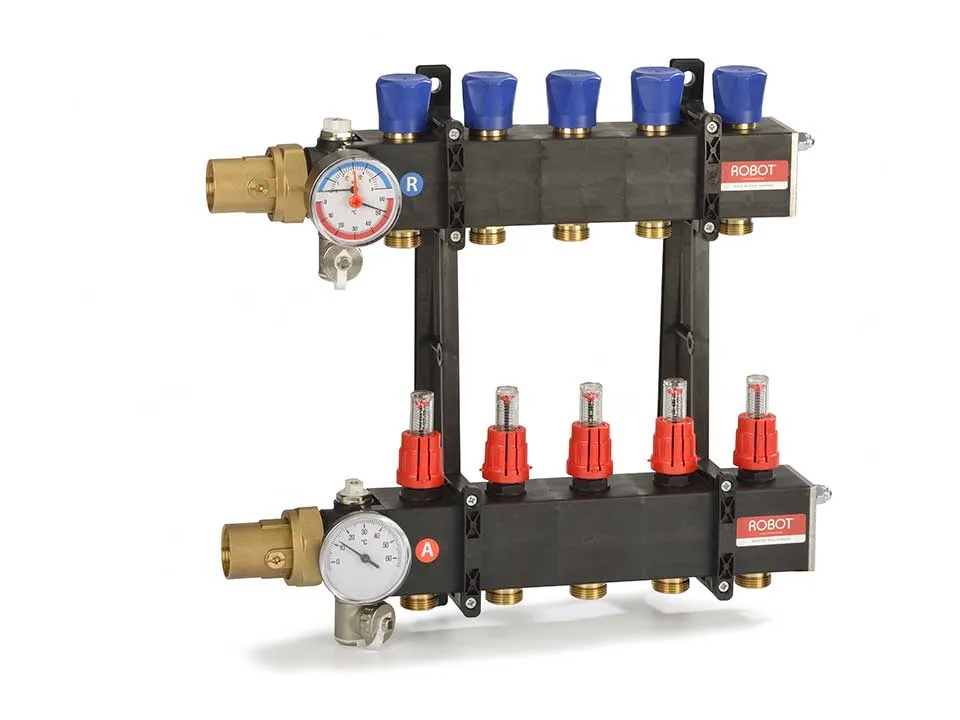
For low-temperature systems, Robot Vloerverwarming offers both the LTC manifold and the Solid manifold. Both are suitable for underfloor heating systems with a primary flow temperature of up to 50°C, provided an external pump is installed. The LTC manifold is made up of modular components. These components contain air chambers, giving the manifold an insulating effect and minimising heat loss. The Robot Solid is a composite manifold supplied as a single unit with up to 8 circuits. It can also be extended to 24+ circuits using an extension module. Both the LTC manifold and the Robot Solid can be connected on either the left or right side of the primary circuit. To prevent heat loss, the Robot Solid comes with insulation shells as standard.
Lower hydraulic resistance
Robot’s composite manifolds have lower heat loss and lower hydraulic resistance than steel manifolds. Kiwa Nederland B.V. is currently conducting measurements and producing reports to substantiate these claims. Kiwa Nederland B.V. is the designated independent party for this type of research. The measurements are analysed and translated into thermal energy savings. The preliminary results are very promising!
Question about this story? Ask your question
Keep following this
Get an email when a new story is published. No account needed.
- ThemeGas-free heating and cooling
- SubjectBuilding services engineering