Plug-in systems: the next level

More and more installers and manufacturers are embracing plug-in installations. That is hardly surprising given the benefits, such as minimal installation time, significant reductions in (failure) costs, optimum flexibility and environmental friendliness. Yet, according to Isolectra, this is only the beginning. The Dutch market leader in (Wieland) plug-in building installations for 230V, 100V, low-voltage systems, lighting and presence detection keeps a close eye on long-term trends in the non-residential and residential construction sectors and translates them into new products and concepts, with the aim of minimising our use of materials and contributing to a more sustainable, circular society.
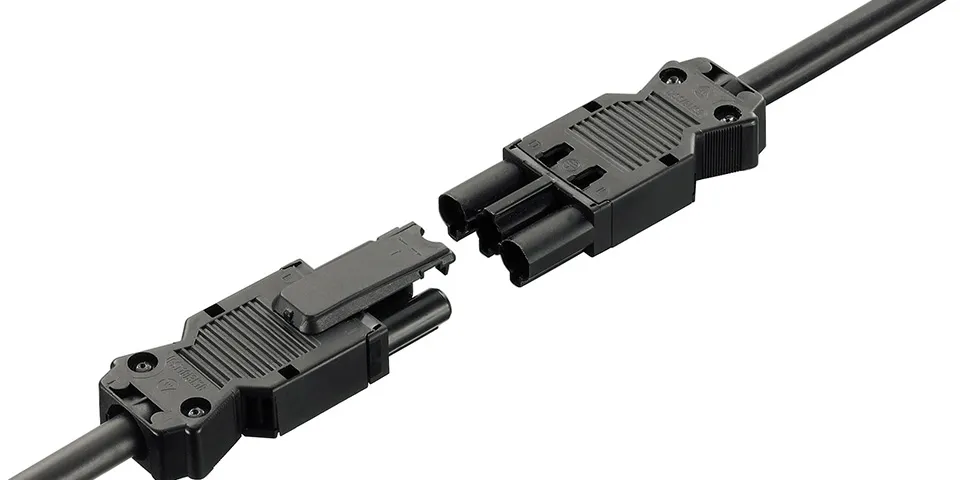
Wieland plug-in installations mean minimal installation time, significant reductions in (failure) costs, optimum flexibility and environmental friendliness.
“We are currently seeing four trends that we believe will influence the requirements for (plug-in) installations,” says Werner Hulst, Managing Director of Isolectra. “The first trend relates to the energy transition. Interest in sustainable, locally generated energy is growing, creating major challenges in practice. In Groningen, for example, farmers, businesses and associations can no longer connect their solar panels to the grid. Quite simply, the electricity network does not have enough capacity to store all the energy. The way we distribute energy is one of the factors contributing to this.” Casper Bontenbal, Business Development Manager at Isolectra, adds: “We expect our electricity networks to change from AC (alternating current) to DC (direct current) in the coming years. This will affect not only the configuration of our installations, but also our cables and connectors.”
A universal building infrastructure
A second trend identified by Isolectra relates to sustainability. “Both the government and businesses are committed to a waste-free, circular society,” says Bontenbal. “The construction industry is focusing on design for disassembly and the reuse of building materials. However, sustainability in the way building installations are laid out is still lagging behind.” Hulst adds: “Separate infrastructures are still installed for building applications. Think, for example, of cables for fire alarm systems, evacuation systems, and data and power networks. All these cables contain a lot of copper and plastics that put a strain on the environment. By exploring the possibilities of application integration, we are tackling this issue.”
According to him, ‘next-level’ plug-in installations are systems with a universal building infrastructure, where the endpoint, rather than the infrastructure, determines the cable’s function. “For this integration to succeed, the way data and power systems are configured needs to change. This requires not only courage, but also cooperation between the various partners in the supply chain. At Isolectra, we are making this a top priority. We expect to introduce our first products and roll out our first projects in the coming months. We would be pleased to hear from architects, consultants, installers, facilities managers and building owners who would like to use and further develop these systems with us.”
Power and data in one
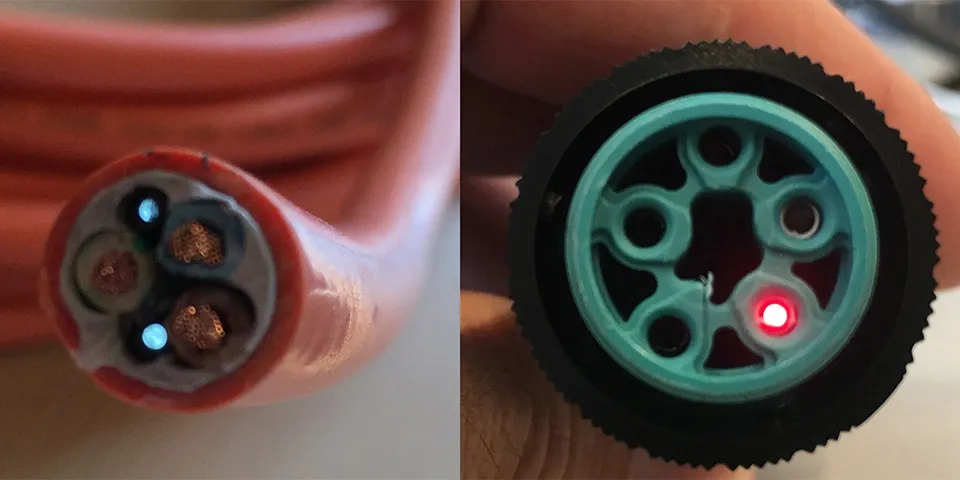
Isolectra’s hybrid high-speed data and 230V power cable and connector.
A third trend Hulst wants to highlight is ‘The Internet of Everything’. “The number of smart buildings is growing rapidly in both the non-residential and residential sectors,” he says. “We are buying more and more smart devices that need to be connected to the internet in some way. Think, for example, of the smart thermostat and smart energy meter, as well as the smart fridge that orders its own groceries. The question for the coming years is how all these devices can best communicate with the cloud. Is it wirelessly, or over a cable?” Bontenbal adds: “Our view is that, from a health perspective, anything that does not need to be wireless is better wired. What’s more, if you have to connect a cable for the power supply anyway, why not integrate data communications into the same cable?”
The final trend concerns consumers’ growing need for flexibility, for example when it comes to the positioning of Wi-Fi access points and power sockets. Hulst says: “With our current installation configuration, responding flexibly to consumer requirements is incredibly costly. Moving or adding a wall socket can easily cost €140, and adding a data point €180. This is not only due to high process costs, but above all because changes to the standard plan often lead to failure costs. To make this easier and more affordable, a plug-in installation with a universal building infrastructure is also indispensable.”
Have a business enquiry for Isolectra BV? Get in touch
Companies in this story
Keep following this
Get an email when a new story is published. No account needed.
- ThemeBuilding electrical systems
- SubjectBuilding services engineering
- CompanyIsolectra BV