Preventing energy loss and improving fire safety
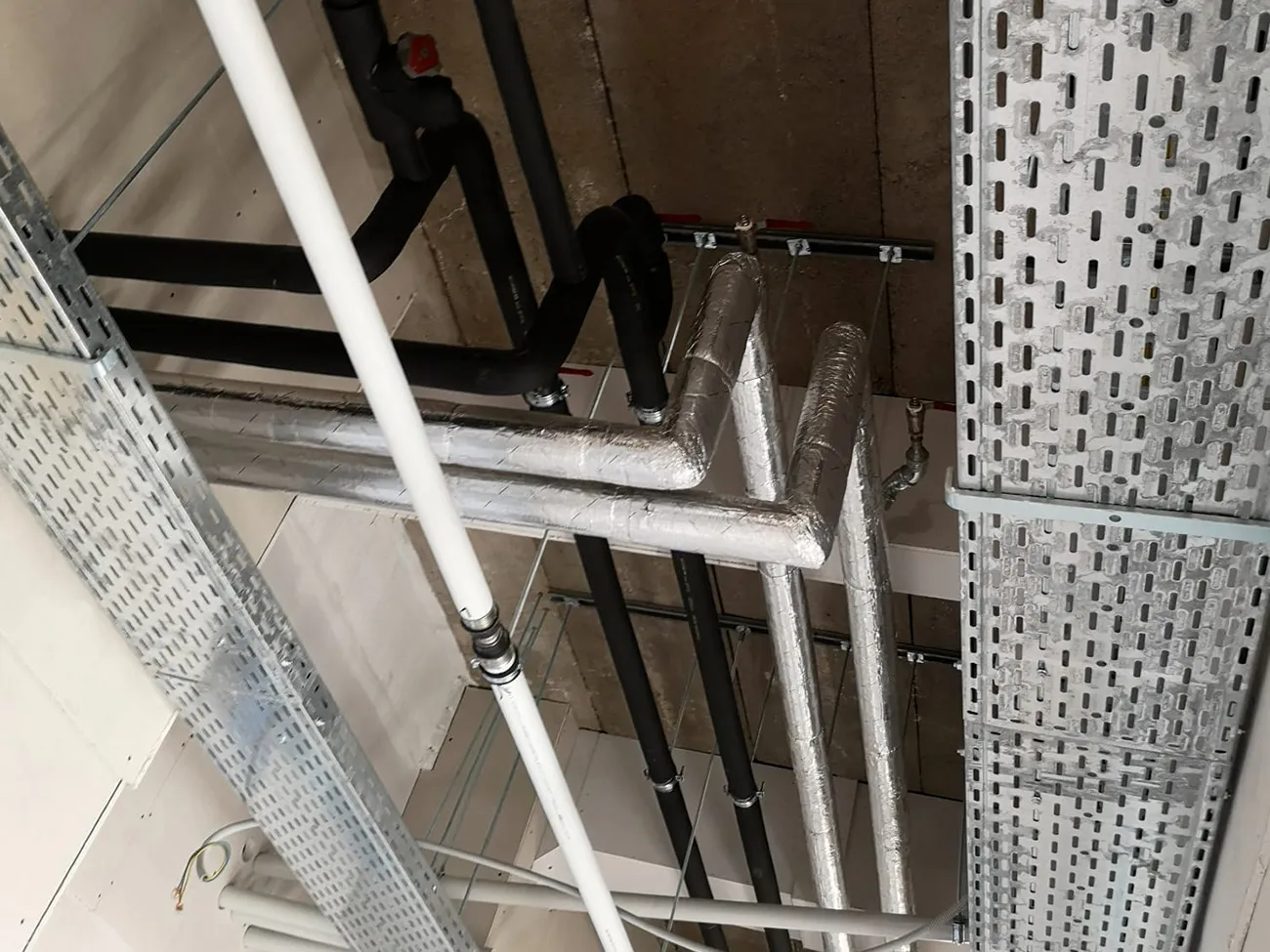
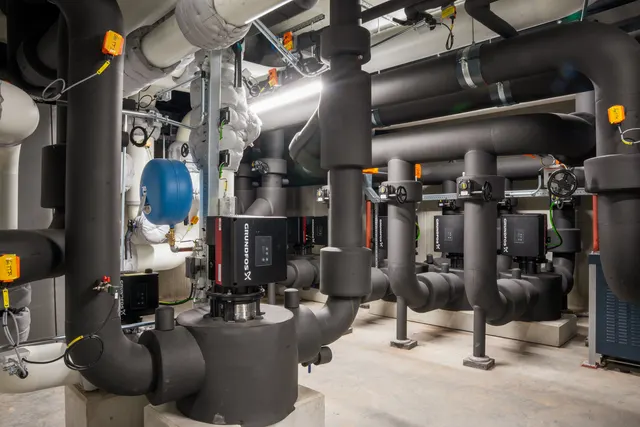
Plesmanduin is the former KLM head office, built in the 1930s. It later became the headquarters of the Ministry of Transport and Water Management and is now being transformed into a high-quality residential complex. This calls for a number of upgrades, including effective insulation. Insulation contractor Hanenberg BV is insulating the building services at Plesmanduin, while Brandpreventie Hanenberg BV is carrying out fire-stopping work around service penetrations.
Insulation and fire safety at Plesmanduin
Hanenberg specialises in insulating building services in commercial buildings, light industry and the food industry. At Plesmanduin, the company is insulating the mechanical and sanitary services, as well as installing fire barriers and fire-resistant seals. This work is being carried out for clients including Roodenburg Groep. “Our company has been in business for 58 years, and we have worked for Roodenburg for decades,” says Ron van den Hanenberg. “For this client, we insulated the chilled-water pipes, central-heating pipes and services in the plant rooms. For Mohr Installatietechniek, we installed thermal and acoustic insulation around the cold-water pipes, rainwater downpipes and drainage pipes. We also provide fire protection for the services on behalf of Roodenburg Groep, Mohr Installatietechniek and Steegman Elektrotechniek.”
Working on the project
For thermal insulation and vapour control, Hanenberg uses ROCKWOOL pipe sections and Armaflex insulation. “The pipe sections prevent energy loss as hot water is transported, while insulation on the chilled-water and cold-water pipes and fittings is primarily intended to prevent condensation and corrosion. As well as controlling condensation, insulation on chilled-water pipes and fittings also helps prevent energy loss. We also installed acoustic insulation on the rainwater downpipes and drainage pipes,” says Ad Bos of Hanenberg. “We carried out as much of the work as possible as part of a construction sequence, insulating the services as soon as they had been installed and released. The fit-out work follows close behind.”
For the fire protection work, the team looked at prefabricating certain service components. “We made a fire-resistant enclosure in which the fire dampers were prepared off site as prefabricated units, to the correct diameter and dimensions. The ‘box’ was then installed as a single unit on the ceiling, allowing the air ducts to be installed as complete units on each floor, with the fire protection for the ducts fully finished.”
Question about this story? Ask your question
Keep following this
Get an email when a new story is published. No account needed.
- ThemeSafe building services and buildings
- SubjectBuilding services engineering