Step by step towards a reliable and safe power supply
Power distribution systems are at the heart of electrical infrastructure. Proper engineering, connection and protection of main and sub-distribution boards are essential to ensure a reliable and safe power supply. This is particularly important on larger, technically complex projects, where it is helpful to have an experienced partner at your side to advise, guide and support you at every project stage. This is precisely where the Hager projects team excels. From the initial enquiry through to implementation and aftercare, the account managers, sales engineers, technical specialists and project managers at the Hager Service & Competence Center provide clarity and confidence. Working together to find the right solution, offering honest advice, clear communication, broad and in-depth expertise, a proactive approach and direct lines of communication: these are the hallmarks that ensure processes are robust yet flexible where needed.
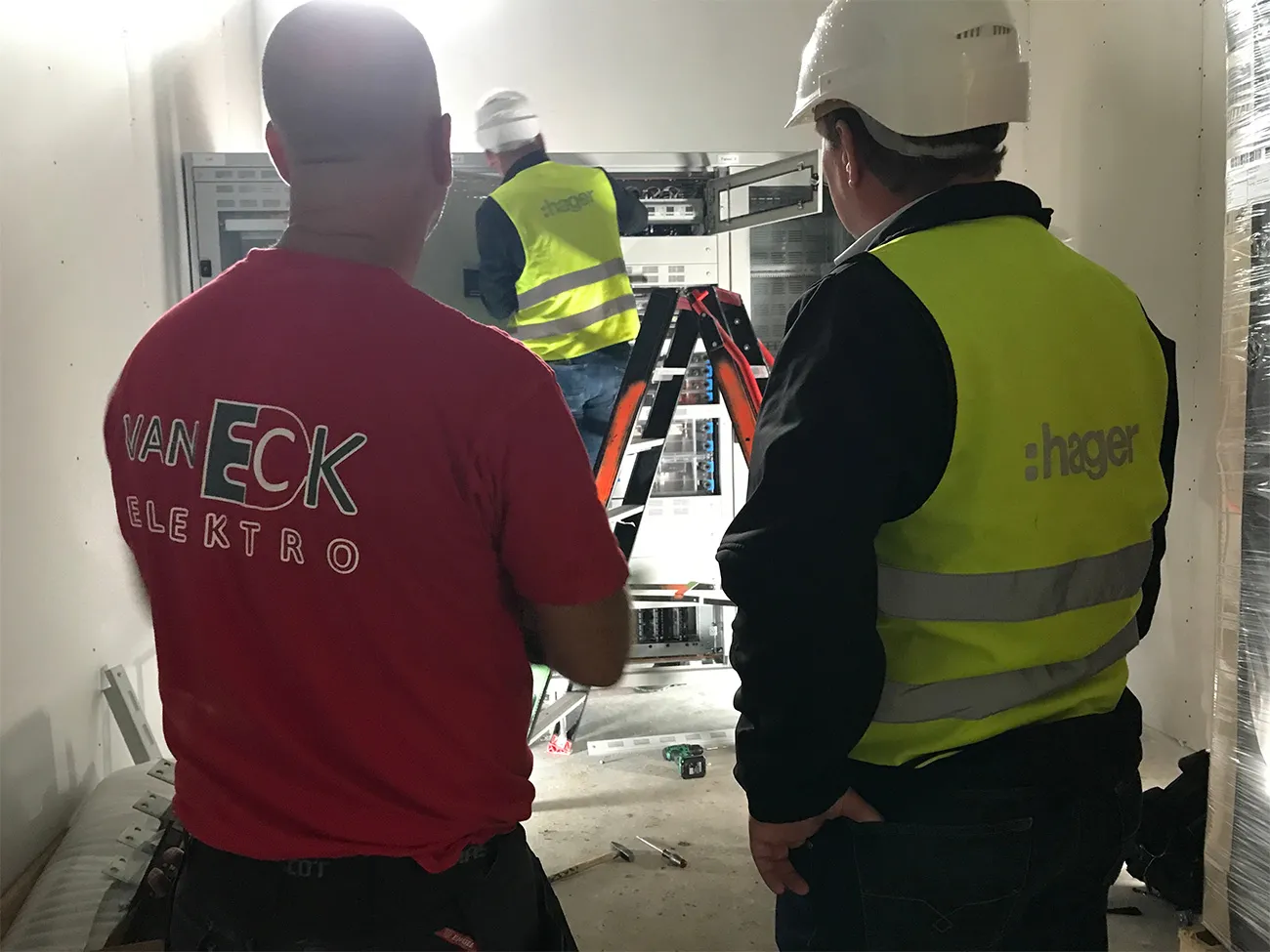
Advice and budgeting: a clear picture, fast
“Direct lines of communication are a hallmark of Hager’s service. We respond to questions quickly,” says project manager Martwin de Man. “This enables installers to respond quickly on projects. Our technical specialists are happy to prepare a preliminary switchboard design. The starting point is always a future-proof solution that fully meets the project requirements, customer preferences and market demands, while staying within budget.” Larger and more complex issues are always discussed with all the technical specialists and sales engineers. “We also apply the four-eyes principle: a quality check in which a second technical specialist reviews the design. Could it be made just a little smarter?”
Design phase: listening and asking the right questions
Thanks to direct lines of communication between the installer and Hager sales engineers, it quickly becomes clear what may still be missing from the functional design. “By listening carefully and asking further questions, we clarify the precise scope of work,” says De Man. The design is then assigned to the technical specialist best placed to develop it. A quotation request is scheduled within a day, and the customer receives a quotation within nine days at most. The project manager prefers to discuss the technical design in person, keeping communication direct, and remains involved throughout the project. Any final changes and recommendations are incorporated into the construction design. Speed and flexibility are also priorities at this stage.
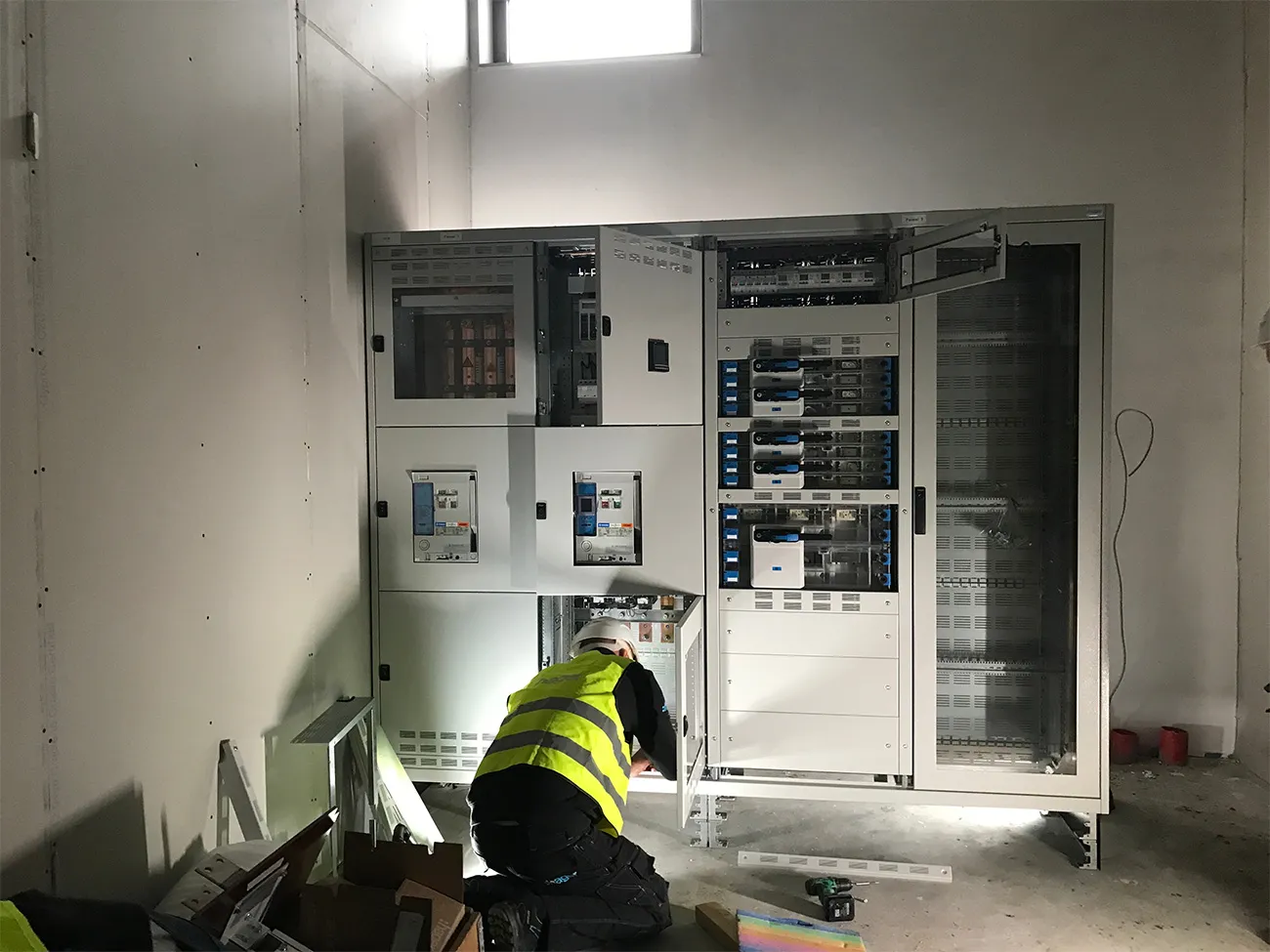
Assembly of the power distribution system
Once the final design has been approved, the switchboard moves into production preparation. Power distribution systems up to 6,300 A are built at Hager’s own workshop in Coevorden or by one of its certified panel-building partners. At this stage, the technical specialist hands over all the specifications to the production planner. They remain involved, however, to ensure the build process runs smoothly. The project manager also keeps a close eye on progress throughout. “Once our technicians have assembled the switchboard, they check their own work,” says De Man. “Using the drawings, they check off that all bolts, nuts and components are present and correctly secured. A colleague then carries out a check, in accordance with the four-eyes principle. Does the drawing match the finished assembly exactly?” The next step is a formal technical test and inspection by the Hager inspector. The inspection certificate and CE declaration resulting from this process are supplied with the switchboard.
Factory Acceptance Test (FAT)
Once the technical quality of the switchboard has been demonstrated, the pre-FAT and FAT are next on the agenda. During the pre-FAT, the technical specialist and production planner check the switchboard against the construction design. Does it also meet the client’s functional requirements? Is there enough space for connections? Are all control commands carried out correctly? And is the switchboard enclosure undamaged? These findings are also recorded in a report, in accordance with the FAT test protocol. The installer is also invited to the actual FAT to test the functional, technical and aesthetic properties of the main switchboard. According to De Man, it really is “a celebration”. “This is where our knowledge, expertise and quality become visible to the customer.”
Transport and installation require specialist skills
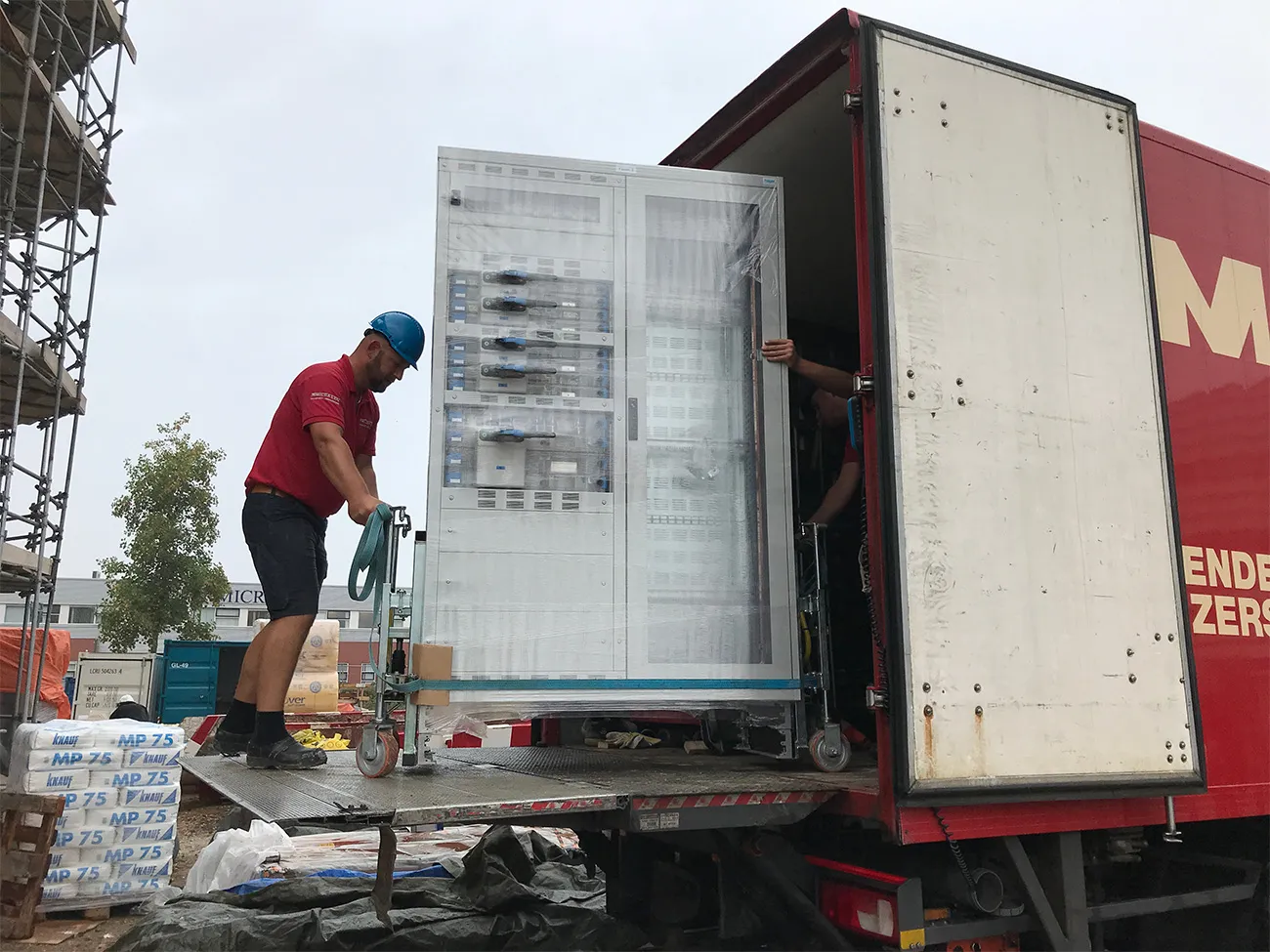
As switchboards are often large, they are divided into manageable sections after the FAT. Once all the parts are ready for transport, specialist Hager partners deliver them to site and move them into position. The project manager is closely involved in this process too. They have inspected the site in detail beforehand to avoid any surprises during installation. What options are available for vertical transport? Is there a tower crane that can be used?
Commissioning, configuration and Site Acceptance Test (SAT)
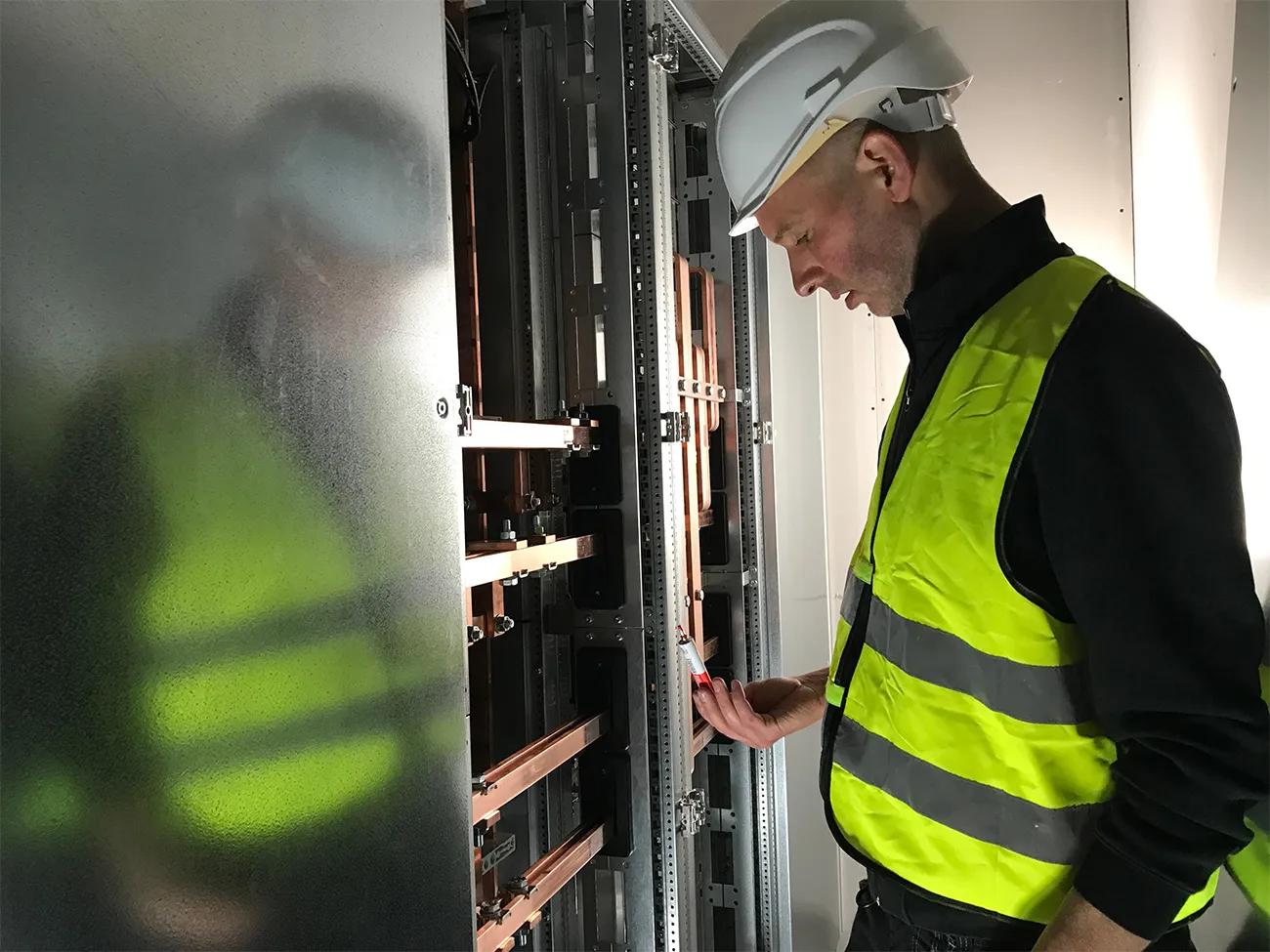
Under the project manager’s supervision, the switchboard is moved into its final position. Specialist technicians carry out the assembly and electrical connections, followed by an independent check and a second check under the four-eyes principle. “A high-voltage test demonstrates that all the electrical connections are technically sound,” says De Man. “To make commissioning as quick and straightforward as possible, we ensure that all the settings are correct, the system has been tested and the switchboard is ready to start. After an acceptance test (SAT), the installation is handed over to the installer.”
After handover
Changes may still be needed after a project has been handed over. That is why Hager’s account managers, project managers and technical specialists remain available and on hand to answer questions. So, if changes need to be made after commissioning, the specialists are ready to help!
Checks during the assembly and delivery of a switchboard
Quality checks in the workshop:
1. Assembly technician’s own check.
2. Check by a colleague, in accordance with the four-eyes principle.
3. Inspection and testing by the inspector.
4. Pre-FAT by the designer and production planner.
5. FAT by the project manager and client.
Quality checks on site:
6. Assembly technician’s own check.
7. Check by a colleague, in accordance with the four-eyes principle.
8. High-voltage test.
9. SAT by the project manager and client.
A business enquiry for Hager? Get in touch
Companies in this story

Keep following this
Get an email when a new story is published. No account needed.
- SubjectBuilding services engineering
- CompanyHager