Tax offices Walterboscomplex and Quintax to receive new control systems
Text Lieke BousemaImage Belimo
By 2050, the buildings owned by the Central Government Real Estate Agency will use no energy. To help achieve this ambition, solar panels and electric vehicle charging points are already being installed. The buildings and their systems are also being made more sustainable as opportunities arise. A good example is the Walterboscomplex and Quintax tax offices in Apeldoorn, where Unica Building Intelligence (a group comprising, among others, Unica Building Automation and Regel Partners) will replace the complete building controls system over the coming years under a UAV-GC contract.
All twelve office buildings will be fitted with new control panels, while the floor-level controls for the climate systems, solar shading and lighting will be replaced. A central building management system will also be installed, allowing all building systems to be easily visualised and managed.
Major maintenance and sustainability upgrades
“The systems in the Walterboscomplex and Quintax buildings have reached the end of their technical service life after around twenty years,” says Kim Broekmate, Technical Manager at Unica Building Automation. “The Central Government Real Estate Agency is using the Major Maintenance of Building Controls project as an opportunity to improve sustainability as well. Between October 2022 and February 2023, we jointly identified, analysed and documented the requirements for replacement and sustainability improvements, including those relating to quality assurance. Belimo and several Unica companies were involved.” Han Lanjouw, Project Manager at Regel Partners, adds: “Together with these parties, we developed an optimum design featuring high-quality products and an attractive price-quality ratio (EMVI score). We started the engineering work in March 2023, with the first work on site beginning in January 2024.”
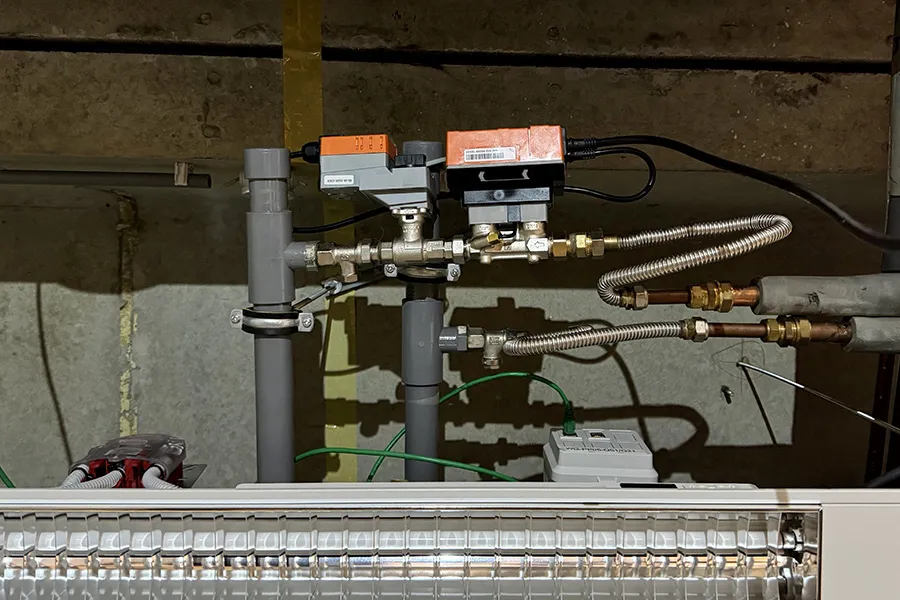
Flow-compensated valves
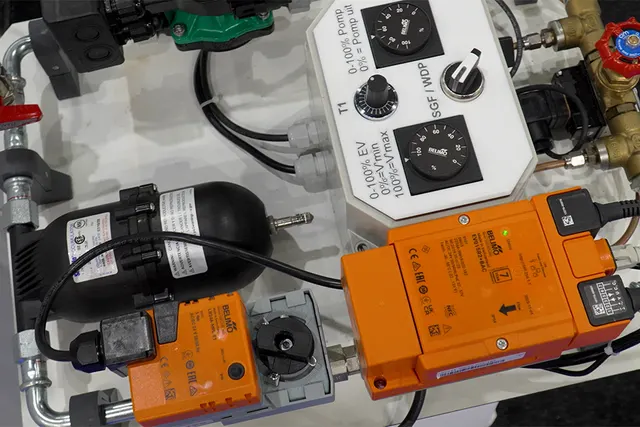
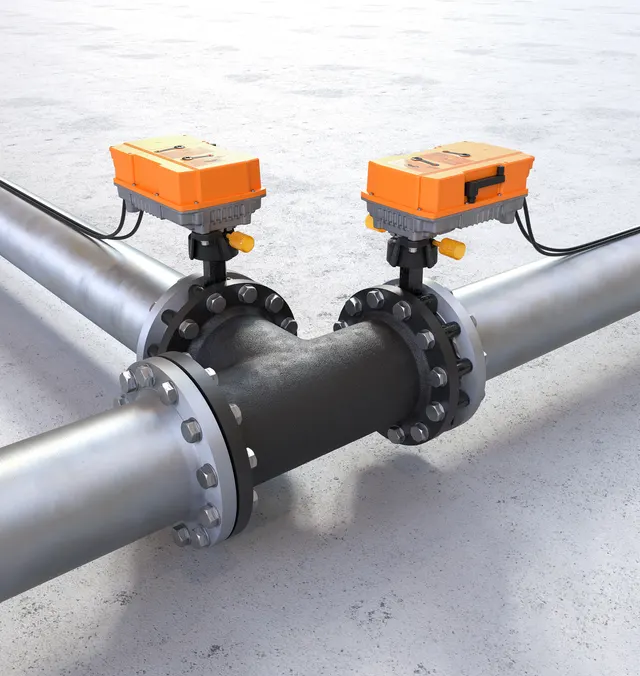
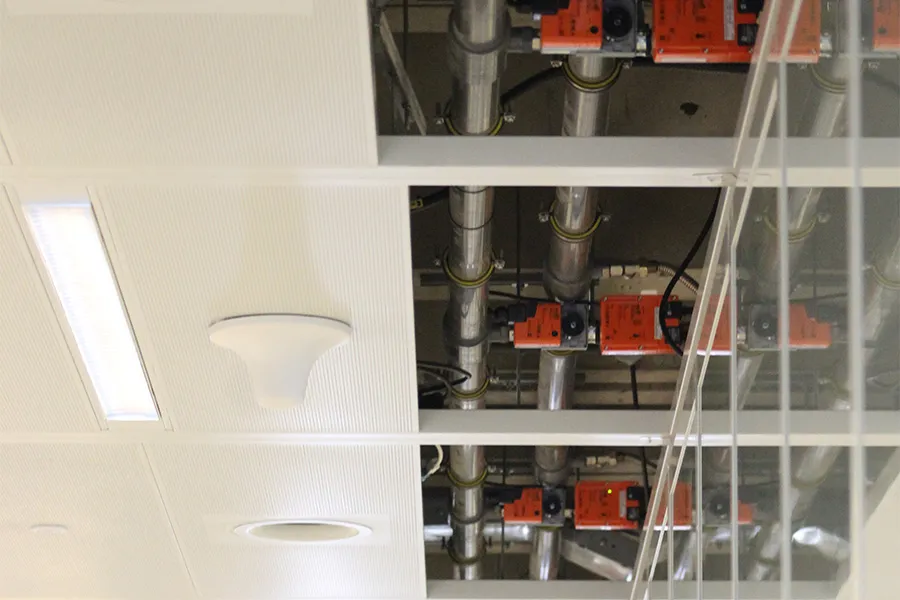
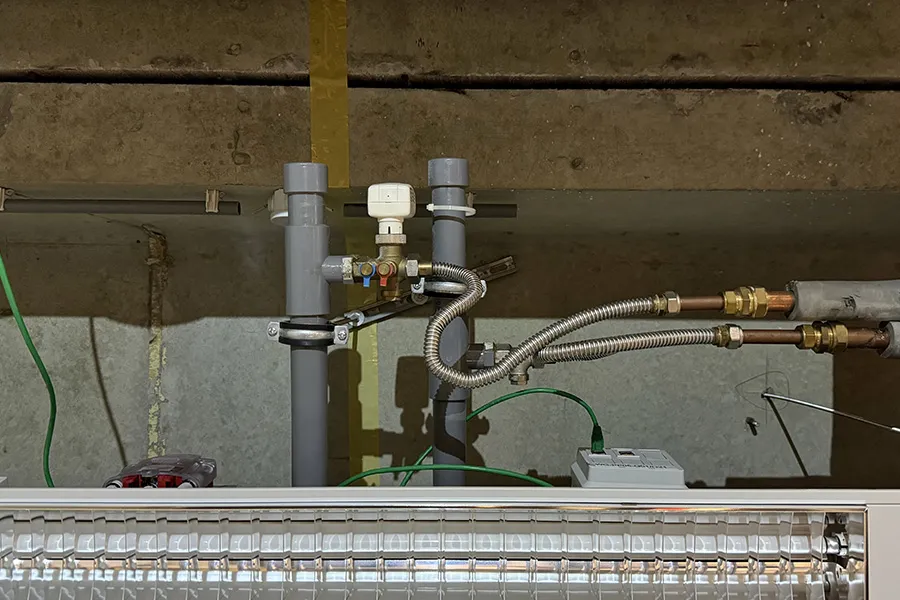
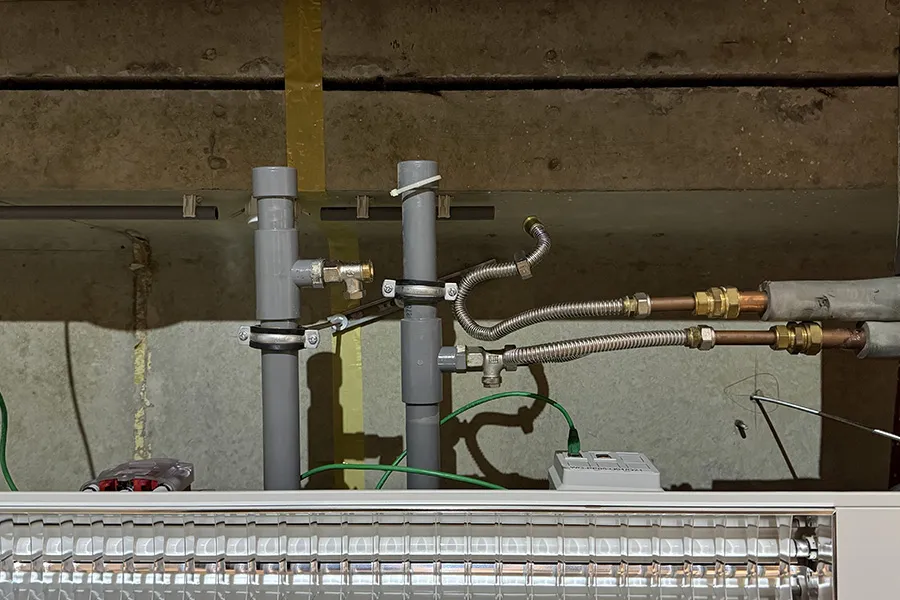
“One key requirement is to fit flow-compensated valves wherever possible on the chilled-water and central heating systems on each floor,” says Broekmate. “These include induction units and chilled ceilings, for example. Where this is not possible, such as at the radiators on the façades, mechanically pressure-compensated valves will be installed.” A major advantage of flow-compensated valves is that water flow rates are measured in real time, says Jeffrey Bellmann, Account Manager for the North/East Netherlands region at Belimo. “Only a minimal pressure differential is needed to achieve the required flow rate. This means that even at lower flow rates, for example under partial-load conditions, the system can be measured, monitored and adjusted. During the preparatory phase, we discussed all the RetroFIT+ options for the tax offices. This led to the selection of our EP015R2+BAC electronic pressure-independent control ball valve (Electronic Pressure Independent Valve/EPIV).” Lanjouw adds: “We then presented our case to the Central Government Real Estate Agency and demonstrated that this valve meets all the project requirements.”
4,364 control ball valves
“In most of the Walterboscomplex and Quintax buildings, the 2-way EPIVs are being installed in the chilled ceilings, in zones measuring 1.80 metres,” says Broekmate. “The other buildings have induction units, where EPIVs are being used for both the central heating and chilled-water systems. A follow-on project will also be carried out shortly, the refurbishment of building Noord, where Belimo 6-way EPIVs will be installed.” Bellmann adds: “We have already supplied more than a thousand 2-way EPIVs. Our total order comprises 4,224 2-way EPIVs and 140 6-way EPIVs. We are also handling some of the prefabrication. Using Belimo PreFIX, all control ball valves are preconfigured with the correct bus parameters. This shortens installation times and reduces the risk of errors. It also means commissioning can start sooner.”
Circular packaging strategy
All components are clearly labelled and delivered just in time, on pallets, to each floor. Empty pallets are collected with every new delivery, says Bellmann. “This helps improve efficiency and sustainability. Our circular packaging strategy minimises waste on site. It also means we do not have to keep using new raw materials.”
60 EPIVs per floor
Work on each floor takes around four weeks. Broekmate explains: “The first week is spent preparing the work, followed by two weeks of dismantling and installation. The fourth week is then devoted to commissioning and preparing the system for handover. To ensure the right field components are installed in the right locations, we attach metal number plates to the band-raster ceiling grid. These correspond, among other things, to the preconfigured EPIVs and room numbers.” 60 EPIVs are installed on each floor, Lanjouw concludes. “One controller is installed for every 30 control ball valves and linked via software. All valve information can then be read easily and directly in the building management system.” Replacement and sustainability improvements to all the building control systems are expected to be completed by October 2026.
A business enquiry for BELIMO? Get in touch
Who worked on it
Walterboscomplex and Quintax in Apeldoorn
- Control systemUnica Building Intelligence
Keep following this
Get an email when a new story is published. No account needed.
- ProjectWalterboscomplex and Quintax
- SubjectBuilding services engineering
- CompanyUnica Building Intelligence
- CompanyBELIMO