The importance of high-quality, clean system water
The water quality and treatment of heating systems are attracting increasing attention from installers and end users alike. This is hardly surprising, according to Floris van ’t Verlaat of Caleffi, as more and more energy-efficient homes are being built. “In energy-efficient homes, lower heating outputs are often sufficient,” he says. “This also means that smaller pipe diameters can be used, with lower flow velocities and flow rates. You can imagine that as the fluid velocity in these pipes decreases, dirt can build up more easily. Smaller pipe diameters also become blocked more quickly. This can lead to faults and failures caused by blockages, stuck valves and clogged heat exchangers.”
According to Van ’t Verlaat, contamination in central heating water can be divided into three categories. “First, there is construction debris, such as dust, welding flux and sawdust, left in the heating pipes during installation,” he explains. “When the system is filled with tap water, limescale particles and air also enter the system. Limescale particles deposit on components such as the heating element, pipes and valves, while air plays a major role in the corrosion of metal components. In the past, dissolved air reacted with the entire surface of the system. However, as more and more systems are made from plastic, the corrosion pressure on the remaining metal components increases. If appropriate measures are not taken, for example, the connection pipes can become sacrificial anodes. The resulting corrosion particles can also cause troublesome blockages and reduce efficiency.”
Removing dirt and air
“Where there is air or dirt in the system, there is no water. Where there is no water, there is no heat. And where there is no heat, no heat can be delivered,” Van ’t Verlaat emphasises. “That shows just how important high-quality, clean system water is.” However, opinions differ on the precise definition of high-quality, clean system water. There are also no clear European standards for this yet. Most manufacturers therefore follow the German VDI 2035 standard, supplemented in 2020 by an ISSO publication on closed water-based systems. “Whether you follow the VDI standard, use conductivity (µS) or hardness (pH) as a measure, and regardless of the system type (stainless steel, aluminium or plastic), the fact remains that dirt and air must be efficiently removed from the fill water and system water. Additives must also be added to effectively prevent limescale build-up and corrosion. Caleffi offers an extensive range of products to help with this, from demineralisation and softener sets, chemical additives and (demineralisation) cartridges to (automatic) air vents, filters and (self-cleaning) dirt separators. These help keep systems cleaner, improve efficiency, reduce faults and significantly extend service life. They also put an end to residents’ complaints about cold homes.”
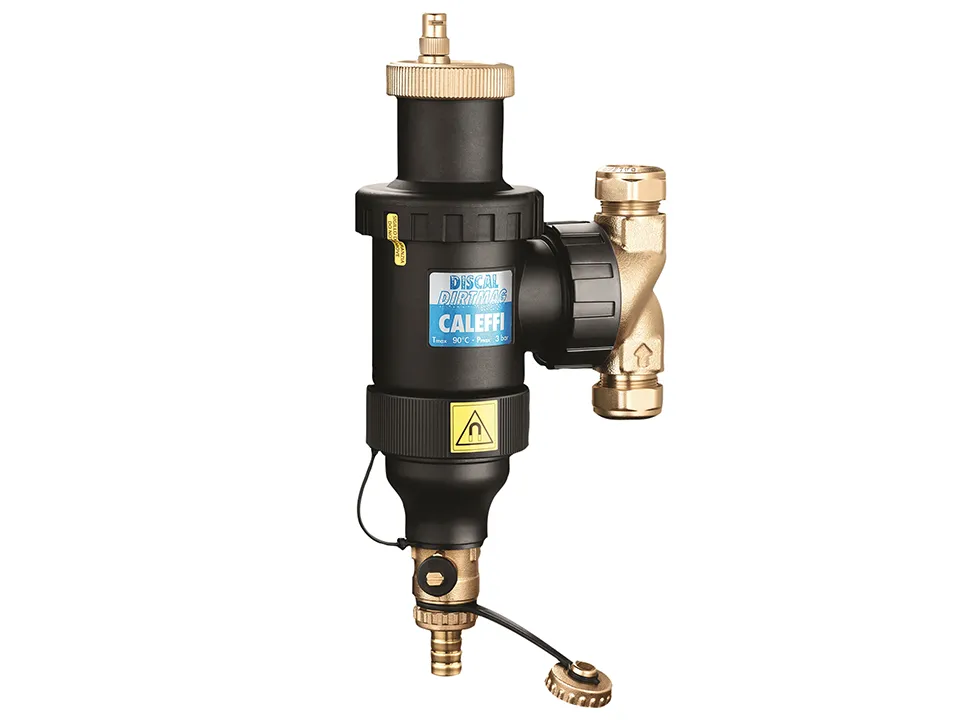
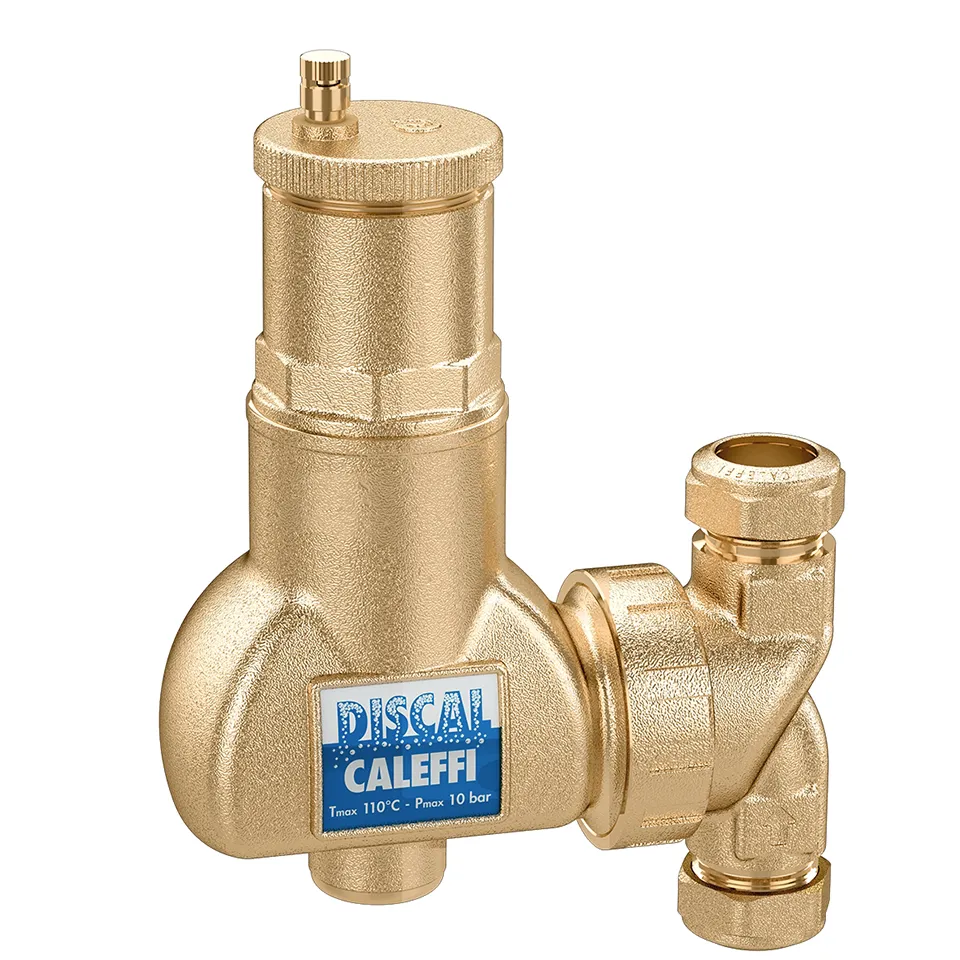
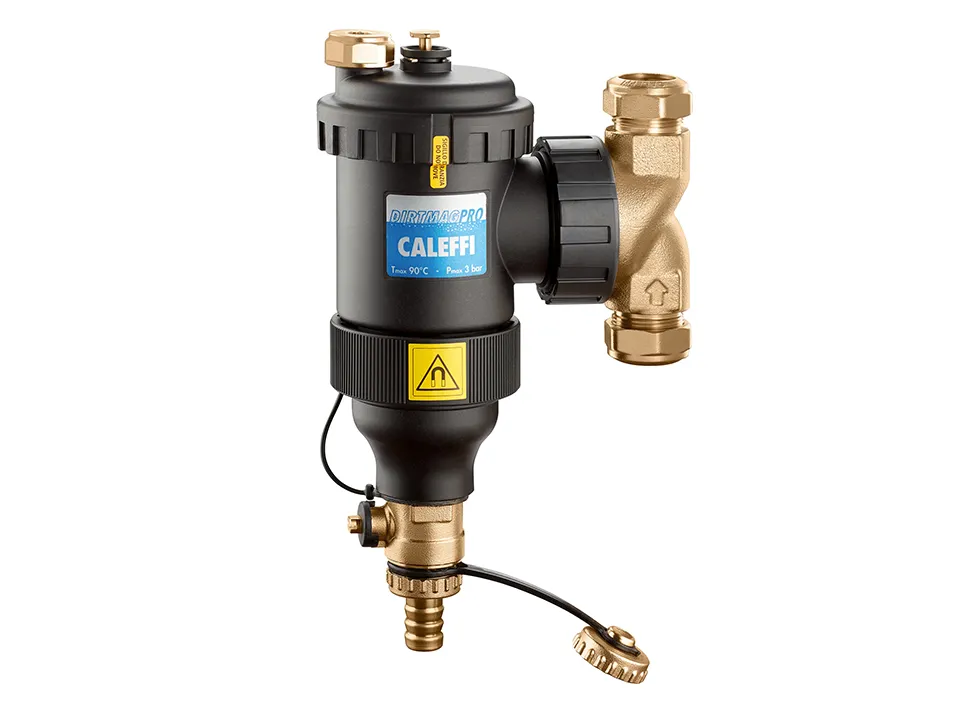
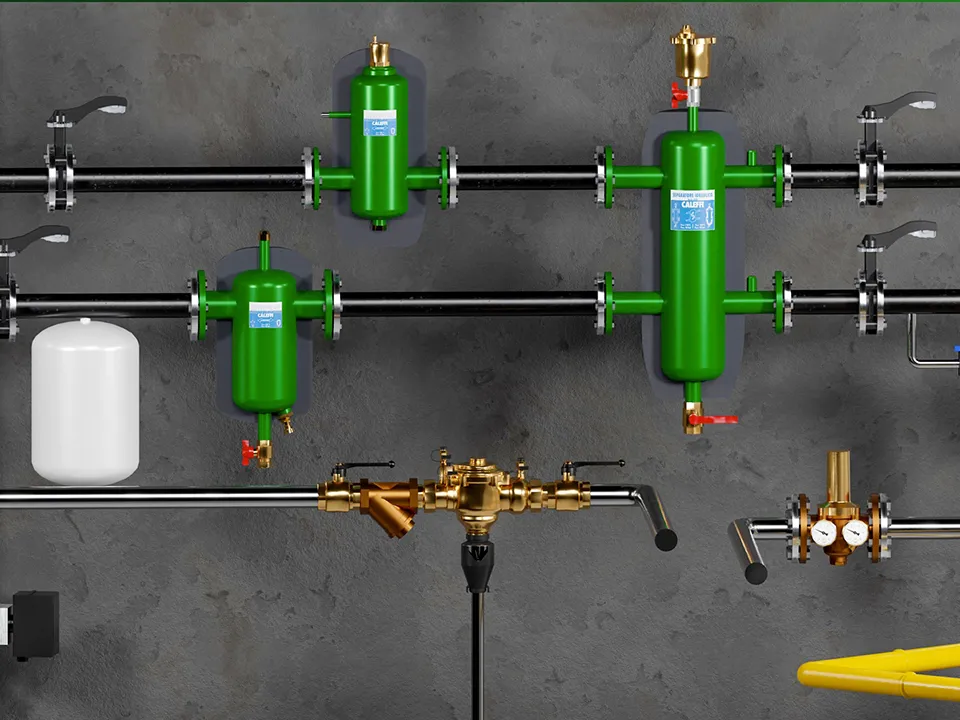
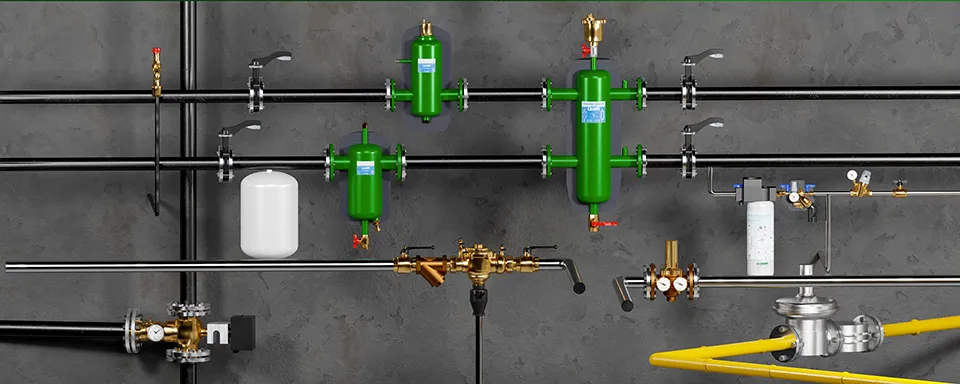
Air and dirt can easily be removed from the system by installing a combined air and dirt separator.
Advice on design and installation
To select the right products for each project, Caleffi is happy to work alongside installers on both the design and installation. “We also regularly run training sessions to explain how contamination develops in a system, the different types of contamination, the damage and complaints they can cause, and the products and systems that can prevent them. We also provide guidance on using our products and systems correctly, and offer support with the hydraulic design.”

Comprehensive, free and always up to date
At the end of February, Caleffi launched its new BIM knowledge portal (bim.caleffi.com), which presents all Caleffi MEP content in a clear format, organised by product family. “Installers can download all the object information they need to create calculations, configurations and specifications free of charge,” says Van ’t Verlaat. “They will also find an extensive BIM catalogue and BIM schematics. The information is compatible with all design software (Revit, Edificius, …) and is updated in real time. This enables installers to reduce installation costs and errors, and achieve an even better end result.”
Een zakelijke vraag aan Caleffi International N.V.? Get in touch
Companies in this story

Keep following this
Get an email when a new story is published. No account needed.
- SubjectBuilding services engineering
- CompanyCaleffi International N.V.