Valve and fitting insulation with removable jackets
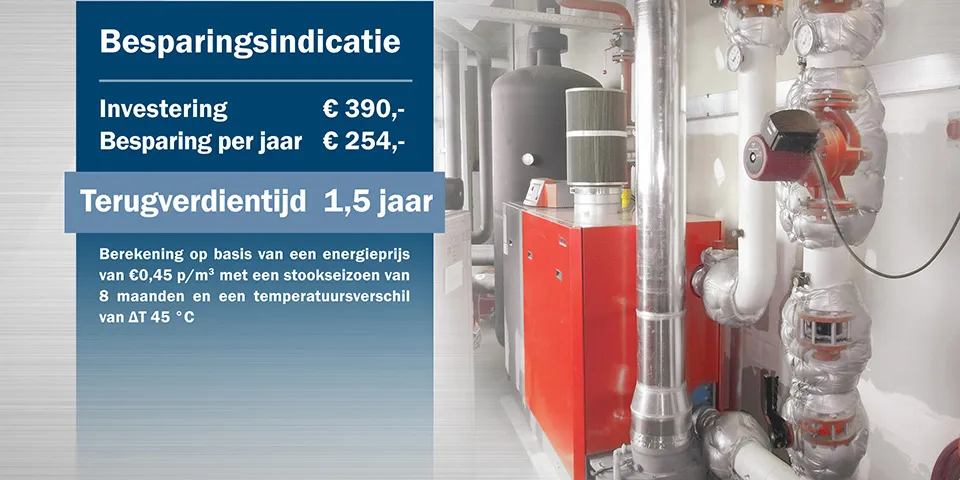
Heat loss, and therefore energy loss, caused by missing or inadequate insulation on valves and other fittings. It still happens far too often. By optimally insulating central heating and domestic hot water systems, you can quickly save a great deal of energy and money.
Thermatras® specialises in surveying, manufacturing and installing thermal insulation in the form of removable insulation jackets. It is precise work that the company’s 40 employees have mastered. Over the past 27 years, the company has demonstrated to many organisations that insulating valves and fittings really does pay off.
Recognised measure
Even so, many buildings still have systems that are not insulated, or are inadequately insulated. In central heating systems, the pipes are often insulated but the valves and fittings are not. Alexander Norder, Managing Director at Thematras, explains what this means: “The heat loss from a flange is equivalent to 0.5 m¹ of pipe. For a valve, it is equivalent to approximately 1.5 m¹ of pipe. A central heating circuit typically consists of four valves, one three-way valve and one pump. That is roughly equivalent to nine metres of uninsulated pipe. In practice, this means significant heat loss in both small and large systems in healthcare, education, government buildings, offices, swimming pools and hotels. Insulation for valves and fittings is also a recognised ‘mandatory’ measure under the Environmental Management Act, which is in turn used to enforce the European EED legislation.”
Custom-made
Insulation for valves and fittings is a bespoke service, which Thermatras has been providing for 27 years. Norder: “Removable insulation jackets were originally used in the shipping industry, but they have also been used for central heating and domestic hot water systems for a long time. We have extensive experience in surveying, manufacturing and installing this thermal insulation. For our customers, the flexibility of this maintenance-free system is an important factor. Depending on the situation, we select the most suitable insulation material and system. We do this only after personally surveying the system in question, either directly or on behalf of the building services installer or consultant. This allows us to draw up a detailed specification of the valves and fittings to be insulated, including a photographic report and a firm cost proposal. We also calculate the payback period using the correct operating hours and energy price. This makes it clear to our customers why insulation for valves and fittings pays off. Naturally, we also manufacture and install the custom-made Thermatras jackets.”
Question about this story? Ask your question
Keep following this
Get an email when a new story is published. No account needed.
- ThemeSustainable refurbishment of existing buildings
- SubjectBuilding services engineering