What can you install using plug-in systems (with Adels)?

Plug-in installation is one solution to the current challenges facing the electrical installation sector.
These include the shortage of skilled workers, shorter construction times, new installation methods, circular construction, sustainability and growing demand for flexibility. But what can you actually install using plug-in systems, and do the engineering costs outweigh the time saved on site?
What can be installed using plug-in systems?
Here are some examples:
Lighting
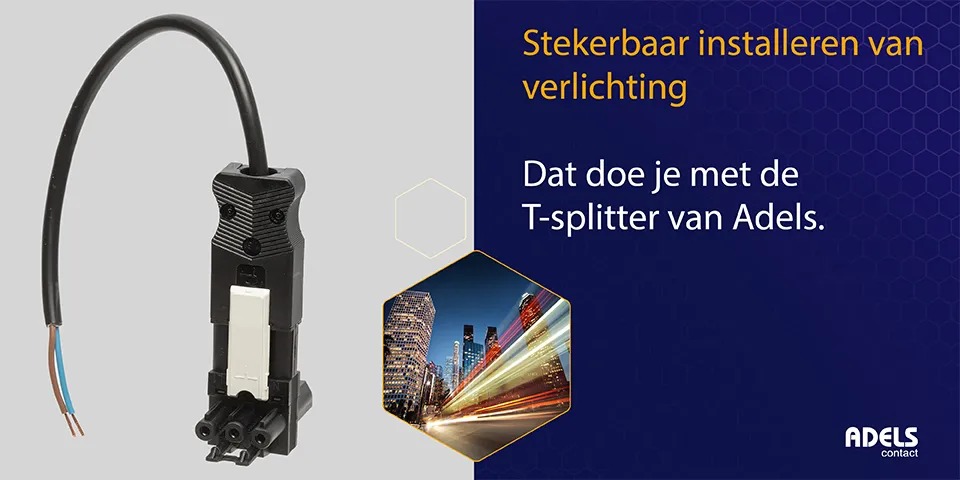
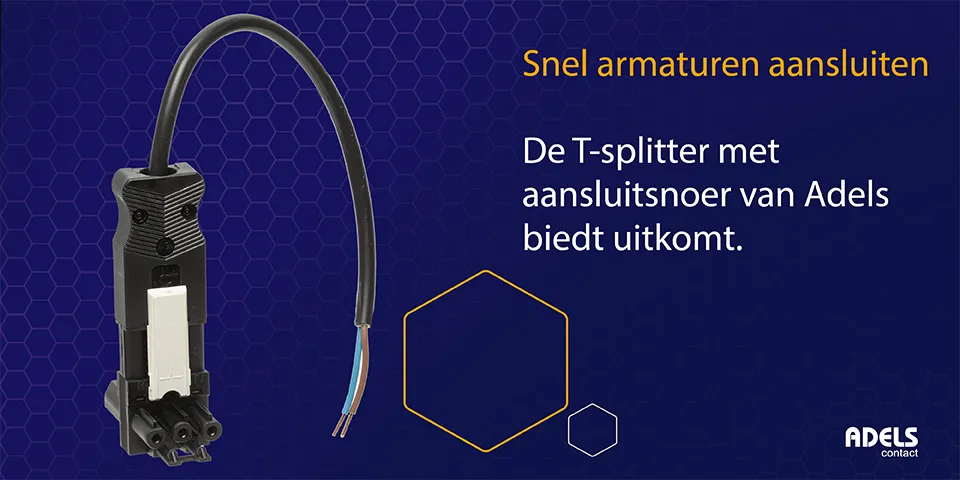
Lighting fixtures are ideal for plug-in installation, which is already standard practice across much of the market. Cables are supplied prefabricated, cut to size at the factory and fitted with connectors. One example is the T-splitter with connecting lead. Installers can fit them quickly and easily in the right place. The Lee Towers residential towers in Rotterdam-West are a great example of a project where the entire lighting installation uses plug-in connections. Watch the video here.
Junction boxes
Junction boxes have long been used to supply power to lighting and motion detectors. Today, they are also used to supply socket outlets and other loads.
Wiring accessories
Virtually every wiring accessories manufacturer offers plug-in solutions. From switches to socket outlets, everything can be connected on a plug-and-play basis. The mechanical and colour coding means there is virtually no room for error.
Distribution boards
As with wiring accessories, almost every manufacturer of consumer units and distribution boards can supply them with plug-in connections.
The benefits of engineering
Unlike conventional installation, plug-in installation puts the emphasis on preparation. Installers no longer need to assemble products, run cables and connect components themselves. Instead, they can get straight to work on site. Rather than being assembled ad hoc on site, the wiring is prepared in advance in a controlled environment.
Thorough preparation is essential. This means identifying, drawing up and checking the right connection and loop-through points, as well as cable lengths. Clear connector coding helps prevent connection errors and the costs of rework. Installation can also be five to ten times faster, with less technical expertise required. This is especially beneficial on larger projects with many repetitive installations: not only is there a substantial time saving, but it is often cheaper overall too, including travel, labour, rework and waste disposal costs.
Hemmink's role
In the Netherlands, Hemmink represents the AC 166G plug-in system from German manufacturer Adels-Contact. It is fully and safely interchangeable with the GST18 system.
Rather than supplying individual products, Hemmink provides complete solutions. These can include combinations with fixing materials from JMV and Schnabl, or Wiska junction boxes.
We provide comprehensive project support and advice, from the initial assessment through to guidance during the logistics process. With a results-driven approach, we offer the most suitable solution and advice. We can take a lot of work off your hands, so you can focus on delivering the project. Want to know more about our approach to projects? Visit hemmink.nl.
Een zakelijke vraag aan Hemmink? Get in touch
Companies in this story

Keep following this
Get an email when a new story is published. No account needed.
- ThemeBuilding electrical systems
- SubjectBuilding services engineering
- CompanyHemmink