Wireless emergency lighting management at Elisabeth-Tweesteden Ziekenhuis in Tilburg
Text Lieke BousemaImage Gortemaker Algra Feenstra en HBI Bisscheroux

Real-time insight and up-to-date information, fewer physical inspections and more efficient maintenance planning. And less disruption for residents and patients. It is no coincidence that more and more healthcare buildings are switching to wireless emergency lighting management. With the new acute care centre, clinical building and energy building at Elisabeth-Tweesteden Ziekenhuis (ETZ) in Tilburg, ULC Installatietechniek and HBI Bisscheroux are proving that this technology is also highly suited to new-build projects.
“It is time for engineering consultants to move away from familiar systems and open themselves up to new technologies,” says Antoon Rijpkema, emergency lighting consultant and IoT consultant at HBI Bisscheroux. “This is especially important in light of the current challenges in healthcare. To improve patient safety while also reducing energy use, costs and CO2 emissions, wireless emergency lighting management is no longer a luxury. It is a strategic choice with a significant impact on the future.”
Faster and smarter
Initially, emergency lighting monitored via BUS cabling had been specified for ETZ Elisabeth in Tilburg, he explains. “During the optimisation phase, however, ULC Installatietechniek and ETZ Elisabeth followed our advice and switched to wireless emergency lighting management, as this allows the system to be installed and managed more quickly and efficiently.”
Upgraded in stages
ETZ Elisabeth in Tilburg is being upgraded in stages. The first phase involves the construction of an acute care centre, clinical building and energy building, which are due to open in mid-2027. The acute care centre will bring together all the main emergency departments, including the Emergency Department, First Cardiac Aid, operating theatres, radiology, cardiac care, intensive care and emergency care for children. The clinical building will house the neurosurgery, vascular surgery and trauma surgery wards. Hurks and ULC Installatietechniek were awarded the contract for the first phase in 2024.
Reliable operation
ULC Installatietechniek is delivering all mechanical, plumbing and electrical installations for phase 1 of the ETZ project. Lead engineer David Getrouw is responsible for the technical design and calculations for the lighting and power installations. Using the tender documents and building floor plans as a basis, he assessed how power should be distributed in each room and which lighting plan best suited its function. He also incorporated the wireless emergency lighting management system into the design. “Alongside the installation benefits, the advantages for management were a key factor,” he says. “Continuous monitoring of the emergency lighting ensures reliable operation. Not only power failures, irregularities and faults, but also installation errors are detected immediately, making it possible to predict maintenance needs more accurately and prevent incidents.”
No longer a snapshot
For his graduation research, Getrouw carried out an extensive study of future-proof building technologies, including wireless emergency lighting management. On this basis, he is confident that wireless emergency lighting management will become a growing trend. He says the main reason is its monitoring capabilities. “Managers and maintenance contractors can see at a glance what is happening in the installation and where attention or servicing is needed. Management is therefore no longer based on a snapshot.”
Several coordination meetings were held between ULC Installatietechniek and HBI Bisscheroux to ensure the system could be properly implemented at ETZ Elisabeth. “The success of a project depends on good communication and coordination,” Getrouw stresses. “That applies to emergency lighting too. Antoon and I agreed on the right number of luminaires and the schedule. Drawing on his experience, he also advised on the right positioning to ensure full compliance with the relevant standards. We really worked together as colleagues to deliver this project. That makes the work very enjoyable.”
Stable communication
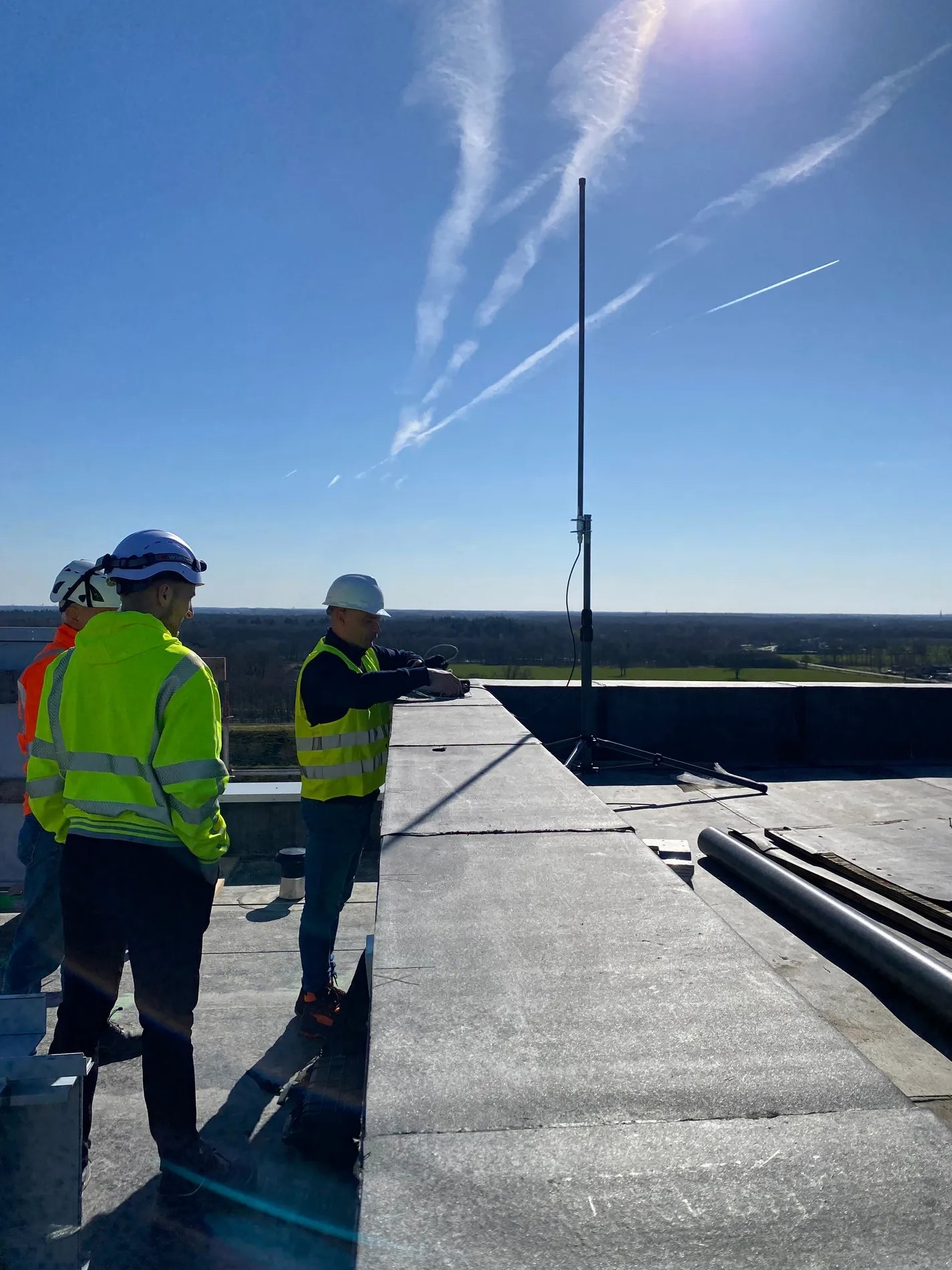
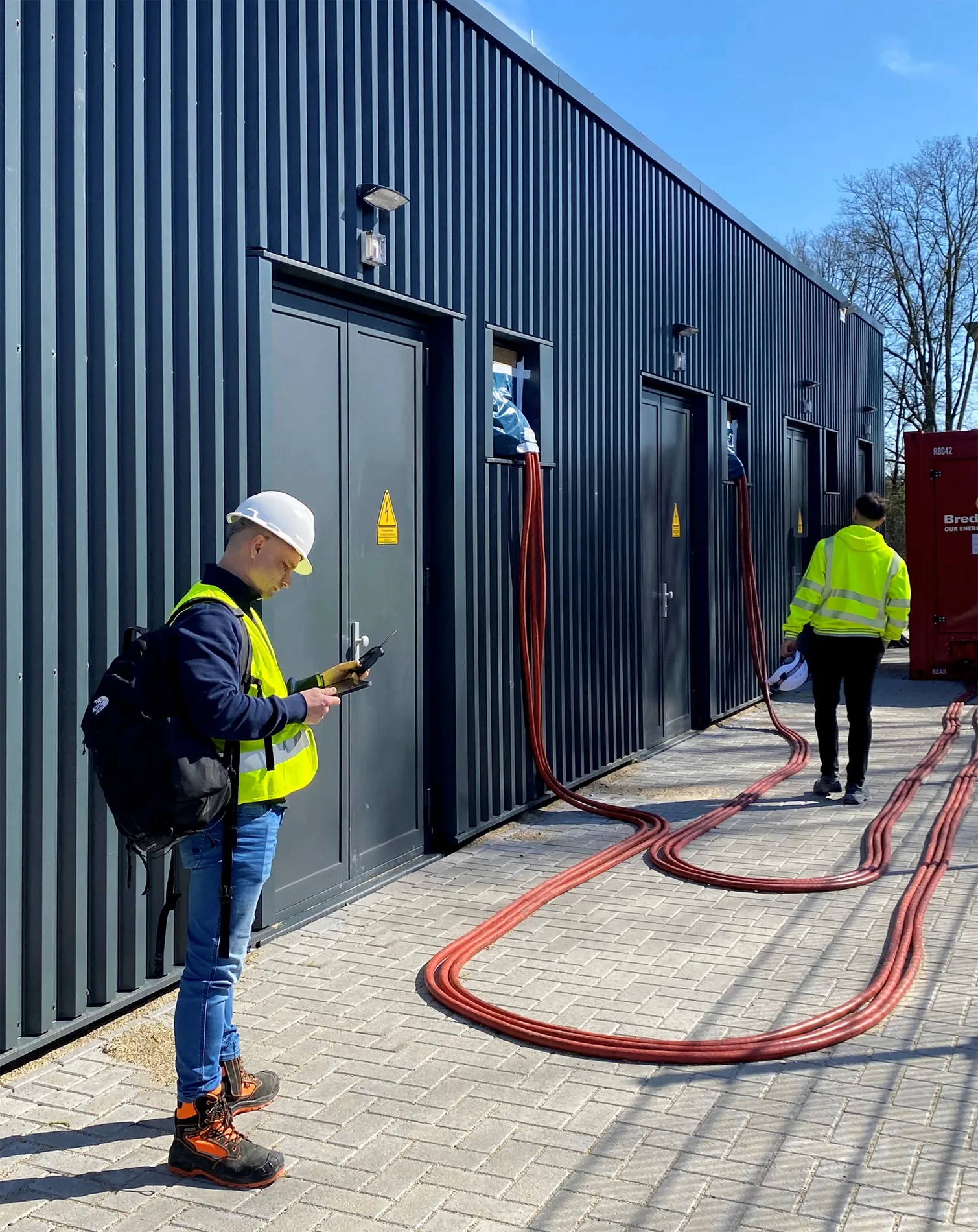
HBI Bisscheroux is supplying around 1,000 emergency lighting luminaires for ETZ Elisabeth, including two gateways for wireless monitoring: one for the acute care centre and one for the clinical building. The gateway’s wide coverage also ensures stable communication with the energy building 350 metres away, says Rijpkema. “Recent field tests have proved this.” Using HBI Bisscheroux’s Sqippa Online IoT monitoring platform, ETZ Elisabeth will be able to see at a glance where any faults are occurring. “The system sends an update on the status of the luminaires three times a day, measuring 18 relevant data points. These range from battery status to functional and duration test information. As LoRaWAN CO2 sensors, smoke detectors, kWh meters and water meters can also be included as required, Sqippa Online provides an integrated solution with a significant impact across the entire new-build project.”
The emergency lighting luminaires are delivered just in time and directly to the required location via Electro Groothandel Snoeck. All luminaires for a particular floor or zone are clearly marked, Rijpkema explains. “This allows us to work with the wholesaler to ensure excellent site logistics, while ULC Installatietechniek always has a clear overview and installers are never left short of materials.” Over the coming months, Rijpkema and ULC Installatietechniek work planner Quinten Marinus will continue coordinating the implementation of Sqippa Online and the handover of the installation.
A business enquiry for HBI Bisscheroux? Get in touch
Companies in this story

Keep following this
Get an email when a new story is published. No account needed.
- ThemeBuilding electrical systems
- SubjectBuilding services engineering
- CompanyHBI Bisscheroux