Acoustic screens that look the part
Text Desiree PenningsImage ModuBar
A noise-control solution for every building
Acoustic screens around air-conditioning units, heat pumps, air handling units and other equipment do not just have to be practical, they can look good too. After all, appearance matters. ModuBar therefore offers made-to-measure screens in a range of designs.
All ModuBar screens are custom-made at its factory in Poeldijk. The factory is also home to an experience centre where installers, architects and consultants can see the options for themselves and find out how the screens are made. Broadly speaking, there are two solutions to choose from: the Noise-Reducer and the Kokowall HA-Minwol variant. The former is an acoustic screen with an absorptive layer, rock wool and PE fleece, finished with a plastic separator in the required colour. The Kokowall HA-Minwol acoustic screen is finished with coconut fibres, making it ideal for supporting climbing plants. Both types of acoustic screen are suitable for various bases, such as concrete roof structures, concrete feet and ground-mounted foundations.
In the heart of the city
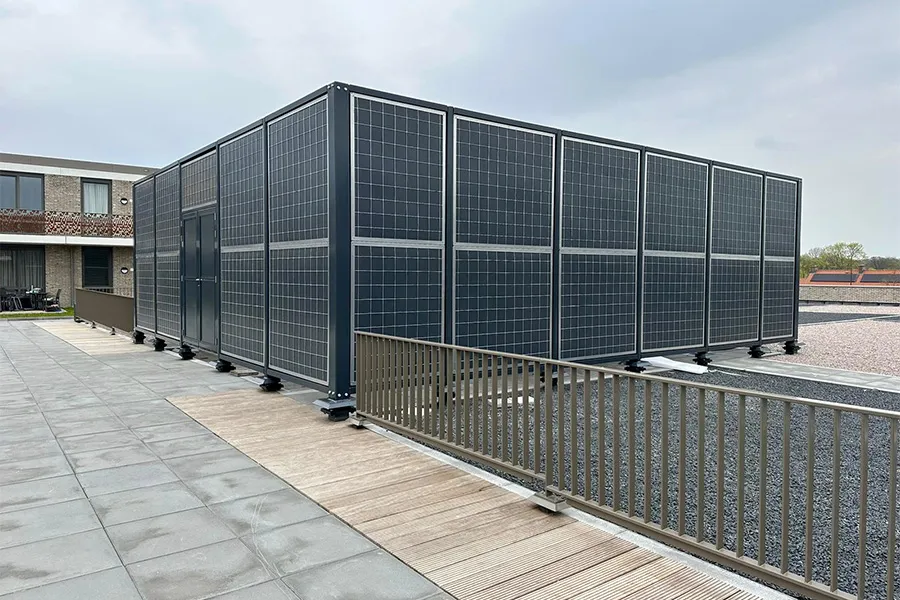
The Noise-Reducer is most commonly used on rooftops, as its colour and design are well suited to this setting and the screens are maintenance-free. Earlier this year, for example, ModuBar installed an acoustic screen on the roof of a temporary building at the Universiteit van Amsterdam. “The client had provided a steel structure for the equipment. We incorporated it into our design so that we could install the panels on the roof later,” says project manager Arjan Kick. The screen was three metres high and made from coated anthracite steel sheet. Kick says: “The building was right in the city centre, and the work had to be carried out on a Saturday using a tower crane. We had nearly a hundred panels to install in a single day. It was quite a special project.”
Following curves
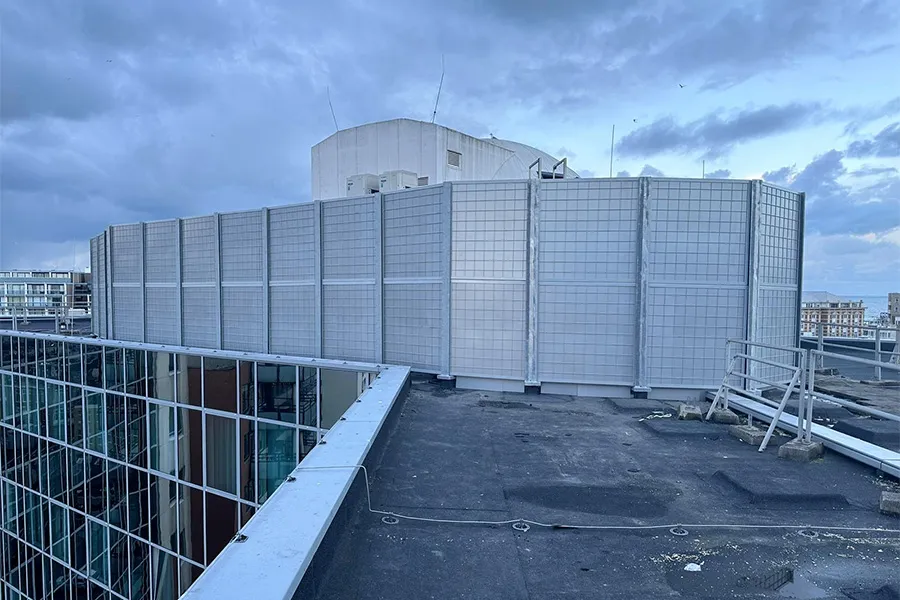
ModuBar demonstrates that custom designs are certainly possible at the Fletcher Hotel in Scheveningen. There, the screens on the roof had to follow the curves of the building. The area covered was 36 metres long, with screens three metres high, says Kick. “We supplied some of the panels in a specific colour. We first developed the design in 3D, so the client could see exactly what it would look like.”
For housing too
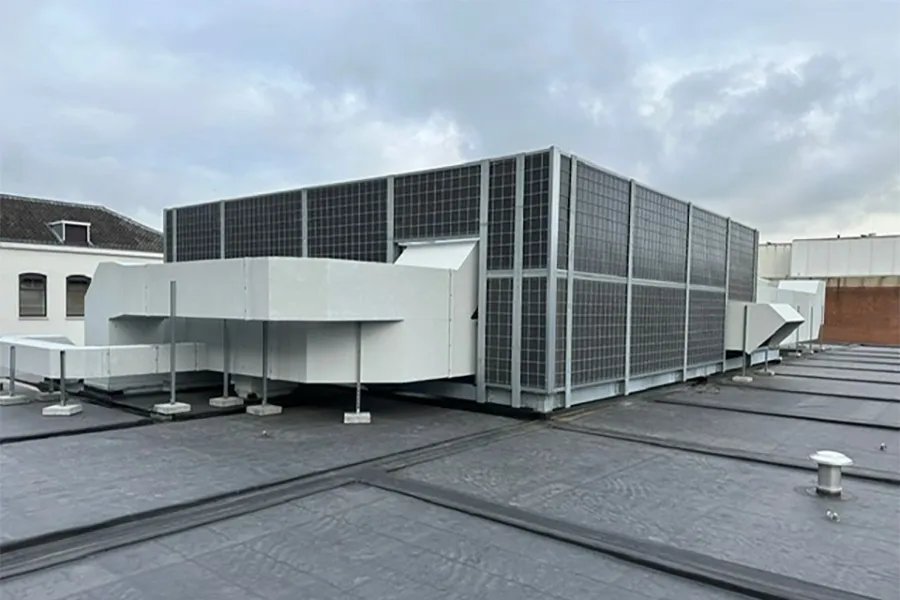
The screens are installed not only at businesses and institutions, but also at homes. For example, screens were installed on the roof of the De Boei apartment complex in Emmeloord this spring. They were fitted between the existing steel structure. “In new-build and renovation projects, equipment is increasingly being installed on rooftops. This equipment makes noise, and we solve that problem. We offer panels with different levels of rigidity and sound absorption. There are also many finishing options,” says Kick.
ModuBar is happy to advise on the available options and the different acoustic screens. Working with the installer, it assesses how much clearance is needed around the equipment and what requirements the screens must meet. You cannot simply install an enclosure around a unit without taking account of cold-air discharge, airflow and other factors. If ModuBar can provide advice early in a project, equipment can be positioned and screened off to best effect.
Question about this story? Ask your question
Keep following this
Get an email when a new story is published. No account needed.
- SubjectGeneral