Acoustic screens are increasingly becoming part of building design
Text Lieke BousemaImage ModuBar bv
A functional and aesthetic solution to noise nuisance
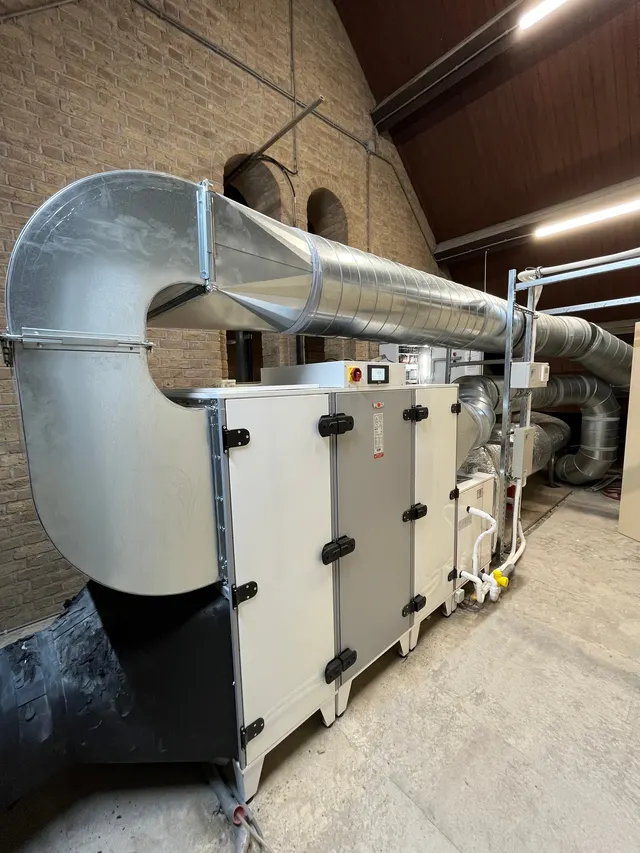
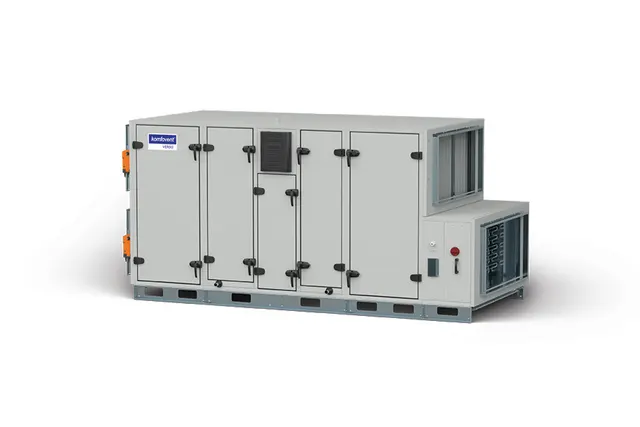
From residential buildings to offices, schools, healthcare buildings, hotels, shops, libraries, government buildings and multi-purpose centres: the Netherlands is a highly urbanised country. Noise must be carefully considered not only in new-build projects, but also in renovation and conversion projects involving the installation of new heat pumps, air handling units, air-conditioning units or ventilation systems. “Although building services are becoming quieter, the noise problem has not yet been solved,” says project manager Arjan Kick of ModuBar bv. “Even in 2026, noise remains a hot topic. Our modular acoustic screens provide an effective and attractive solution. They deliver high levels of sound absorption and sound insulation, allowing building owners to run their equipment at full capacity while still meeting all noise requirements. Our acoustic screens are also highly attractive in terms of both appearance and cost.”
Whereas acoustic screens were often installed retrospectively in the past to address noise complaints, they are now increasingly being incorporated into designs and specifications as a preventative measure, Kick notes. “This is a positive development, as it means the design and noise-reduction solutions can be perfectly aligned, both aesthetically and structurally.”
An attractive, cohesive appearance
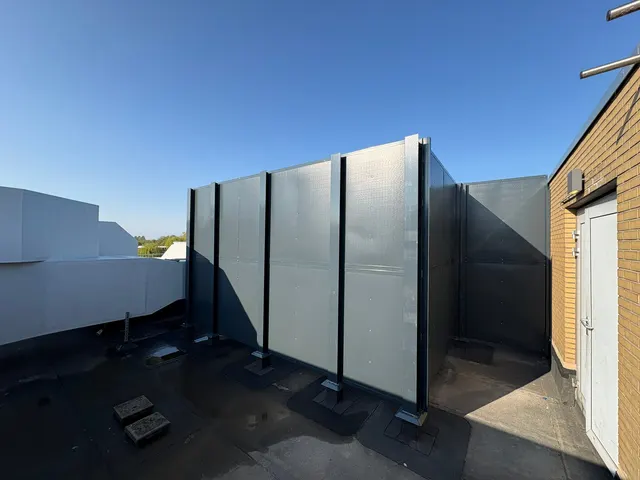
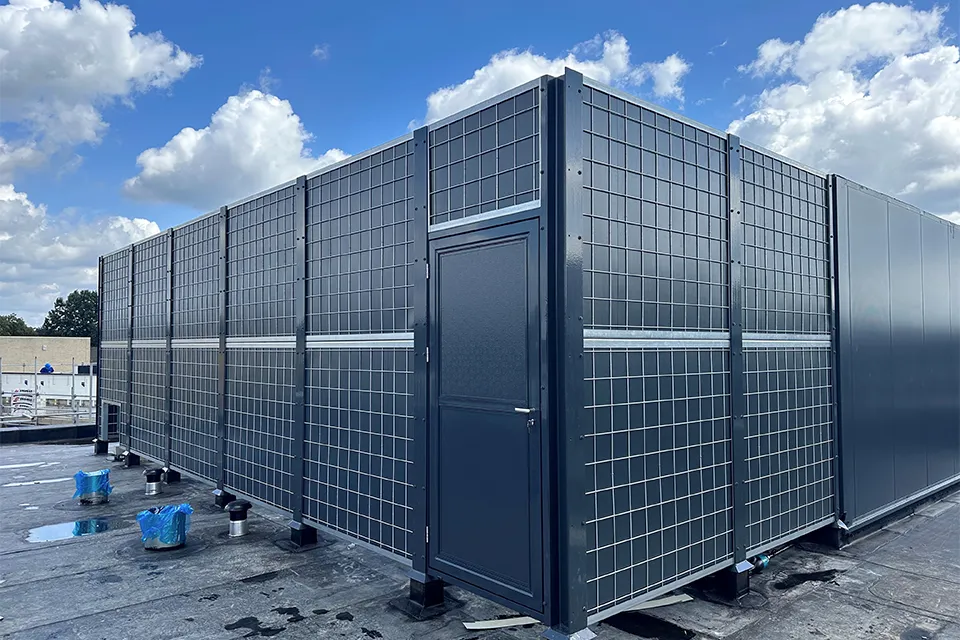
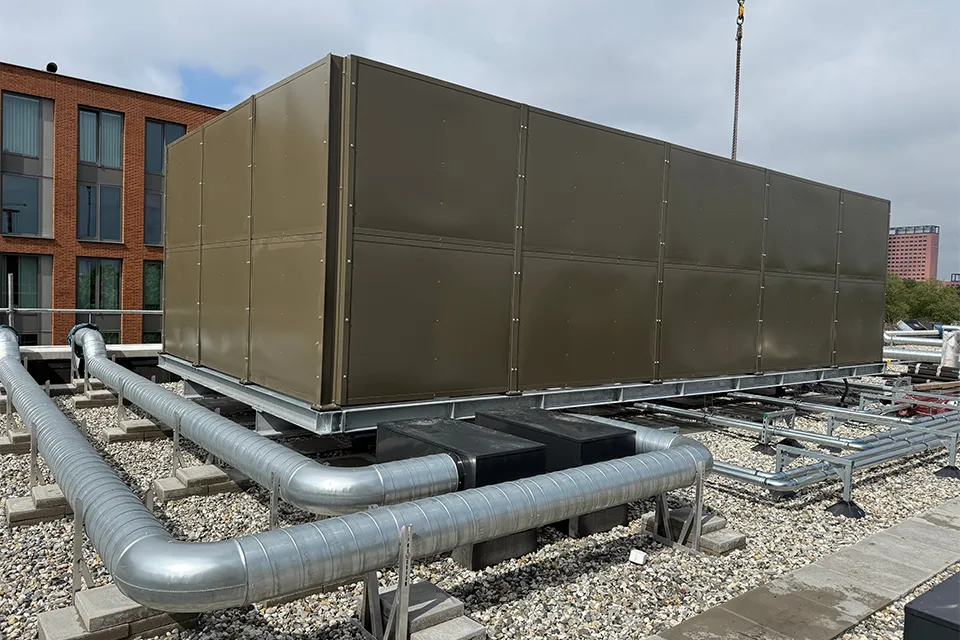
ModuBar bv’s acoustic screens can be assembled modularly, making it possible to create a suitable, effective solution for any roof and project, he explains. “The starting point is always a galvanised or powder-coated steel frame, fitted with ready-made panels. Each panel has an inner layer of absorbent mineral wool, which provides high levels of sound absorption and sound insulation.” The panels are finished with a plastic PE net and steel mesh, while the rear is supplied as standard with a coated flat steel sheet. Zinc standing-seam panels, corrugated sheets and trapezoidal profile sheets are also available. “These are all materials also used for façade finishes, creating an attractive, cohesive appearance.” ModuBar bv also offers panels made with recycled plastic tubes and coconut fibre, which provide an excellent surface for natural vegetation to take hold. The column sections, frames and acoustic screens are available in a wide range of RAL colours.
A wide range of installation options
As with the choice of materials, architects, contractors, building services installers and end users also have a wide range of installation options, depending on the building and roof structure. “On concrete wide-slab floors, acoustic screens can be easily bonded to the roof structure using chemical anchors,” says Kick. “Another interesting option is to bolt the column sections to the existing or new steel structure. For screens up to 2.0 metres high, freestanding concrete blocks can also be installed and the column sections fixed to them. Screen height, air circulation and airtightness are carefully determined in consultation with the building services contractor. This means we can provide a functional and aesthetic solution for every situation.”
Question about this story? Ask your question
Keep following this
Get an email when a new story is published. No account needed.
- SubjectAir handling