Leakage in rotary heat exchangers: an inevitable but manageable phenomenon
Text Lieke BousemaImage WOLF Energiesystemen
Rotary heat exchangers play a crucial role in modern air handling systems, efficiently recovering heat and moisture. However, their use always entails some degree of leakage, says Jimmy Dequeecker, Air Handling & Ventilation Adviser at WOLF Energiesystemen. “This is an important consideration for designers, consultants and installers, as leakage affects the air quality and energy efficiency of a system.” This article looks at the three main causes of leakage and how they can be controlled.
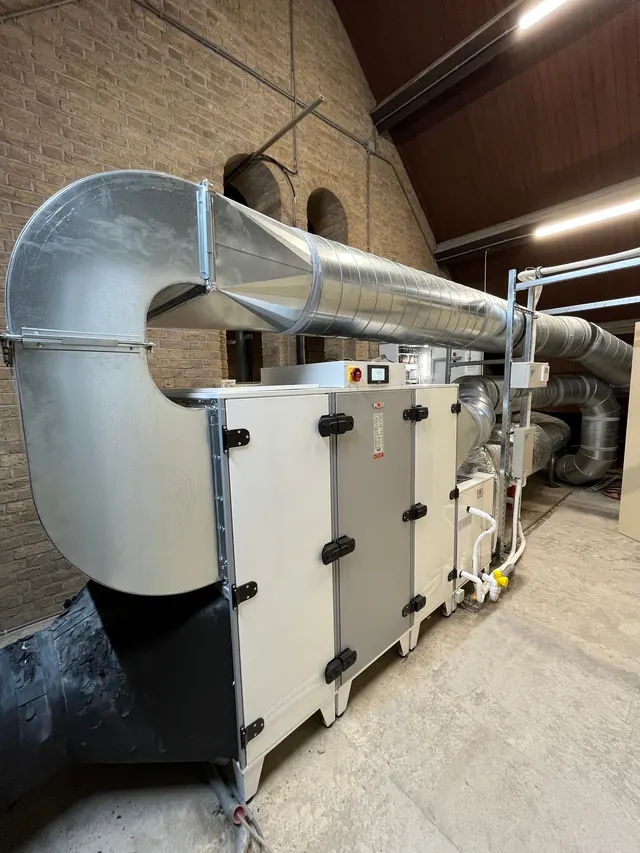
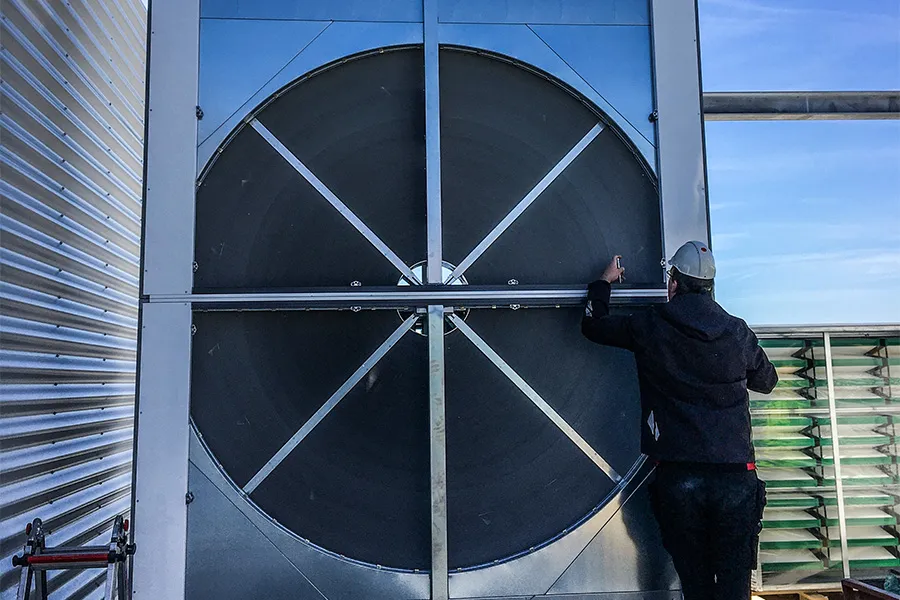
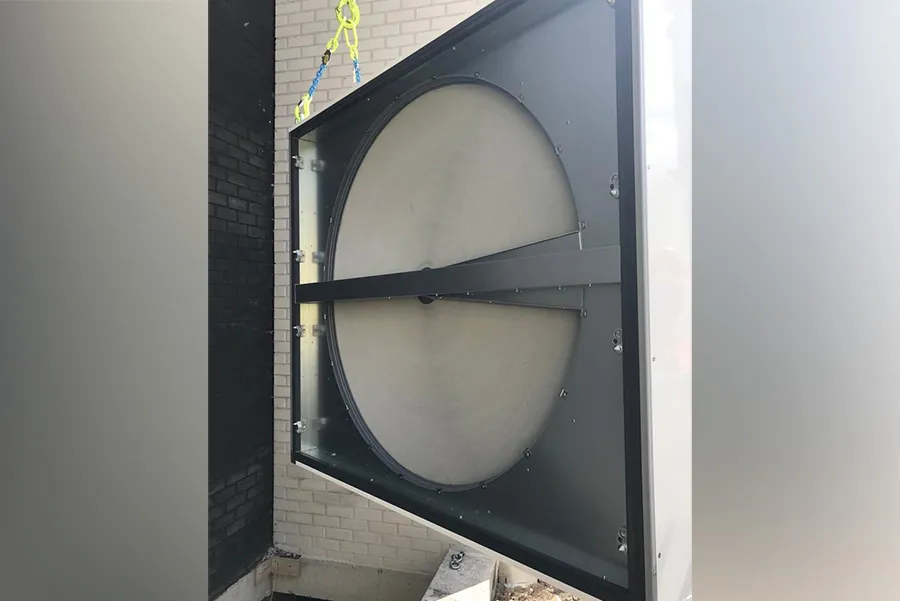
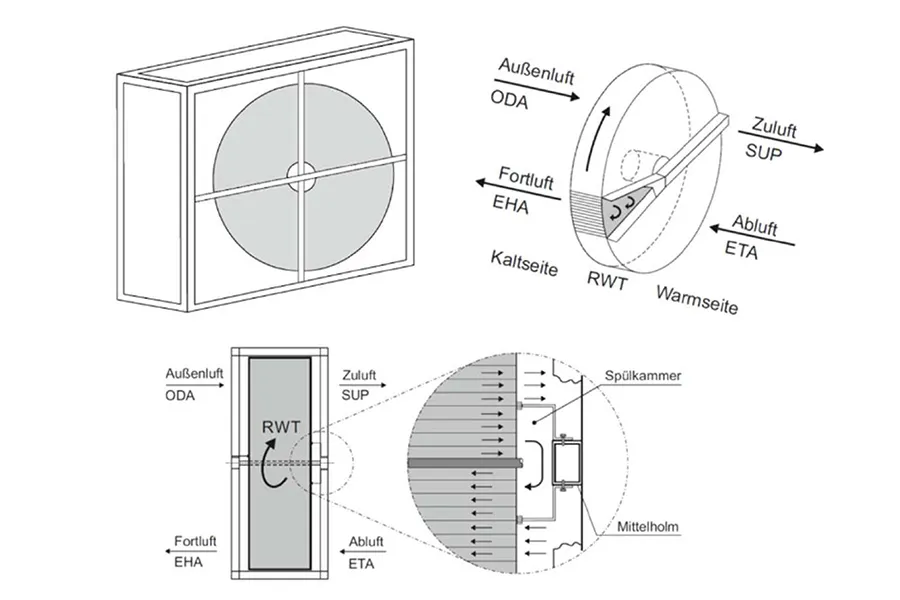
Dequeecker begins by explaining the basic principle of a rotary heat exchanger. “A rotary heat exchanger is a round wheel made up of an aluminium fin pack on the supply and extract air sides. The section in the extract air stream is warmed by the warm extract air, then rotates into the cold supply air stream to transfer that heat.”
Leakage past the seal
Every rotary heat exchanger has a seal to separate the air streams, he explains. “However, it is practically impossible to achieve a completely airtight seal while allowing the wheel to rotate. In practice, a balance is therefore always sought between minimising leakage and ensuring the wheel rotates smoothly. There is always a pressure difference between the supply and extract sections, which causes leakage.”
A rotary heat exchanger has a front and a back, so leakage can occur both from the extract air to the supply air and from the fresh air to the exhaust air. “We use the abbreviation EATR (Extraction Air Transfer Ratio) for leakage from extract air to supply air,” says Dequeecker. “Leakage from fresh air to exhaust air is referred to as OACF (Outdoor Air Correction Factor).” OACF is important for energy efficiency. “The greater the transfer of fresh air to the exhaust air, the harder the supply fan has to work to deliver the required fresh-air flow rate.”
EATR is important because the proportion of fresh air supplied by the supply fan should be as high as possible. “Any transfer from extract air to supply air is effectively wasted air,” says Dequeecker. “Leakage also occurs along the outer edge of the rotary heat exchanger, and in its bypass. In this case, the outdoor air is not heated and the extract air is not used to heat the wheel. A seal that is as airtight as possible therefore ensures higher rotary heat exchanger efficiency.”
EATR and OACF are defined in EN 16798-3:2017 and EN308:2022:
Where:
- qm,SUP is the airflow rate of the supply air leaving the heat recovery unit;
- qm,SUPnet is the airflow rate of the supply air leaving the heat recovery unit and the outdoor air entering the heat recovery unit;
- qm,ODA,HR is the airflow rate of the outdoor air entering the heat recovery unit;
- qm, SUP, HR is the airflow rate of the supply air leaving the heat recovery unit.
Transfer through the rotary heat exchanger itself
Air can also be transferred through the rotary heat exchanger itself, in addition to leakage past the seal, says Dequeecker. “Because a rotary heat exchanger is not infinitely thin, some extract air will always be carried over into the supply air. This is clearly undesirable, but can be prevented by using a purge sector or purge chamber.” The purge sector flushes the portion of extract air that would otherwise be carried over with the fresh outdoor air, preventing it from entering the supply air. “WOLF Energiesystemen includes a purge sector as standard wherever the pressure conditions in the system allow it, which is the case in most situations.”
Odour transfer
Another form of leakage is odour transfer, which is often undesirable in an air handling system. “Odour transfer can be caused by air leakage itself, but even when we do our best to minimise leakage in all the ways described above, a rotary heat exchanger can actively transfer odours. For example, through its coating.” Some rotary heat exchangers are coated to improve moisture transfer, Dequeecker explains. “That is often highly desirable, and should be encouraged. However, certain coatings, such as silica gel coatings, absorb molecules that are large enough to transfer odour molecules as well. Depending on the odours in the extract air, this is often strongly inadvisable. I would even recommend no longer using these types of systems. More modern technologies, such as a zeolite coating, which WOLF Energiesystemen also uses, absorb such small water molecules that virtually no odour molecules are transferred.”
Managing leakage: pressure ratios and selection
The degree of leakage is determined not only by the quality of the seal, the purge sector and the type of coating, but also by the pressure ratios within the system. “An excessive pressure difference between the extract and supply air streams can also increase leakage,” concludes Dequeecker. “That is why selecting the right air handling unit is essential to prevent unwanted mixing of air. Paying attention to the correct positioning of the fans and other components can prevent a great deal of leakage while increasing efficiency. It is therefore important to rely on indoor climate experts to make an informed choice of air handling unit.”
A business enquiry for WOLF Energiesystemen? Get in touch
Companies in this story
Keep following this
Get an email when a new story is published. No account needed.
- ThemeHealthy indoor air
- SubjectAir handling
- CompanyWOLF Energiesystemen