The ideal humidity for people and materials
Text Desiree PenningsImage Condair

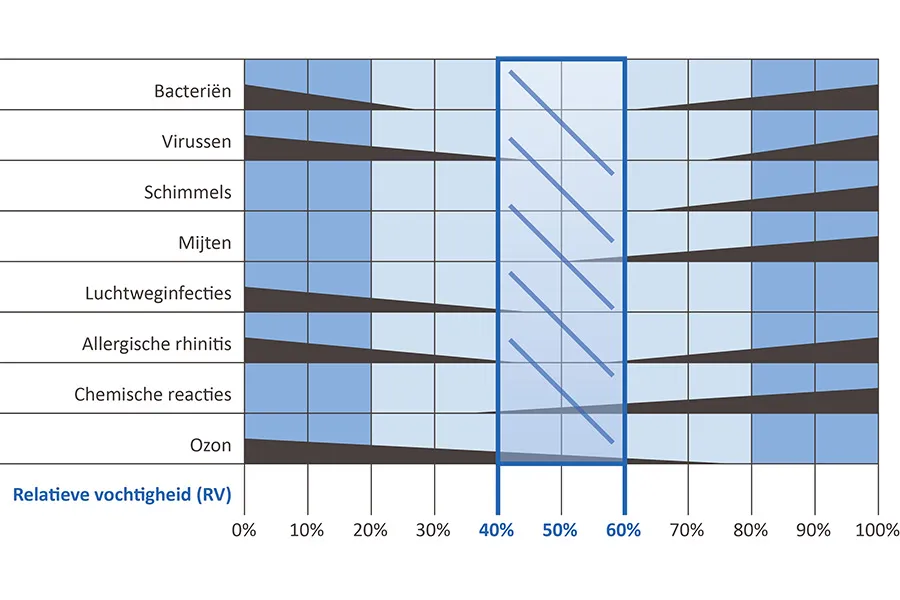
Did you know that people function best at a relative humidity of between 40 and 60 per cent? And that this level is also best for most products? This gives viruses, bacteria, mould and even pollen the least chance to spread. Condair is the world market leader in commercial and industrial humidification and dehumidification. The company has found that humidity is often overlooked when it comes to indoor climate.
Indoor air in buildings is often too dry, for example because of air-conditioning systems and the heating of cold outdoor air. Pollen, bacteria and viruses then remain airborne more easily and can spread more effectively. Research by Yale University shows that dry air has a direct impact on our bodies. Low humidity can weaken the immune system, making us even more susceptible to infections. Dry air can also damage our airways and cause dry skin, dry eyes and headaches.
A solution for every need
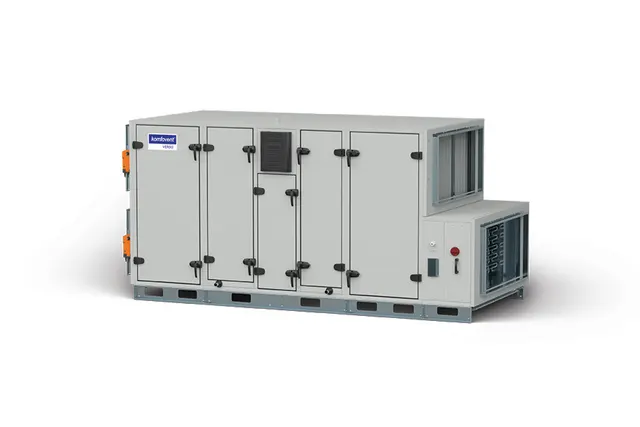
Hospitals are another example of how humidification helps prevent infections. It is widely used in operating theatres and hospital wards, for instance. Stefan Rijsmus, marketing manager at Condair, says: “Your mucous membranes work better at the right humidity, but humidity is also important for preserving products. Just look at museums, where collections need to be kept under the right conditions. We supply products for industry, offices, hospitals, museums and schools. Thanks to our extensive range of humidification and dehumidification systems, we have a suitable solution for every application.”
Small and large
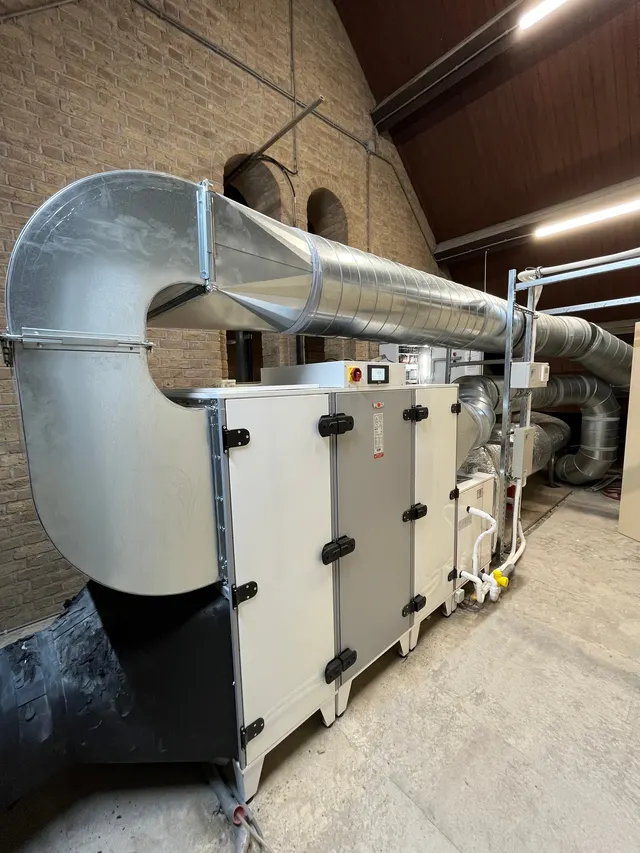
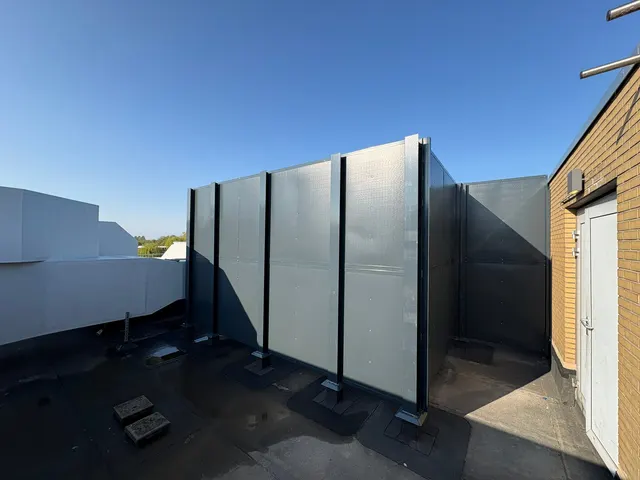
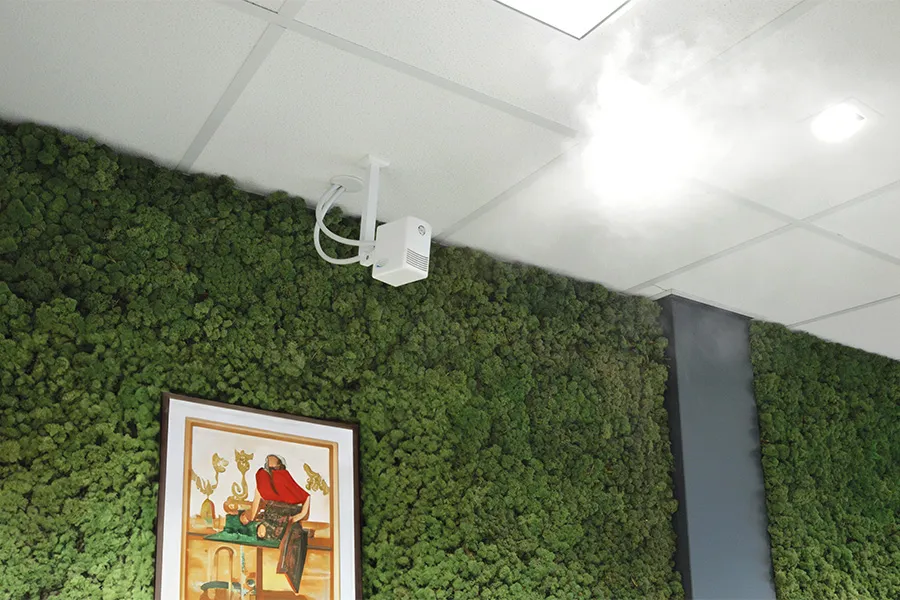
Opening a window or door does not improve relative humidity. It is linked to the indoor temperature, which often remains fairly constant. The only real solution is to add moisture to, or remove it from, the space. Which product Condair supplies depends on the customer's requirements and the environment in question. “Our range includes small and large systems, and we also hire out products to businesses that are temporarily based somewhere. For museums, we have mobile systems, because you cannot simply drill into the walls of listed buildings,” says Rijsmus.
Cold water
Condair supplies humidifiers that use either steam or cold-water atomisation, Rijsmus explains. “Air can be humidified with steam, but that uses more energy. Cold-water atomisation better meets the sustainability requirements now being placed on buildings. We use water that has been purified and is 100 per cent hygienic. The systems are also fully hygienic and certified, just like steam systems.”
Humidifiers are needed more often, but sometimes the air needs to be dehumidified instead. If it is not, and humidity is too high, mould can develop and bacteria and viruses can multiply more easily. It is therefore always important to keep humidity between 40 and 60 per cent, whatever the starting point.
Whichever system the customer chooses, Condair develops its humidification systems in-house and also manufactures them. If the customer chooses a Condair Draabe system with the full-service maintenance concept, the company can even provide a lifetime guarantee. “Because we maintain the systems ourselves, customers do not have to worry about a thing,” says Rijsmus.
Een zakelijke vraag aan Condair BV? Get in touch
Companies in this story
Keep following this
Get an email when a new story is published. No account needed.
- ThemeHealthy indoor air
- SubjectAir handling
- CompanyCondair BV