Smart building automation for today and tomorrow
Text Lieke BousemaImage Webeasy
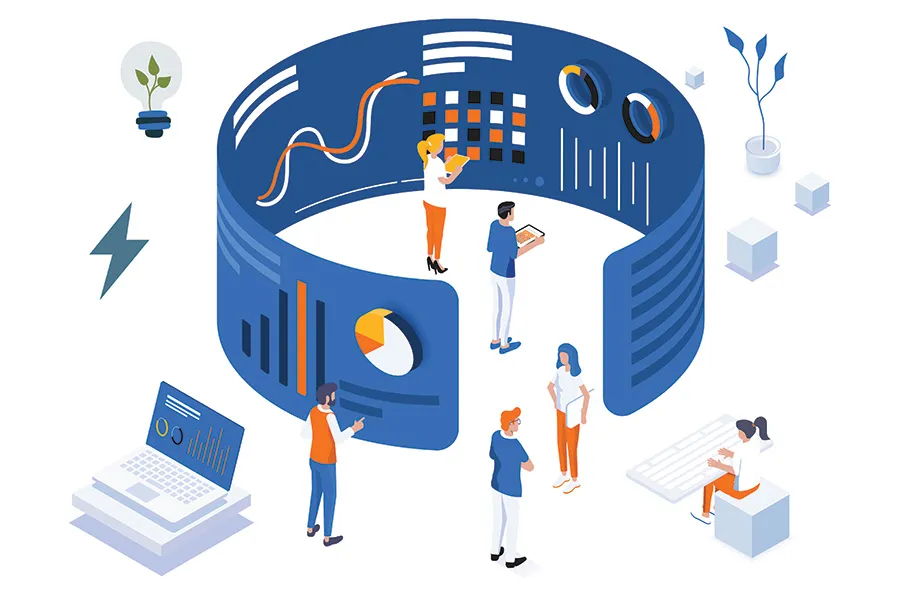
The future of smart buildings starts today. At least, that is Webeasy’s view. The Building Control specialist is putting its weight behind Smart Buildings: buildings where smart, innovative technologies and sensors come together to improve comfort, optimise use, reduce energy consumption and minimise energy losses. They also help meet increasingly stringent legislation and regulations. R&D Manager Ronald Breijer identifies three key themes: Energy, People, and Cloud & IoT.
Energy: from management to smart integration
The energy transition is prompting building management systems (BMS) to be expanded with energy management systems (EMS) more and more often. “At present, BMS and EMS still often operate as separate silos,” says Breijer. “But if you want to control systems more intelligently and efficiently, integrating them is unavoidable.” One example is using surplus solar power to heat water. Another is charging electric cars when the sun is at its highest. “BMS and EMS can also help address the challenges of grid congestion.”
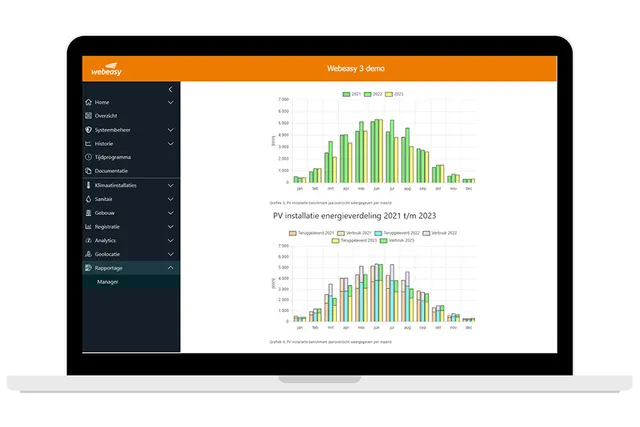
To provide insight into energy flows within a building, Webeasy has turned its attention to energy monitoring. “In Webeasy 3.2, for example, we have integrated a reporting module with benchmarking capabilities and standard reports,” says Breijer. “The EBS (Energy Registration and Monitoring System) report provides a straightforward view of current energy consumption in line with legislation. This enables building owners to make targeted savings, improve sustainability and achieve a better energy rating.” Webeasy is also working on an intelligent algorithm to balance energy supply and demand. “By analysing current generation and consumption, dynamic energy prices and weather forecasts, we can use energy even more efficiently.”
People: from user convenience to workforce opportunities
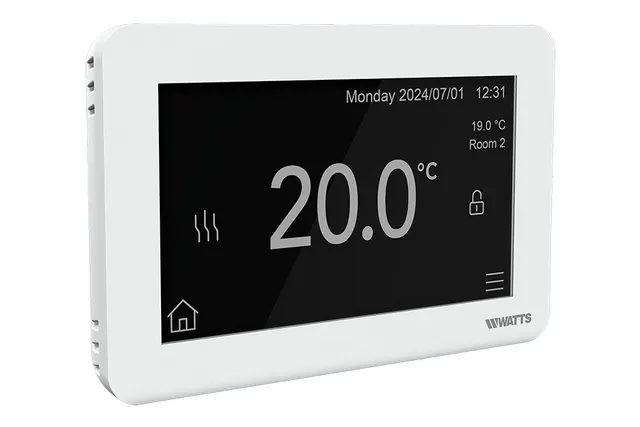
The second key theme centres on building occupants. “Generations change, and so do their needs,” says Breijer. “Personal control is becoming increasingly important. For example, users may soon be able to set their comfort preferences by zone or even by workstation. The current Webeasy Zone Control app will therefore be supplemented in the future by an even more intuitive, personalised and automated system, also with the help of artificial intelligence.”
People also means staff. “Staff shortages are a challenge, but by bringing people and AI together, we can leave routine tasks to Agentic AI. This gives our specialists more scope to focus on creative and complex issues, making their work more appealing.”
Cloud & IoT: the conductor of smart buildings
The third key theme is Cloud & IoT. “The number of smart devices in buildings continues to grow. Their intelligence lies not only in modern connectivity, but also in advanced control functions and data exchange with other systems. As a result, the building management system is increasingly becoming a ‘conductor’, coordinating the various systems.”
Virtual buildings are increasingly being developed, with the specifications and the building’s energy requirements entered into the model, says Breijer. “By adding real-time data, a building can be continuously monitored, tested and optimised. This is also known as ‘continuous commissioning’.” Webeasy plays a facilitating role in this. “We have the technology to make buildings truly ‘smart’. We can also establish cloud connections, for example with Microsoft Azure, enabling Digital Twins and Power BI to use our real-time building data.”
A business enquiry for Webeasy? Get in touch
Companies in this story

Keep following this
Get an email when a new story is published. No account needed.
- ThemeSmart buildings and controls
- SubjectBuilding automation
- CompanyWebeasy
- CompanySmart Buildings