











Compact, slim and future-ready: DUCO’s latest heat recovery solution
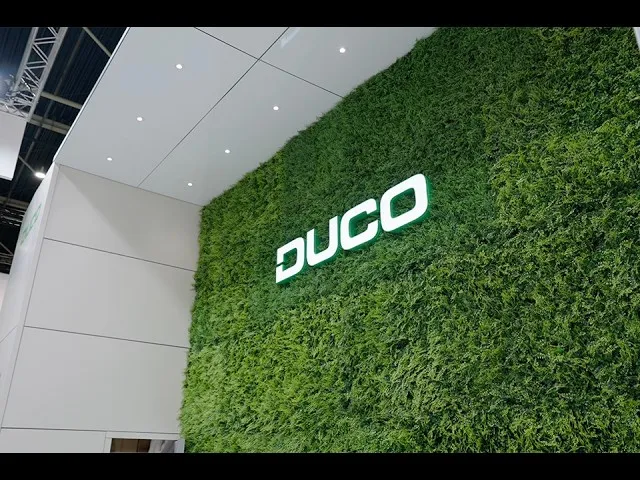
At the VSK trade fair, DUCO presented its latest innovation: the DucoBox Energy Comfort D250. This compact heat recovery ventilation unit is designed specifically for small spaces such as laundry cupboards and kitchen cabinets, and is aimed in particular at small-scale residential construction.
Alongside compactness, connectivity is a key focus. DUCO is investing heavily in smart monitoring, giving residents insight into their indoor climate and providing installers with support for maintenance and commissioning. The systems are demand-controlled using CO₂ and humidity sensors, with data used to tailor ventilation to residents’ behaviour and needs.
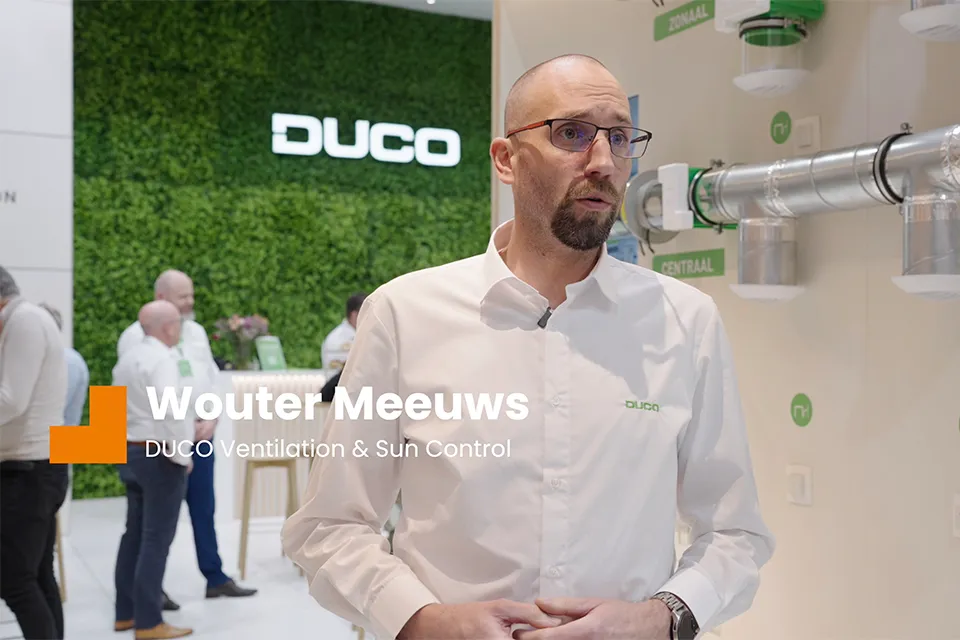
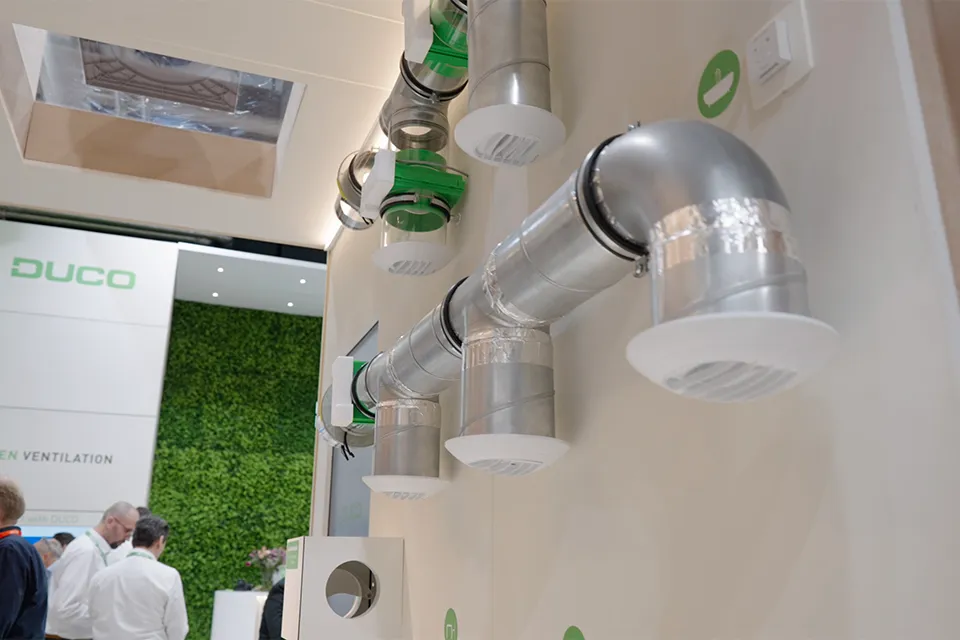
DUCO also offers solutions for renovation projects. Although improving energy efficiency with new ductwork affects residents, DUCO stresses the long-term benefits: a healthier, more comfortable indoor climate.
Full transcript
00:00:06 – 00:00:08
At this trade fair, we have launched our
00:00:08 – 00:00:11
latest development, called the Ducobox Energy Comfort D250.
00:00:11 – 00:00:13
A compact heat recovery ventilation unit,
00:00:13 – 00:00:16
specifically designed to fit in small spaces,
00:00:16 – 00:00:19
laundry cupboards, kitchen cabinets, whatever the dimensions allow.
00:00:19 – 00:00:22
And specifically aimed at small-scale residential construction.
00:00:22 – 00:00:23
We have also recently been focusing more
00:00:23 – 00:00:26
on connectivity, which is increasingly
00:00:26 – 00:00:28
important to us.
00:00:28 – 00:00:30
Why? On the one hand, we want to give residents more insight
00:00:30 – 00:00:33
into what is happening in their home in terms of indoor climate.
00:00:33 – 00:00:34
On the other hand, we also want to be able to
00:00:34 – 00:00:38
help installers understand the condition of
00:00:38 – 00:00:40
the systems they have installed in terms of maintenance.
00:00:40 – 00:00:42
We can then also
00:00:42 – 00:00:44
support them with commissioning.
00:00:44 – 00:00:48
The systems are, of course, fundamentally demand-controlled.
00:00:48 – 00:00:50
So we use room sensors for CO2 and
00:00:50 – 00:00:52
and/or humidity sensors.
00:00:52 – 00:00:53
We also capture that data, of course.
00:00:53 – 00:00:57
We also look at residents’ behaviour and where the main need
00:00:57 – 00:01:00
lies in providing good ventilation in the home.
00:01:00 – 00:01:03
In existing homes, you are dealing with a situation where
00:01:03 – 00:01:05
Read the full transcriptCollapse transcript
residents are living in the property.
00:01:05 – 00:01:07
The homes often need to be made more energy-efficient
00:01:07 – 00:01:08
with a new duct system.
00:01:08 – 00:01:12
On the one hand, this takes up space that residents have to give up.
00:01:12 – 00:01:15
On the other hand, it also causes disruption during
00:01:15 – 00:01:16
the entire installation process.
00:01:16 – 00:01:20
Ultimately, you need to convince residents that they will be better off in the long term.
00:01:20 – 00:01:22
And all of that is ultimately for
00:01:22 – 00:01:23
a healthy indoor climate.
Companies in this story

Keep following this
Get an email when a new story is published. No account needed.
- ThemeHealthy indoor air
- SubjectGeneral
- CompanyVSK







