Flat cable provides ideal foundation for EV charging stations in residential buildings
Text Lieke BousemaImage Hacar
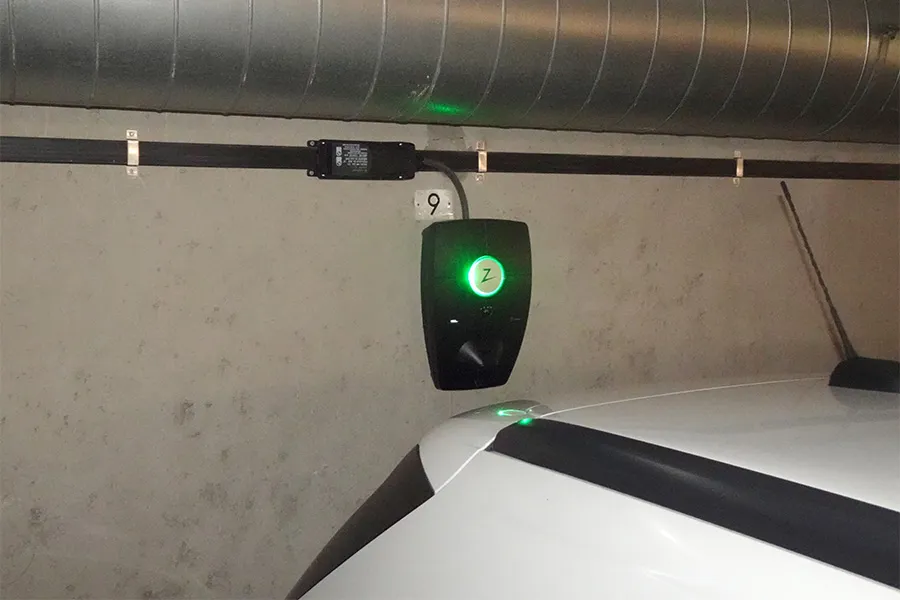
At the end of the first quarter of 2025, the Netherlands passed the 1 million mark for plug-in cars for the first time. More than one in ten cars is now fully electric or a plug-in hybrid. Whereas plug-in cars were previously driven mainly by business users, private owners have been in the majority since the start of 2025. This is also driving demand for EV charging stations in the car parks of residential buildings. Hacar, an electrical installation company serving housing associations, property managers and owners’ associations, is seeing this trend too. For these projects, it favours Isolectra’s Wieland podis® flat cables.
Challenges for owners’ associations
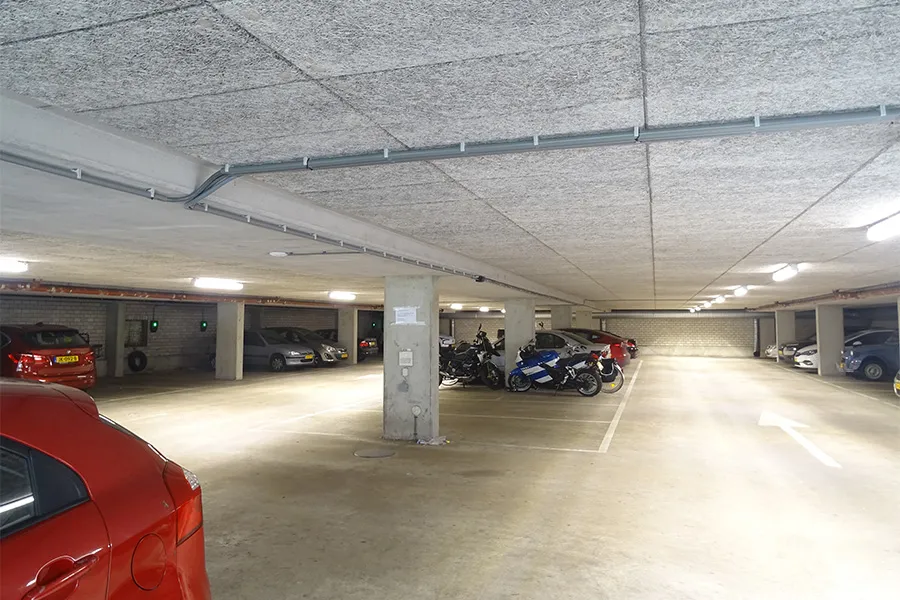
Hacar regularly installs EV charging stations for property managers, who designate one or more spaces in their car parks for this purpose. “The installations can then be carried out relatively easily,” says Eric Stevens, Commercial Manager at Hacar. “The number of charging points is determined based on the available capacity, after which the infrastructure is built using a short length of cable.” The process is much more complex for owners’ associations and residents. “Owners’ associations face a range of challenges. Not all residents have a use for the charging stations, for example, so funding often becomes a point of contention. A car park is a communal area, which means that electricity consumption is generally shared among the residents. How should an owners’ association deal with this? Residents who drive a petrol or diesel car today may switch to electric tomorrow and apply for an EV charging station. This means that new EV charging stations often have to be installed in specific spaces in the car park. After all, each resident has their own parking space. When residents move out, these charging stations must also be easy to remove. In short, flexibility is essential, and Isolectra’s Wieland podis® flat cables are an excellent solution.”
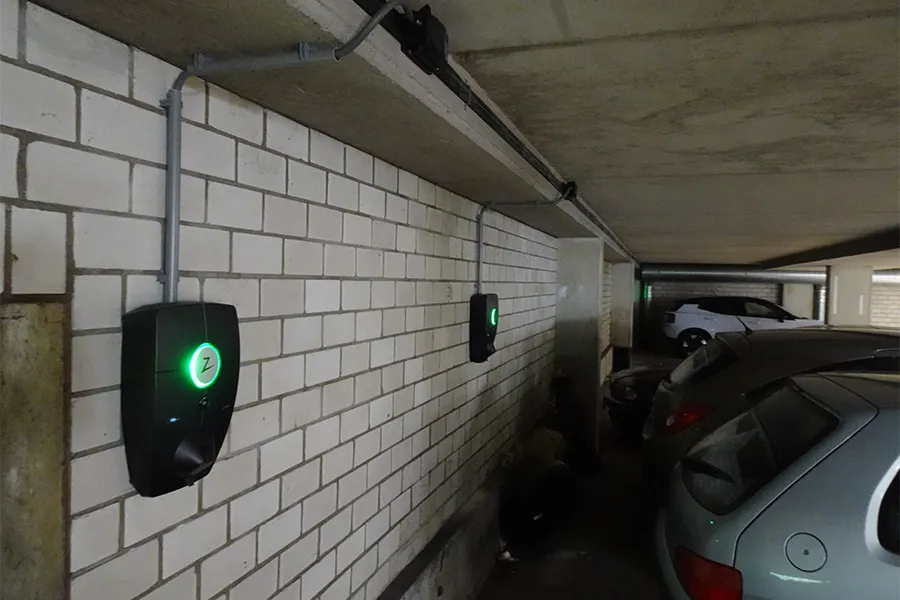
Fast installation, plenty of flexibility
At first glance, installing a flat-cable charging system seems very straightforward. However, the right expertise is needed, stresses Cor-Hein Slobbe, Senior Product Manager at Isolectra. “For example, to ensure safety. We provide support with ready-to-install systems that can be fitted easily, with limited training and no risk, and that immediately add value to the parking space and the home.” Isolectra’s decentralised Wieland flat cable enables EV installers to lay EV infrastructure in car parks quickly and easily, with the flexibility to expand it later, he says. “The connection between the electricity grid and a residential building’s distribution board (or supply panel) is usually oversized. Apartment buildings often have 3×50, 3×63 or even more amps to spare. This makes it easy to install one or more EV circuits.”
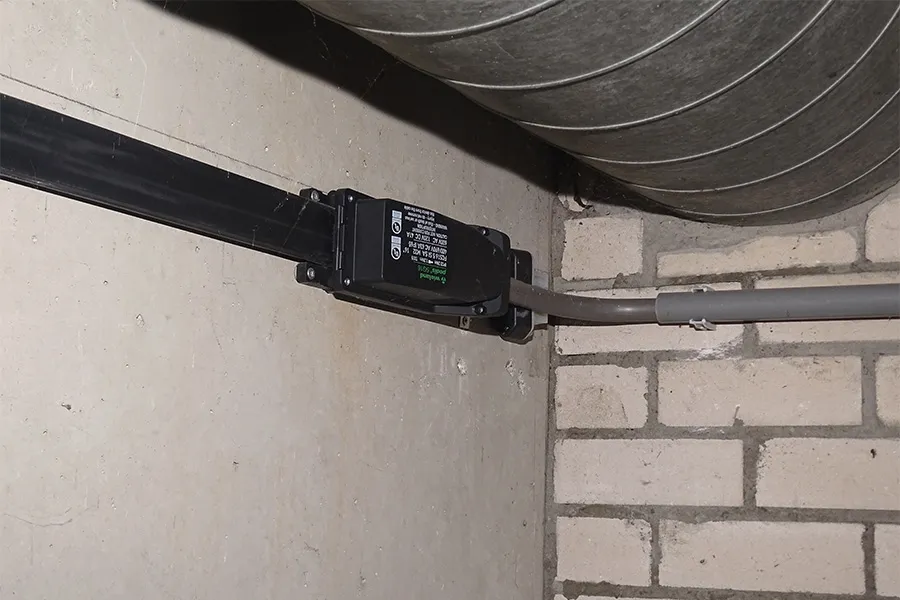
Just one flat cable
Isolectra’s decentralised, waterproof Wieland flat-cable system can connect up to twenty chargers to a single circuit. “Only one flat cable is needed for each circuit. It can be installed quickly against the wall or beneath the ceiling, without cable trays,” Stevens stresses. “Branches can then be made to the charging stations at any time and wherever required, without significant additional costs.” Slobbe adds: “Because the neutral, three-phase conductors and earth conductor lie neatly side by side in the flat cable, it is easy to pierce the cable sheath and copper conductor. This makes the concept cost-effective and flexible.”
Substantial savings
Alongside the Wieland podis® flat cable, Isolectra also supplies the associated round branch and connecting cables, mounting brackets, junction boxes and circuit end caps, including the corresponding protective devices. As all the materials are 100% pluggable, they can be installed on site even more quickly and easily. Slobbe says installation is on average 66% faster than with conventional systems. “Extensions can be completed 88% faster, and because considerably less material is needed, average savings of 30% compared with round cable are not unusual. What’s more, disruption to residents is kept to a minimum.”
Dynamic load balancing
A dynamic load balancing function continually adjusts the cars’ charging current to match the available power. This prevents the EV infrastructure from becoming overloaded, even when several chargers are connected. If required, the infrastructure can also be easily connected to renewable energy sources such as solar panels or battery storage, further reducing pressure on the grid.
Comprehensive engineering
A comprehensive engineering process always takes place before installation, during which Hacar assesses the available capacity. “We also look at the best way to install and supply the cabling,” says Stevens. “Are the existing distribution board and upstream protective devices (circuit breakers) in good condition? And what about the main switch, which must shut down the installation in an emergency? We use our findings to develop a bespoke solution.”
Hacar has now completed several installations using Wieland podis® flat-cable systems in Amsterdam. Stevens says choosing these systems was an obvious decision. “As an organisation, we know Wieland and Isolectra well. Cor-Hein also really knows his stuff. He gave us excellent guidance on engineering and installing the flat-cable systems, until we were able to carry out our projects entirely independently. Trying a new system is always daunting, but Isolectra made the implementation a very smooth process.”
Have a business enquiry for Isolectra BV? Get in touch
Companies in this story

Keep following this
Get an email when a new story is published. No account needed.
- ThemeBuilding electrical systems
- SubjectElectrical engineering
- CompanyIsolectra BV