Flat cable: the ideal basis for EV charging stations
Text Lieke BousemaImage Isolectra
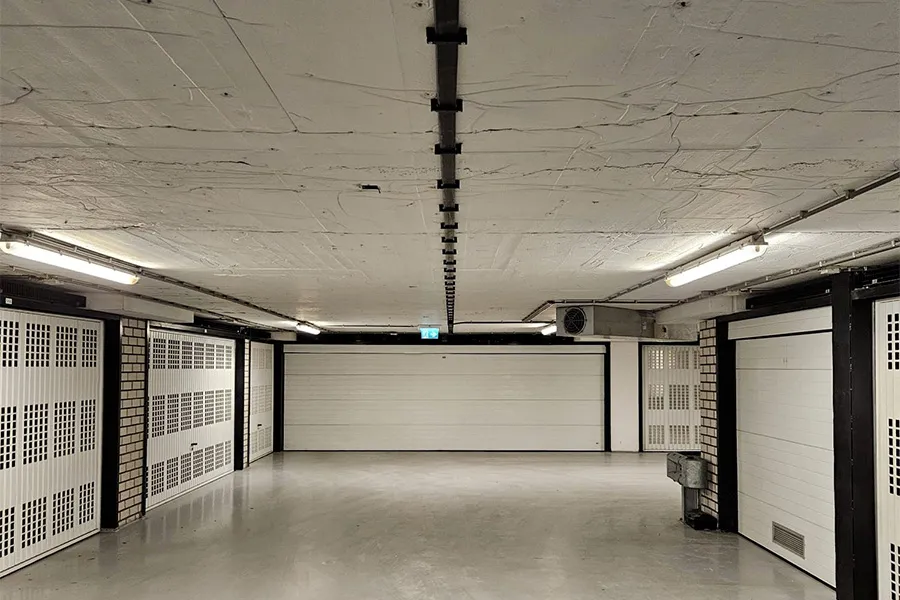
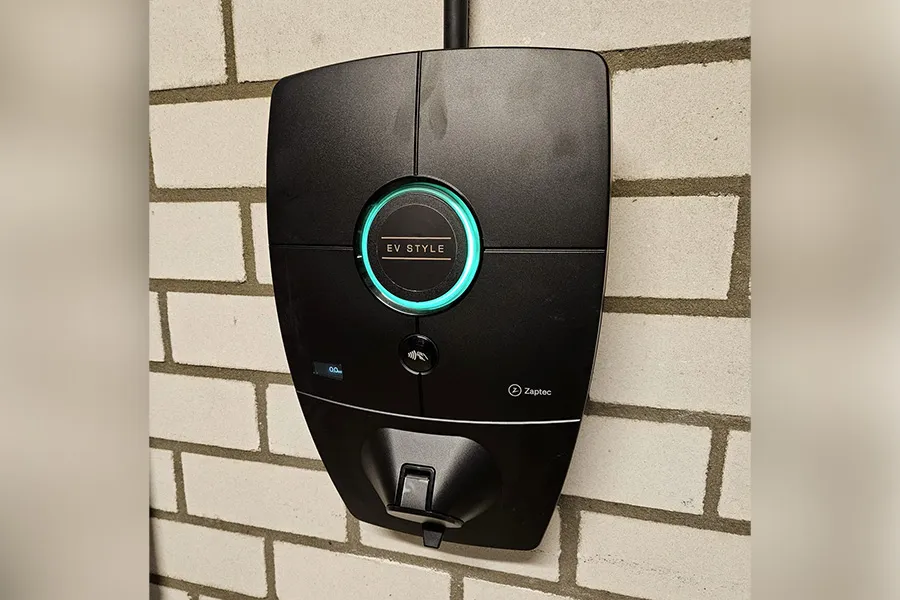
At the start of 2023, the Netherlands had more than 511,000 plug-in cars, and this number is set to rise in the coming years. The demand for EV charging stations is growing too, including in the car parks of office and residential buildings such as Hoge Erasmus in Rotterdam. EV-Style recently installed 15 charging stations on behalf of the owners’ association (VvE), and applications have now been submitted for a further 5 charging stations. Because the EV infrastructure in the car park uses decentralised Wieland flat cables from Isolectra, both installation and expansion can be completed in no time. It also requires significantly fewer cables.
Hoge Erasmus is a 93-metre-high tower on Willemsplein in Rotterdam, at the foot of the Erasmus Bridge. In addition to five floors of offices in its rectangular base, Hoge Erasmus has space for 68 luxury apartments in the tower and 360 parking spaces in a separate building. 147 parking spaces are reserved for residents. Since some residents drive electric cars and attractive subsidy schemes are now available, the owners’ association set out to find a good, smart charging solution.
A smart solution
“Owners’ associations face a number of challenges when it comes to EV charging stations,” says Robert de Leur, Manager of Work Preparation at EV-Style. “Not all residents need these charging stations, for example, which can make financing a point of discussion. A car park is a communal space, so electricity costs are generally shared among the residents. Could we offer a smart solution here in partnership with charging station supplier Zaptec?” Residents who drive a petrol or diesel car today may switch to an electric car tomorrow and apply for an EV charging station, he explains. “That is why the owners’ association was also looking for a flexible system. Isolectra’s Wieland flat cables enabled us to provide exactly that, while also making significant savings on installation materials.”
Fast installation
Wieland/Isolectra’s decentralised flat cable allows EV installers to lay EV infrastructure in car parks quickly and easily, with the flexibility to expand it later. “The connection between the electricity network and the consumer unit (or supply cabinet/distribution board) in a residential or office building is always overdimensioned,” says Cor-Hein Slobbe, Senior Product Manager at Isolectra. “Apartment buildings often have 3×50, 3×63 or even more Amps to spare. This makes it easy to install one or more EV circuits.”
Just one flat cable
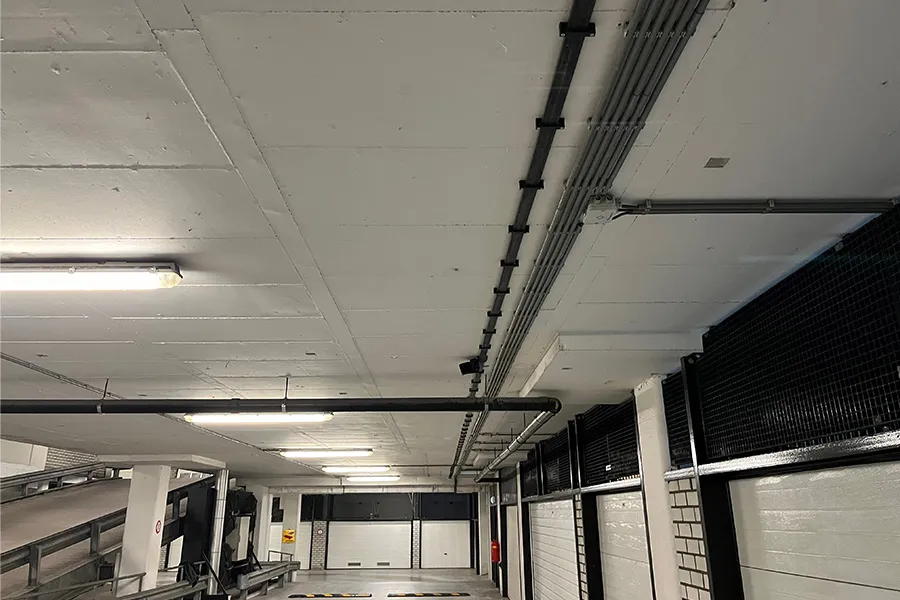
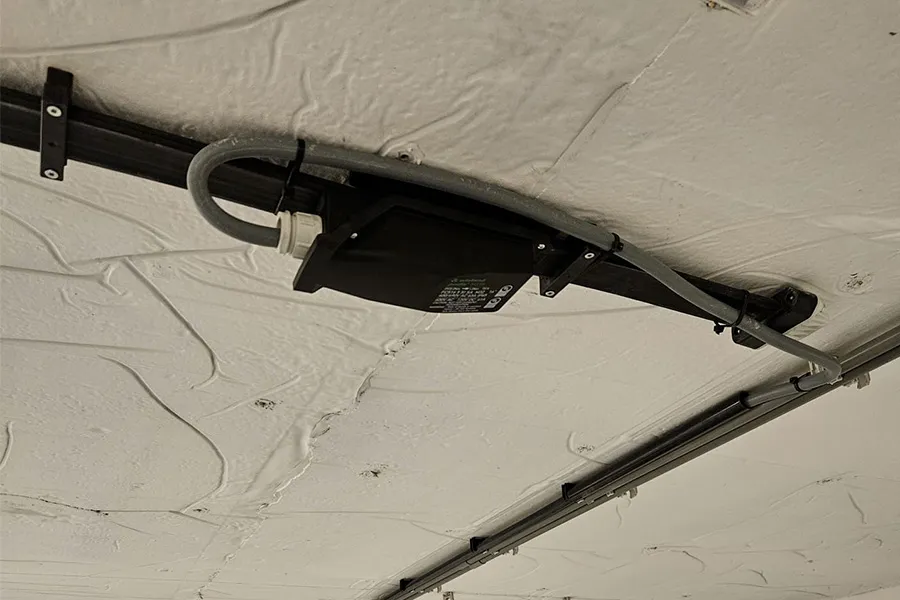
Only one flat cable is needed for each circuit. It can be installed quickly and easily against the wall or beneath the ceiling, without cable trays, says Slobbe. “Branches to the charging stations can then be added at any time and at any point. Since the neutral, 3-phase and earth conductors lie neatly alongside one another in the flat cable, it is easy to pierce the cable sheath and the copper conductor.”
With a diameter of 16 mm² per core, the 5-core Wieland flat cable is somewhat thicker than a ‘standard’ charging cable. According to De Leur, this is hardly surprising, as several cars are connected. “There are currently 15 charging stations connected in the Hoge Erasmus car park, distributed across 3 circuits of 63 Amps. A maximum of 15 charging stations can be connected to each circuit (floor).”
Significant savings
Isolectra supplied the flat cables, round supply cables, mounting brackets, coupling boxes and end caps for the 3 circuits, including the associated protection devices. Since all the materials are 100% plug-and-play, they can be installed even more quickly and easily. Slobbe says installation is on average 66% faster than with conventional systems. “Expansions can be completed 88% faster, and with considerably less material required, cost savings averaging 30% compared with round cable are not unusual.”
Dynamic load balancing
Dynamic load balancing adjusts the cars’ charging current in real time according to the available power. This prevents the EV infrastructure from becoming overloaded. Slobbe says: “Experience shows that private motorists travel around 35 km a day, while business drivers cover around 50-100 km. Those who drive further often use a rapid charger en route. This means a standard EV charging station is sufficient for most car parks. After all, the cars have the whole night to recharge.” De Leur adds: “A sub-meter continuously records all charging sessions, while the E-Flux back office ensures residents are billed exactly according to their usage.”
Lockable garage units
One challenge in the Hoge Erasmus car park is that residents do not have standard parking spaces, but lockable garage units, says De Leur. “The installation of the charging stations therefore had to be closely coordinated with residents. The EV infrastructure, using Wieland flat cable, was installed on the ceilings close to the garage units. From there, we needed just 3 metres of cable to connect to the charging stations.”
A flat-cable charging installation may seem very easy to work with at first glance. However, the right expertise is essential. Isolectra provides support with ready-to-install systems that can be fitted easily and safely with only limited training.
Have a business enquiry for Isolectra BV? Get in touch
Who worked on it
Hoge Erasmus in Rotterdam
- vlakkabels
 Isolectra
- laadstationsEV-Style
- laadpaalleverancierZaptec
Keep following this
Get an email when a new story is published. No account needed.
- ProjectHoge Erasmus
- ThemeBuilding electrical systems
- SubjectElectrical engineering
- CompanyIsolectra BV
- CompanyEV-Style
- CompanyZaptec