Four good reasons to install a battery cabinet with charging function now
Text Mark KoopmansImage Seefion B.V.
‘There’s more to it than just minimising fire risks’
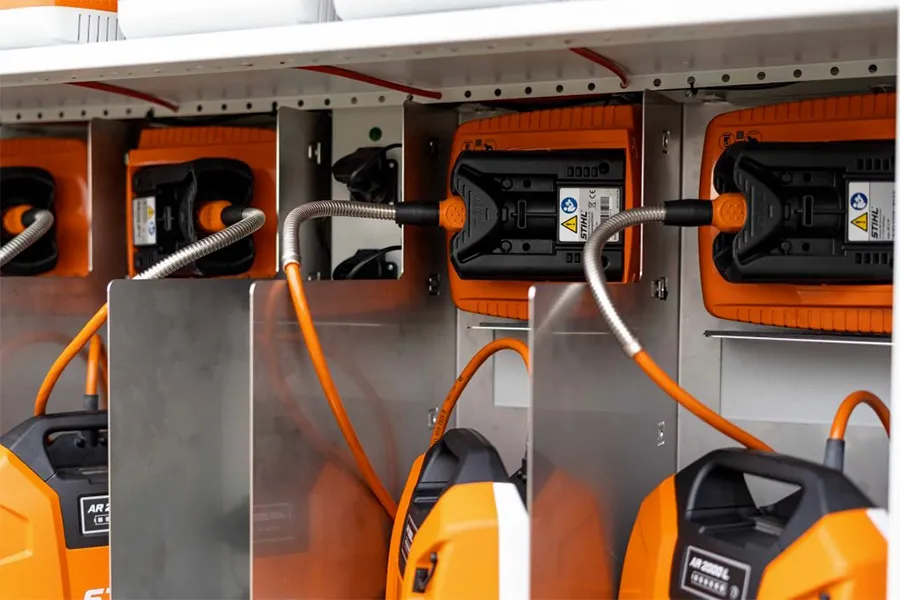
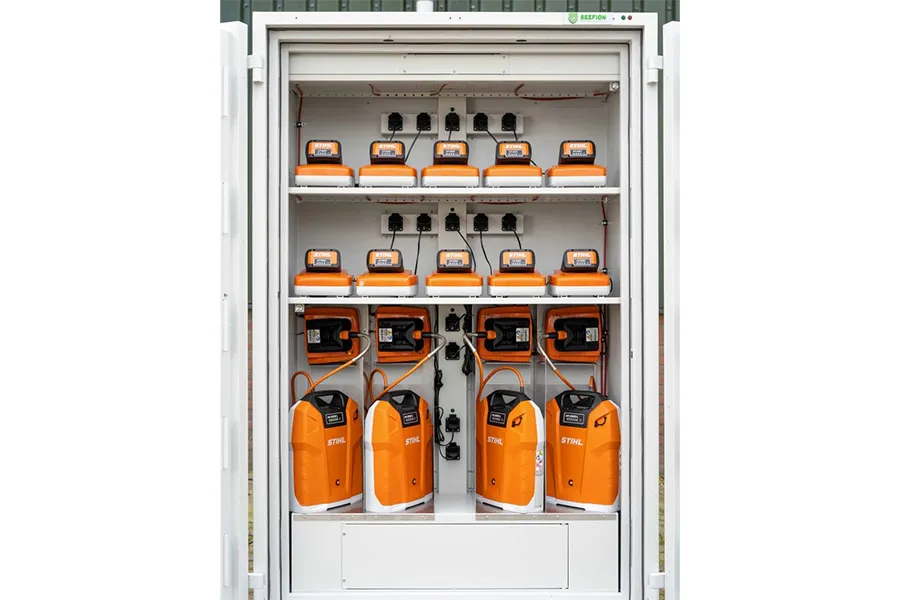
According to Remco van Kuilenburg, director of Seefion, a battery cabinet is ideally suited to minimising the risk of fires at businesses. Spontaneous ignition of Li-ion batteries while charging is a real problem. Seefion’s battery cabinets offer a safe solution for businesses in sectors such as landscaping and construction. But there’s more to it at the moment…
To gain a different perspective, we’re visiting the municipality of Den Haag today. We’re meeting Edwin van Ruijven, Coordinator of Technical Facilities at the Municipal Public Space Management Department. The department has recently installed thirteen cabinets at nine locations. What prompted the Municipal Public Space Management Department to buy these battery cabinets in the first place? And why did it choose Seefion in particular?
Safety first
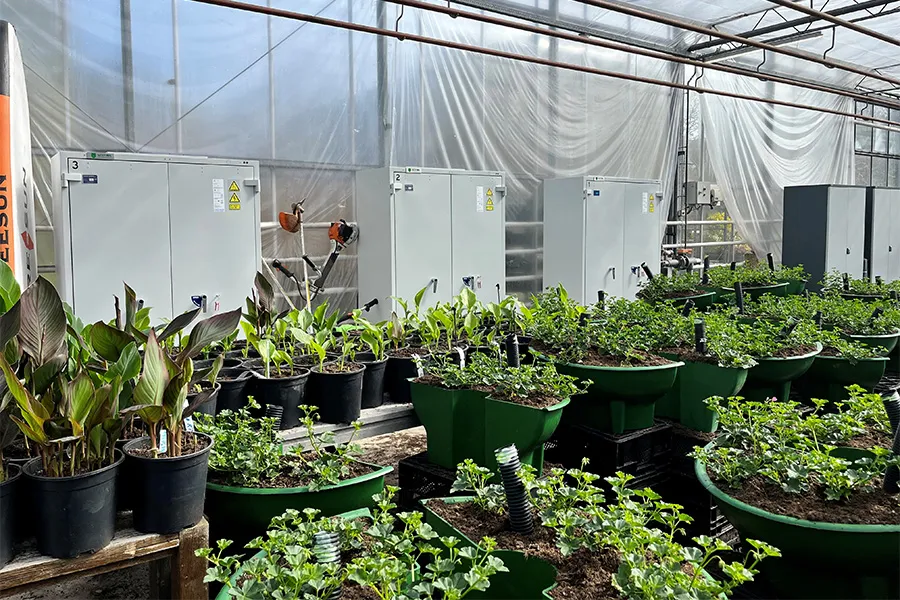
“First and foremost, the safety of our people and our buildings naturally plays a major role,” says Van Ruijven. “When charging lithium-ion batteries, we want to minimise every risk. That’s why we decided to take a proactive approach and find a solution. We had to do something, and a battery cabinet where you can store and charge your batteries is simply the safest and best solution.” Van Kuilenburg confirms this: “Seefion cabinets meet the strictest current standards, and even already comply with the forthcoming PGS-37-2 standard.”
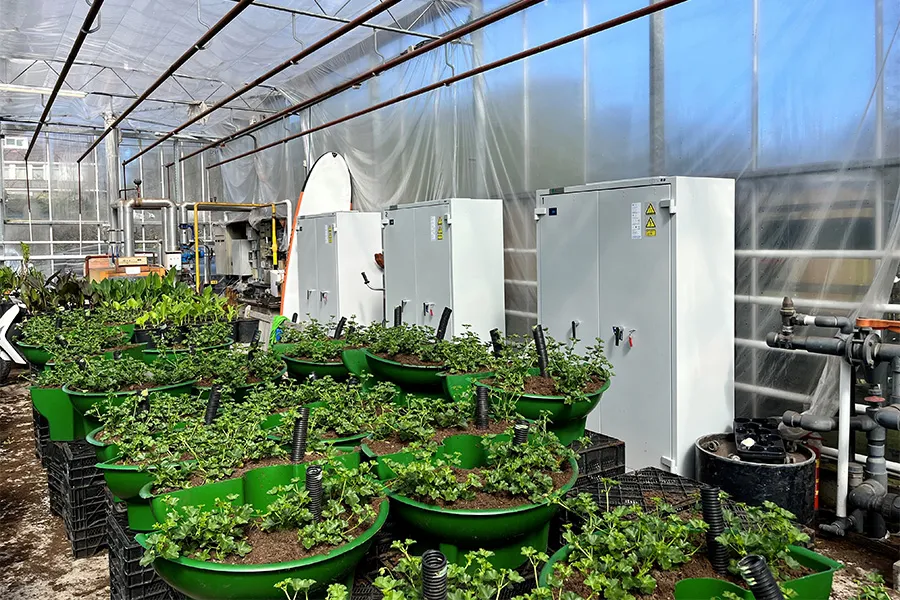
Van Ruijven adds that the Municipal Public Space Management Department was under considerable time pressure to purchase and install the cabinets. He expects the PGS-37-2 standard to become mandatory in the foreseeable future, with demand for good battery cabinets set to grow enormously. He wanted to get ahead of that. Other factors also increased the pressure to make the purchase: “This project involves more than just buying a battery cabinet. In this particular case, the power supply to the building had to be upgraded, which means contacting the network operator. Have you seen their lead times? The distribution board in a hall or warehouse often needs to be modified as well. Lead times for that are also getting completely out of hand, and demand is only going to increase.”
Van Kuilenburg acknowledges the longer waiting times for electricity network upgrades, but stresses that in the vast majority of cases they are not needed at all: “A standard connection works perfectly well for us.”
Flexibility
Why choose Seefion in particular? Van Ruijven is quick to answer that too. “Seefion’s cabinets can be adapted after installation to suit changing circumstances. If the work changes, backpack batteries may no longer be needed at that particular location, in which case Seefion can modify the cabinet. Seefion’s director, Remco van Kuilenburg, also has extensive knowledge of the applications and the market. He knows the standards inside out and is in constant dialogue with insurers and testing institutes. That inspires confidence.”
Question about this story? Ask your question
Keep following this
Get an email when a new story is published. No account needed.
- SubjectElectrical engineering