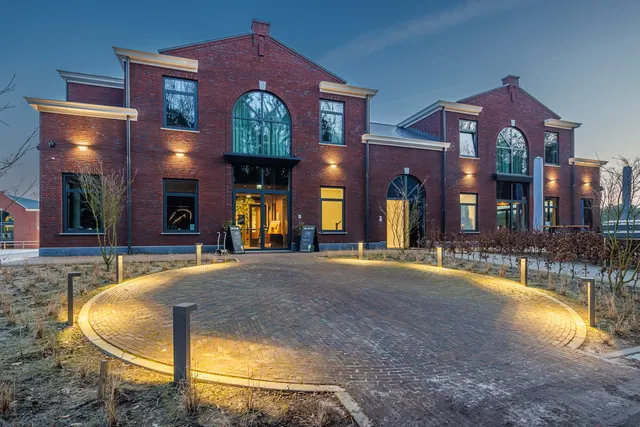
How do you run a hotel without enough electricity?
Text Peter StalImage The Florian en Eaton
The Florian became a sustainable energy hub
Having enough electricity available is a relatively new concern for hotel owners. Not so long ago, all you had to do was connect to the grid, use electricity and pay the bill. But the grid is now full. When companies apply for new or larger connections, grid operators regularly have no choice but to say no. Does this mean that building or expanding a hotel is no longer possible? That is certainly not the case for hotelier Tony Chu. He has found a solution for his hotel, The Florian in Hoofddorp.
Grid congestion is affecting almost every part of the Netherlands as electrification continues to grow. We use more electricity for cars, heating and industry. At the same time, more and more electricity is being fed into the grid locally by solar panels and wind farms. Grid operators invest around €5 billion a year in expanding the electricity grid. That is still not enough to keep pace with electricity demand in the coming years. Companies are put on a waiting list and can only be connected when capacity becomes available again.

‘That came as quite a shock’
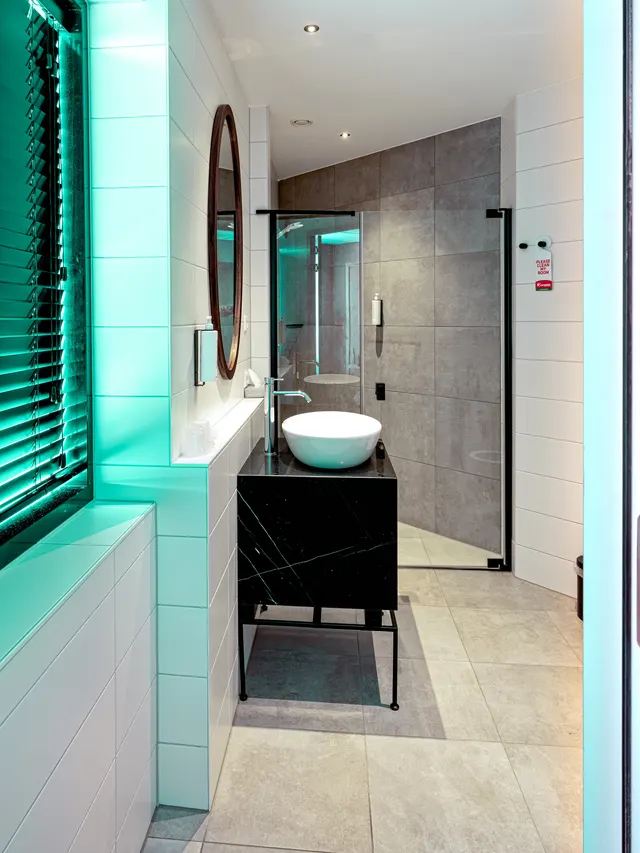
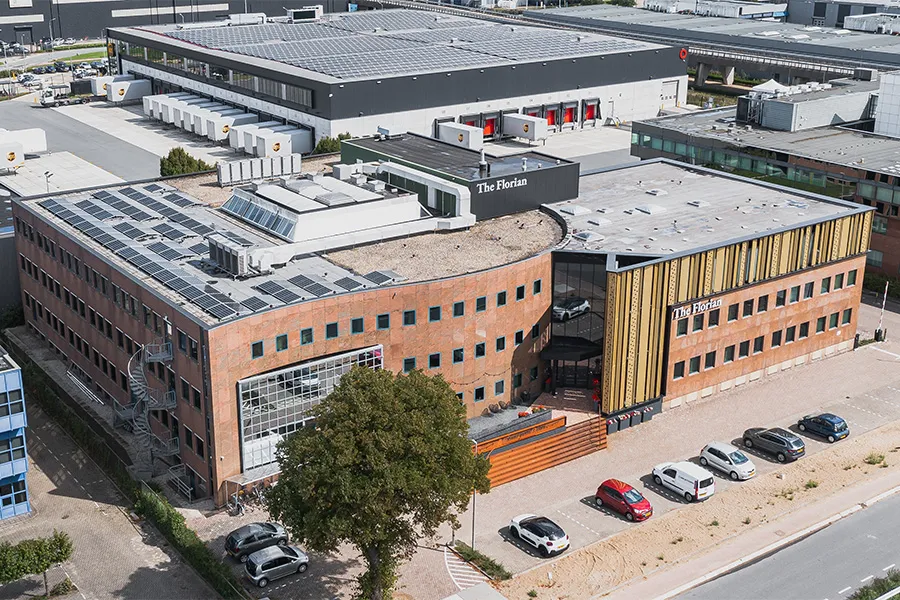
Companies can help tackle grid congestion by improving energy efficiency and using the grid more flexibly, putting less strain on it at peak times. What does that look like in practice? Tony Chu, owner of The Florian in Hoofddorp, shows us. His hotel is housed in a former office building dating from the 1990s, which was completely renovated by Workshop of Wonders. The contracted capacity for the former office was nowhere near enough to supply the hotel with the energy it needed. Chu applied to the grid operator for a substantially larger connection, almost double the capacity used by the office building. “We were told ‘no’, because the maximum supply available was just 137 kW. That came as quite a shock. We really needed more capacity to run the hotel profitably.”
The hotel owner was unwilling to fall back on fossil-fuel alternatives such as gas-fired systems or diesel generators. “Sustainability comes first, from construction right through to welcoming our guests.” The Florian has since been awarded Green Key Silver, the second-highest level of this international sustainability certification for businesses in the leisure and recreation sector. At the time, the main question was how to secure enough capacity.
The building as an energy hub
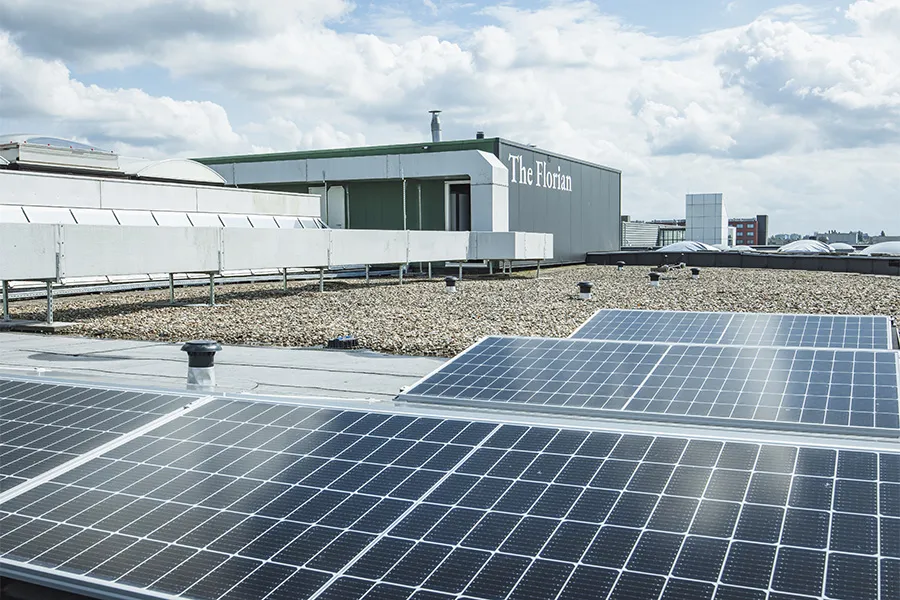
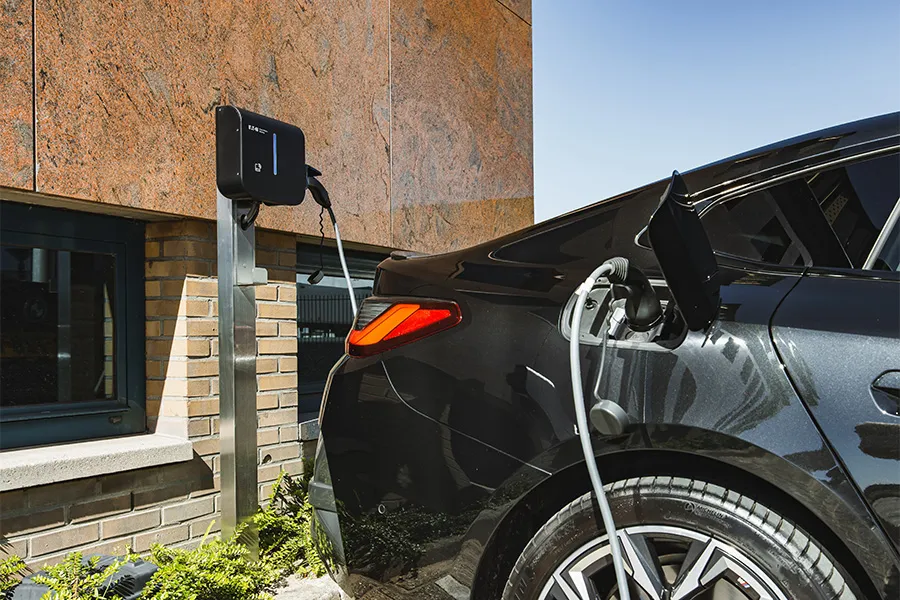
Chu was put in touch with power management company Eaton through his installer. Eaton proposed installing a local energy network, known as a local grid. In a local grid, self-generated renewable energy is stored and used when there is not enough electricity available from the main grid. The solar panels on the hotel roof and the battery energy storage system in the basement, together with the existing grid connection, provide enough electricity, even at peak times. That was where the main problem lay: during the morning rush, when guests shower and dry their hair and the kitchen is running at full capacity for breakfast, and during the evening rush, when all the lights and air conditioning are on, cars are charging and the kitchen is preparing dinner.
Eaton’s solution is called Buildings-as-a-Grid, turning the building itself into an energy hub. With this solution, an energy management system (Building Energy Management Software) ensures that power is available wherever it is needed most. Battery power is used during periods of peak electricity demand at the hotel (‘peak shaving’). This keeps total electricity consumption within the limits of the contract with the grid operator. The Building Energy Management Software continuously analyses trends in the hotel’s energy use and may even take factors such as weather forecasts into account in the future. This makes it possible to maximise the use of cheaper, more sustainable solar power, cutting costs and keeping the hotel’s carbon footprint as small as possible.
Energy costs under control
For The Florian, this proved to be the ideal solution. Chu says: “We are now staying within the limits of our grid connection. If we had not managed that, we might have had to close. The system also helps us keep our energy costs under control and limit our CO2 emissions. A win-win-win!”
Question about this story? Ask your question
Keep following this
Get an email when a new story is published. No account needed.
- ThemeBuilding electrical systems
- SubjectElectrical engineering