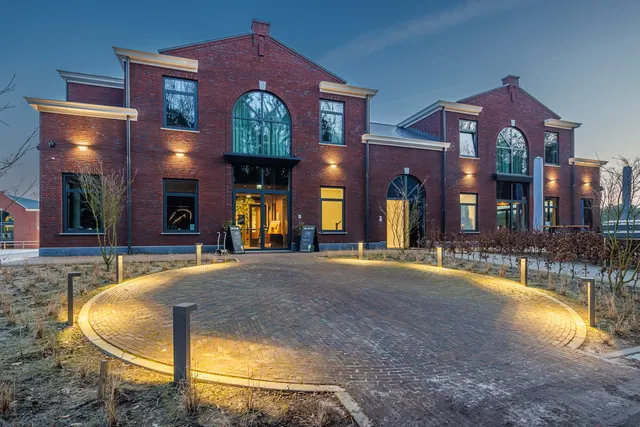
Smart lighting as the foundation for a smart building
Text Lieke BousemaImage Maas & Hagoort
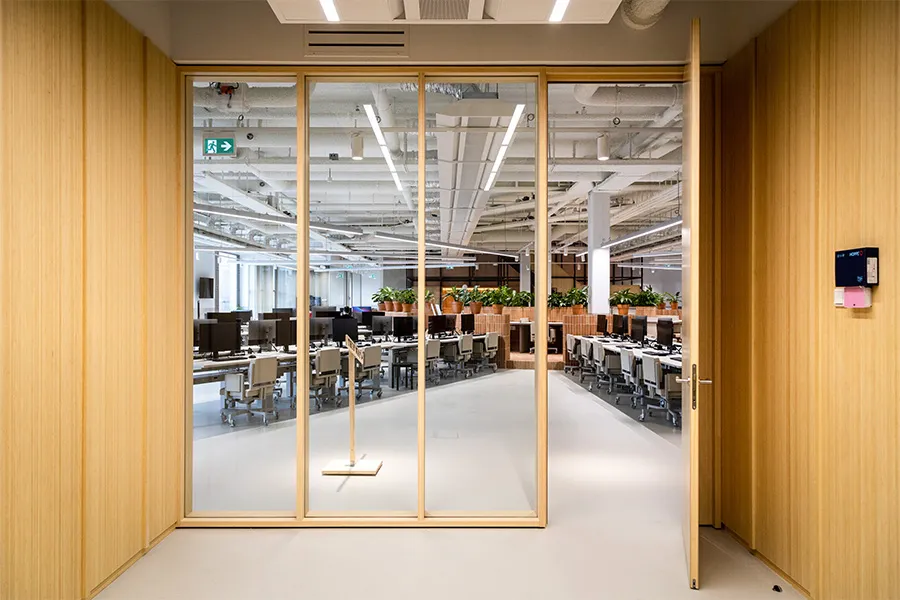
Our future calls for buildings that continuously learn and evolve. Connecting technologies such as lighting, climate control, solar shading, security and access control plays a key role in this, says Willem-Jan Zwemer, commercial director at Maas & Hagoort. “By continuously collecting data from these systems, analysing it correctly and acting on it, buildings can be managed more energy-efficiently. It also helps ensure health and safety while improving user comfort. It is no coincidence that Smart Buildings are becoming an increasingly common part of our built environment.”
“A Smart Building is entirely focused on its users and the activities taking place in and around it,” Zwemer emphasises. “The main aim is to optimise comfort, performance, maintenance, energy consumption, efficiency and asset management. For this reason, a Smart Building is not a fixed state, but is constantly evolving. Buildings and their systems are becoming ever smarter and more advanced, for example thanks to the Internet of Things, artificial intelligence (AI) and other innovative technologies that we cannot even predict yet. Take lighting, for instance: we started out with luminaires that sent information to the building management system over a wired network. As the digitalisation of LED progresses and improves, our role in Smart Buildings is becoming increasingly prominent.”
Data carrier and control element
“Office buildings broadly comprise a floor, ceiling and interior elements, each with a different technical lifespan,” Zwemer explains. “We see, for example, that furniture is replaced sooner than ceilings and lighting. This makes a luminaire the ideal component for collecting and carrying environmental data. Luminaires can also be put to excellent use as control elements to meet the needs of the building and its users.”
Focus on ease of control and use
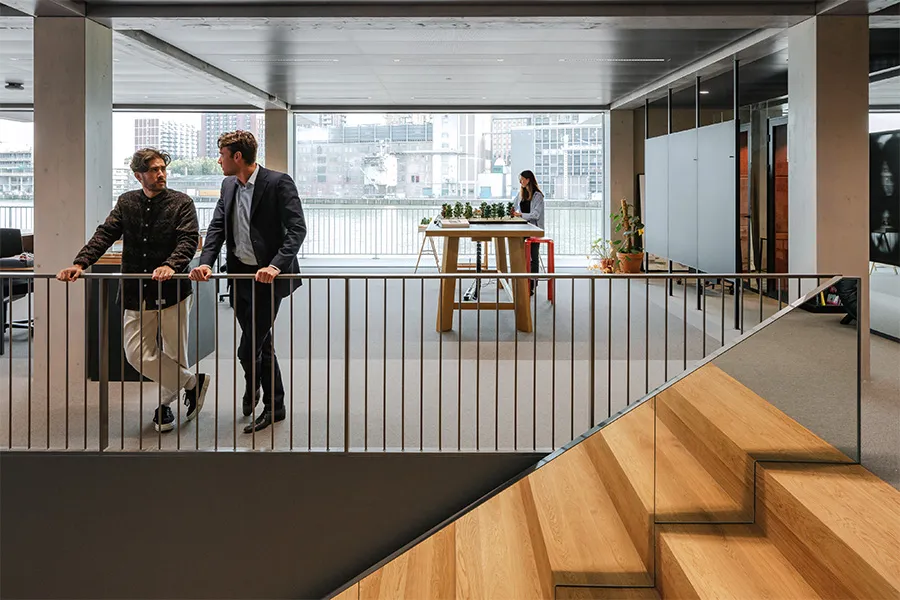
“For a long time, installers fitted out buildings with the aim of controlling every technology from A to Z,” says Zwemer. “But we are now seeing the operation of technical building components increasingly becoming the responsibility of the user or users. That is the only way to make buildings as flexible as possible. In 2025, ease of control and use is increasingly taking precedence over complex programming languages, with control passed down to the user level. This means we can deploy scarce technical expertise and specialists where they are most needed.”
Successful growth in the use of sensors
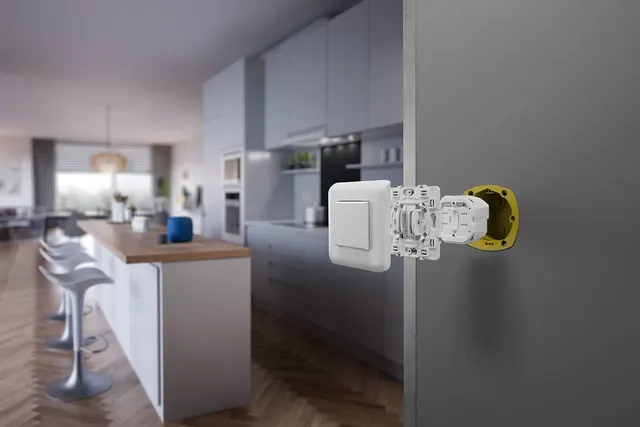
“Another new development is the growing number of sensors, which can do more and more,” says Zwemer. “Where previously only daylight levels or movement were measured, lighting sensors are now also used to count people and/or measure occupancy levels and CO2 concentrations. Sensors make a major contribution to building automation, reducing the need for switching equipment and copper wire. This also means fewer installation hours are required, delivering more functionality for a lower investment.”
‘Think about tomorrow today’
Zwemer notes that fears about wireless systems are increasingly fading into the background. “There is still some hesitation about wireless technologies, though,” he says. “Hybrid combinations, using wired connections where they are ‘preferred’ and wireless where possible, offer a solution.” He is keen to make the case for this approach. “A Smart Building is not an end in itself, but an outcome. To achieve it, building owners need to take several steps when they are ready. The key is to keep weighing up what they want today and what it would be sensible to prepare for the future, for example to avoid substantial additional investment later on.”
Easy to connect to one another
The final development he has observed is that all building technologies can now be connected to one another. “For example, through APIs, which means that managing a building is no longer dependent on a single person or company. We think that is ‘Smart’ too.”
Maas & Hagoort has recently written an interesting white paper on the opportunities and benefits of smart lighting in Smart Buildings. Interested? The white paper is available to download free of charge from the website.
A business enquiry for Maas & Hagoort? Get in touch
Companies in this story

Keep following this
Get an email when a new story is published. No account needed.
- ThemeBuilding electrical systems
- SubjectElectrical engineering
- CompanyMaas & Hagoort
- CompanySmart Buildings