Healthy indoor air without renovation or new-build projects
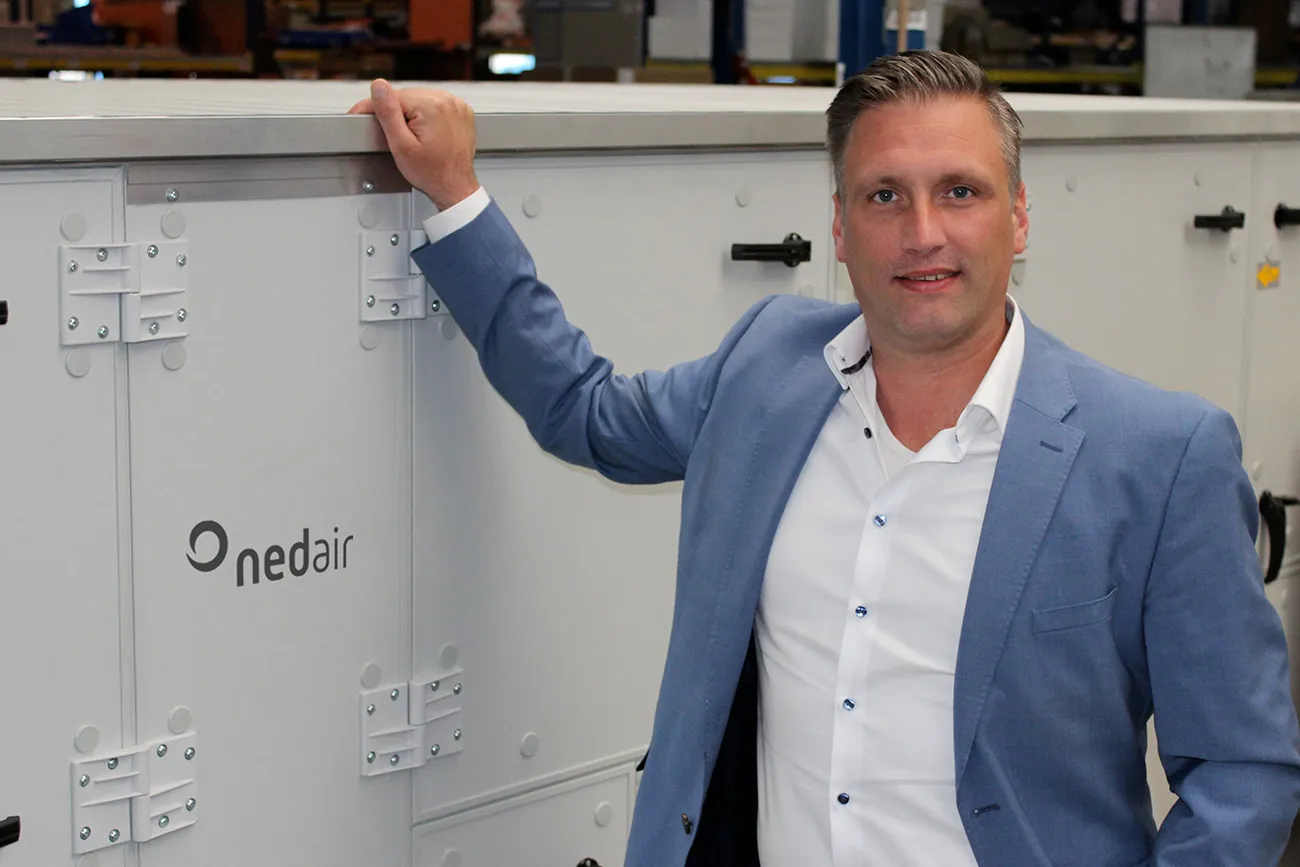
Hans Robben, Commercial Director at NedAir
The Netherlands is facing a major housing shortage, while new-build housing construction is stagnating. This is due in part to staff shortages in the engineering sector and the lack of permits being issued as a result of the nitrogen crisis. The commercial property sector faces similar problems: hardly any new connections are possible. Renovation of commercial premises and homes is becoming increasingly common. This presents opportunities to improve indoor air quality that are not yet being taken advantage of.
Demand-controlled ventilation
In new-build projects, particularly high-rise developments, a complete heat recovery ventilation (HRV) unit is often installed in each home. This is the traditional approach. However, it takes up a lot of space and uses more energy than necessary. A CO2-controlled air damper is a better option. This provides ventilation when it is needed. The system is always controlled according to indoor air quality, which promotes health. A demand-controlled system is much easier to implement than a complete unit, both in renovation projects and new-build developments.
Save time, energy and space
Because the system is controlled according to CO2 levels and relative humidity, rooms remain comfortable. A central system for the building handles heat recovery and filtration, which also makes maintenance easier. There is no longer any need to call on each occupant individually, saving time and energy. It also saves space.
There are also plenty of options when it comes to air handling units. They are often associated with commercial buildings, but they can also be combined effectively with demand-controlled air dampers in residential buildings. The result is a maintenance-free system that performs well in BENG calculations, provides ventilation and can optionally provide cooling and heating.
Revitalisation
This type of system is also suitable for building conversions. However, many people overlook the fact that revitalising existing air handling units can also go a long way. They can then meet current requirements again. If new-build construction is not possible, revitalisation can still deliver excellent results. Options include installing new fans, replacing filters and adding heat recovery. This can help an existing building perform better, with minimal investment and no additional space required.
Higher energy rating
There is considerable scope to improve energy consumption and comfort. From 1 January 2023, all offices must also meet energy label C requirements. Improving the ventilation system, together with other energy-saving measures, will also improve the energy rating. So when upgrading a building, consider renovating the ventilation system too.
A business enquiry for Ned Air? Get in touch
Companies in this story
Keep following this
Get an email when a new story is published. No account needed.
- ThemeHealthy indoor air
- SubjectSustainable construction
- CompanyNed Air