











Take control of your energy with a DC microgrid
Text and images Elektro Internationaal en Menno Ringnalda
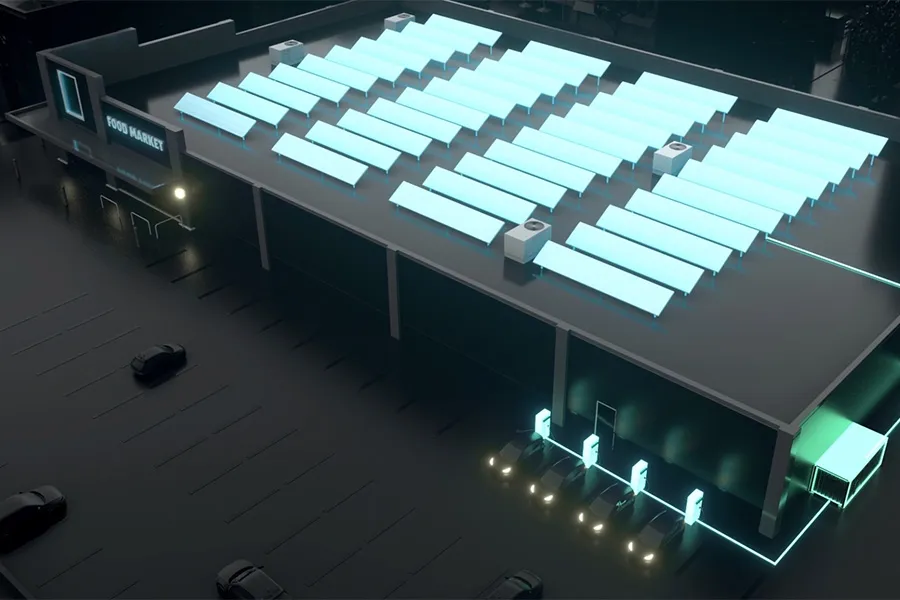
A solution to grid congestion
The electricity grid is under increasing pressure from the rapid electrification of society and the transition to sustainable energy sources. This means we need to move away from the traditional approach to managing generated energy and find creative solutions. To do so, DC Systems, Schneider Electric and Elektro Internationaal have brought their expertise together. The result? A DC microgrid.
Grid congestion, the phenomenon in which the electricity grid lacks the capacity to balance rising demand with the additional electricity being generated, is causing problems particularly for businesses and the construction sector. There appears to be no quick fix in sight over the coming years. But an on-site DC grid offers a solution.
The rise of direct current
Traditionally, processes in buildings and industry have run mainly on alternating current. However, the energy transition has set a shift towards direct current in motion. The energy efficiency of DC technology is a major driver of this shift, as it avoids conversion between AC and DC. When an entire installation is designed for DC, energy efficiency improves by 10 to 15% compared with an AC/DC solution. Combined with smart storage and the smart use of self-generated energy, this can cut energy bills by as much as 35%. There are many other benefits, including reduced copper use, a lower CO2 footprint, and straightforward integration and scalability. The use of a so-called second grid operating on DC is increasingly being cited as a way to accelerate and smooth the global transition to electricity as the primary energy source.
Trusted partners join forces
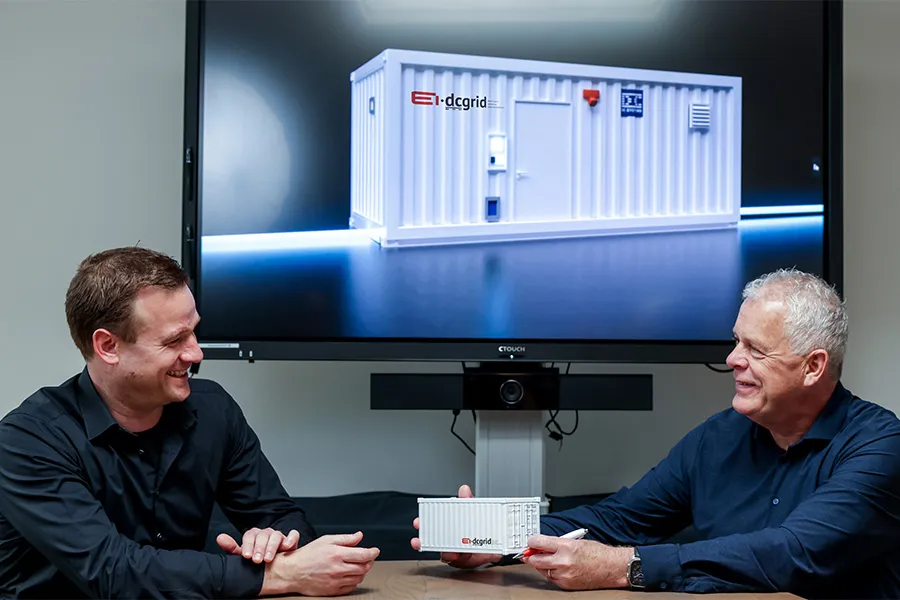
This second DC grid, which reduces dependence on the grid operator, has been the focus of DC Systems in recent years. The company was ahead of its time. Manufacturer Schneider Electric soon joined forces with the electrical engineering visionaries. A company that has been innovating in energy distribution products for 100 years is naturally alert to developments in today’s energy market. Panel builder Elektro Internationaal, a specialist in energy distribution systems for 45 years, also sees every day the challenges faced by businesses looking to grow and become more sustainable, but held back by the restrictions imposed by their grid operator. Applying early for a grid connection for a new-build project is increasingly unlikely to deliver the desired result. But extreme measures, such as literally digging beneath a motorway to connect to the grid in a different, less congested energy region, should become a thing of the past, as far as Elektro Internationaal is concerned. By combining the strengths and reliability of their brands, DC Systems, Schneider Electric and Elektro Internationaal are offering a DC microgrid solution that gives businesses back control of their energy.
Self-regulating DC microgrid
The DC microgrid, installed in a container on the outdoor site, enables businesses to store self-generated renewable energy and use it during periods of peak demand. Unlike an AC microgrid, the DC grid operates without complex and often costly software. It is controlled by voltage levels known as droops. The special Active Front End (AFE) sets the droop settings, which define voltage levels and their limits, and communicates them to the loads. The AFE indicates whether a load should run more actively, less actively or shut down. These settings make the system self-regulating, and it can even be linked to a weather forecast. All this without involving the grid operator.
A future-proof energy solution
This is good news given the forecast rise in grid connection charges and the increasing costs of feeding electricity back into the grid. Because the AFE isolates the grid operator from the DC microgrid, renewables can also be added without limit. If a business needs more electricity, for example to expand an EV charging hub, there is no need to apply for an upgrade to its existing grid connection. It may even be possible to reduce its capacity. The system is also easy to integrate and expand as needed, giving businesses not just a temporary fix, but a flexible, sustainable and future-proof energy solution.
Key benefits of the DC microgrid:
1. Add solar panels to the DC microgrid without limit and without affecting the grid operator.
2. Reduce the grid connection by up to 50% through smart use of battery capacity.
3. Save 10 to 15% energy by reducing AC/DC conversion losses.
4. Easy to integrate. The DC microgrid can be added without upgrading the existing installation.
5. The installation can be expanded as needed.
Een zakelijke vraag aan Elektro Internationaal? Get in touch
Companies in this story
Keep following this
Get an email when a new story is published. No account needed.
- ThemeBuilding electrical systems
- SubjectGeneral
- CompanyElektro Internationaal
- CompanySchneider







