











Three Vs for maximum kitchen performance
Text and images Vianen KVS
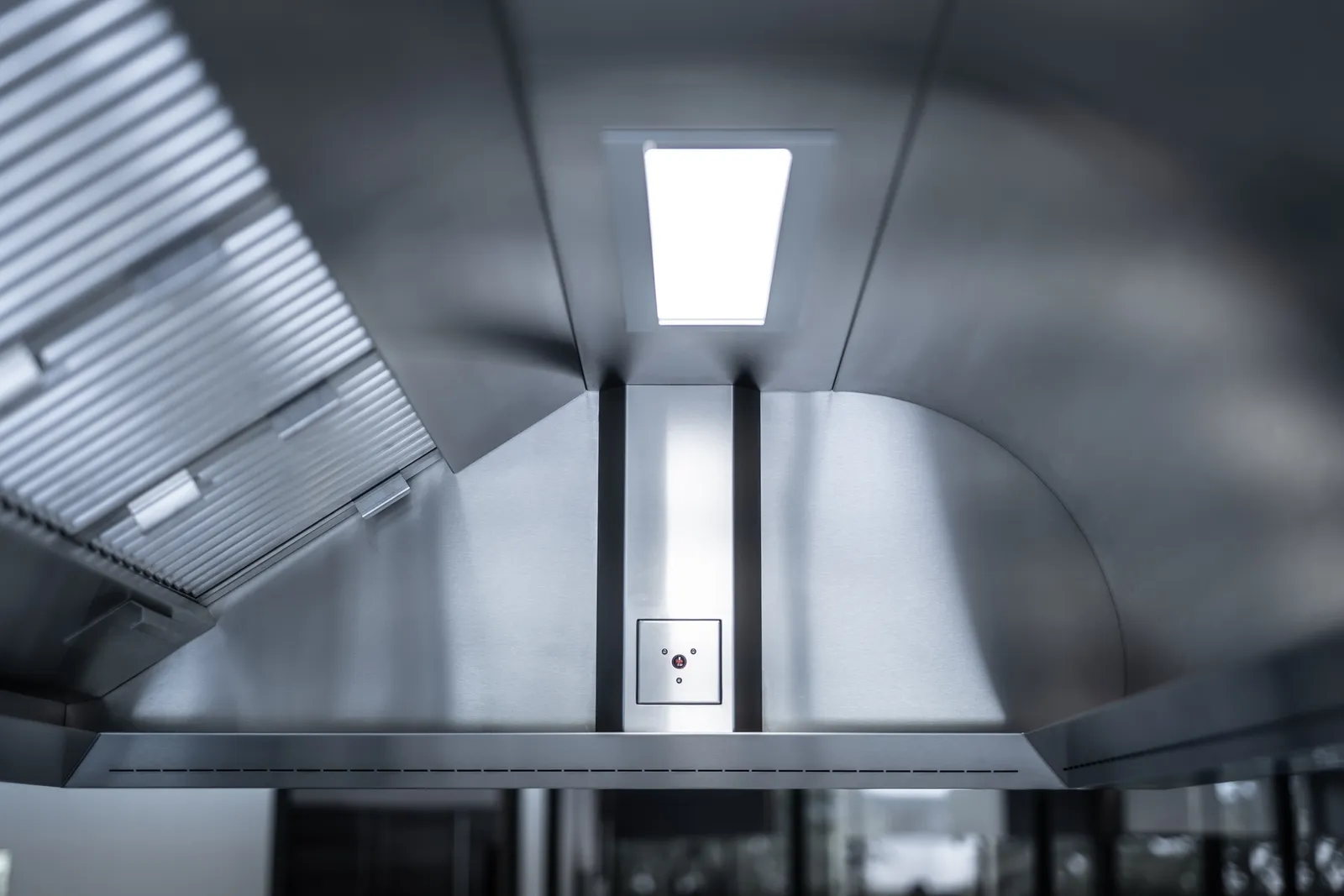
High-tech kitchen ventilation
Using less energy, improving comfort and keeping a closer eye on the system at the same time sounds like a difficult combination for commercial kitchens, where peak loads and strict hygiene requirements are the norm. Yet this is exactly what Vianen KVS has been developing over recent years. The key lies in Triple V Solutions: Vianergy II, VéTEC and Victoria, three building blocks that can be used independently but deliver the greatest returns when combined.
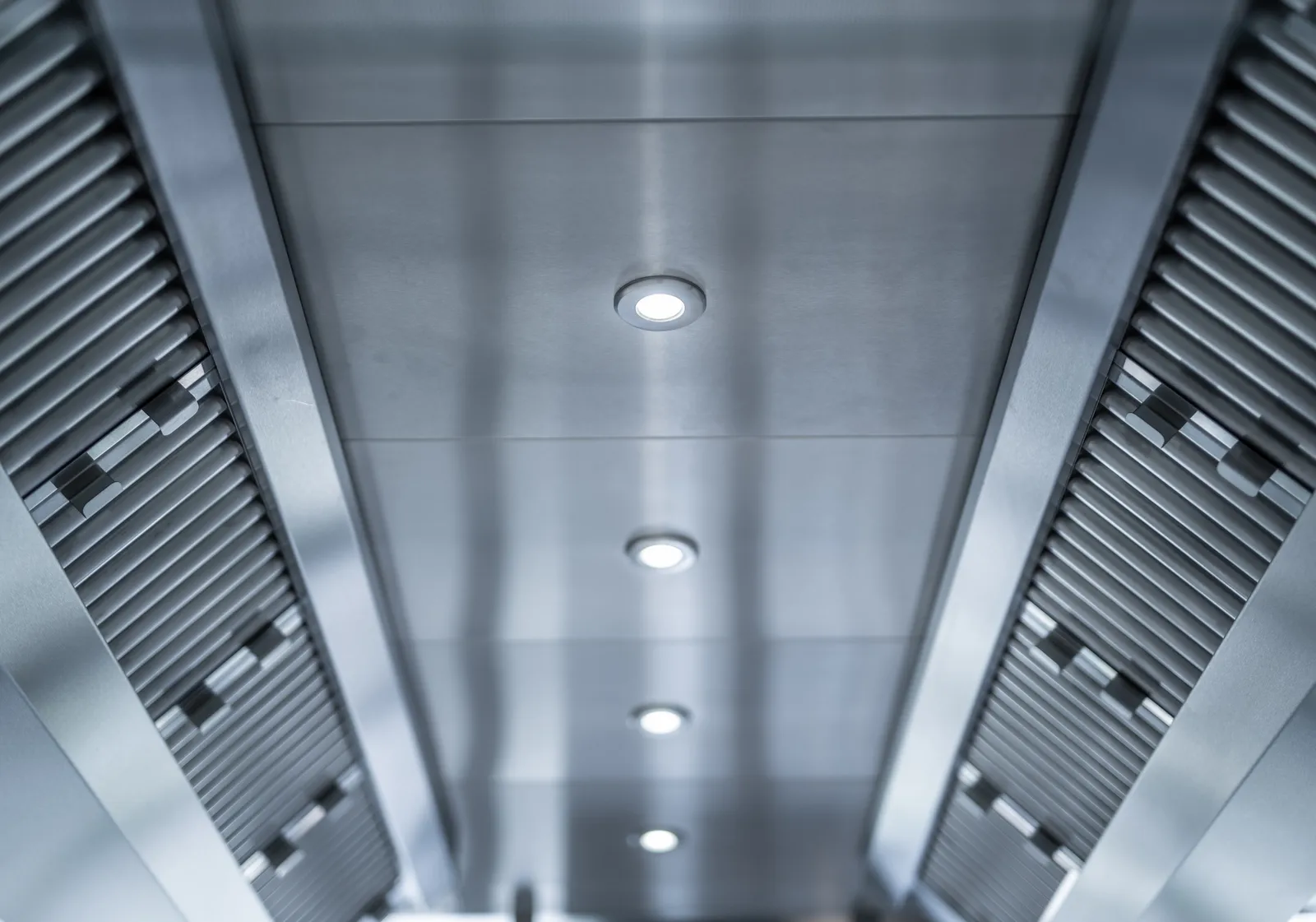
The centrepiece of the Vianen KVS showroom in Woerden is the Vianergy II extraction canopy. “This is where all the design work and optimisation come together,” says key account manager Bob Janssen. “The double-curved inner surfaces and rising angled lower edge direct cooking vapours towards the filters more quickly. This means less extraction air is needed to capture the same amount. Jet Stream guide air also directs cooking vapours towards the filter and creates a barrier, preventing unnecessary extraction of room air. The system focuses entirely on cooking vapours.”
“In the ASTM F1704 test, this optimised canopy achieves up to 28% lower extraction air volumes than a standard canopy,” says Janssen. “The lower air volume has an impact on the entire design: ducts, fans and cooling/heating capacity can often be specified more compactly. This delivers immediate space savings and greater design freedom, particularly in hotels, care complexes and boats.”
Demand-controlled ventilation
While Vianergy II reduces the required air volume, VéTEC ensures that air is only moved when it is really needed. The system detects cooking activity using, among other things, cooking vapour detection and temperature sensors. It turns down when activity is low, but can ramp up immediately when steam or smoke is detected. “Normally, you would set a canopy to fixed speeds or simply leave it running at 100% in practice,” says account manager Thomas van Rookhuizen. “With VéTEC, you start at a low base setting and the system only ramps up when necessary.” The result is lower fan energy consumption and less loss of conditioned air. In larger kitchens, the system also uses automatically controlled dampers to maintain airflow distribution in the ductwork, so other canopies do not lose capacity when one zone ramps up.
Less grease build-up, less maintenance
Just as important for operating costs is reducing the amount of grease in the canopy and ductwork. Vianen can integrate UV systems into the canopies to break down grease molecules and reduce deposits. Janssen says: “This means less cleaning, more stable airflow and a lower fire risk. When VéTEC is installed, UV output can also adjust to the ventilation setting: at low loads, not all the UV lamps need to be on. This reduces energy costs and extends lamp life, a direct benefit to the Total Cost of Ownership.”
From installation to insight
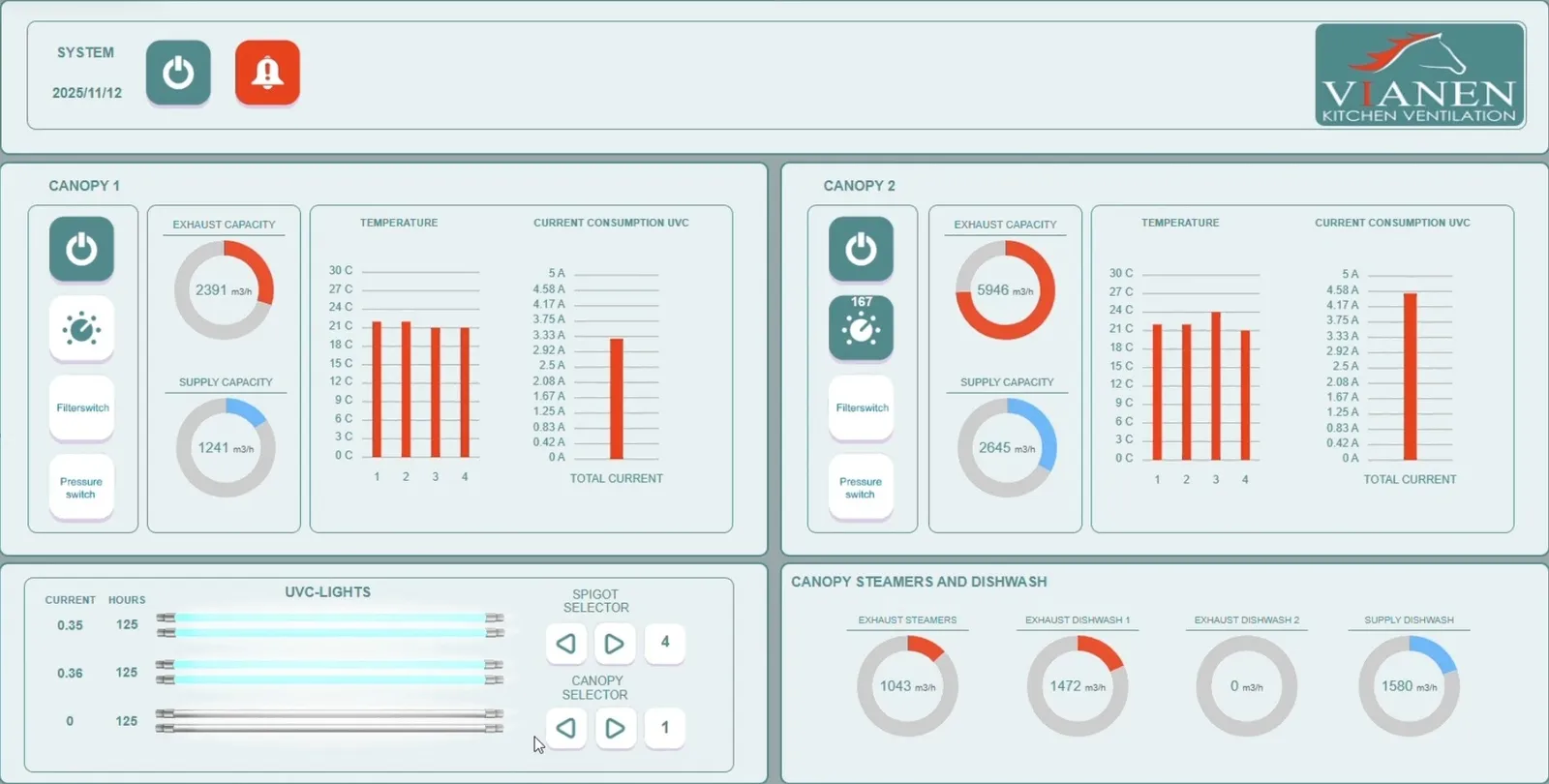
The third V is Victoria: monitoring via a dashboard. Air volumes and energy consumption are made visible, including the difference between a con-
ventional on/off system and demand-controlled ventilation. Victoria also alerts users when the UV tubes and lights are nearing the end of their service life, the soap tank is empty or the nozzles need replacing. This helps not only to demonstrate savings, but also with system management. A change in pressure patterns or a rising reading could indicate contamination, a blockage or a component that needs attention. This shifts maintenance away from routine servicing towards action based on what the system actually needs.
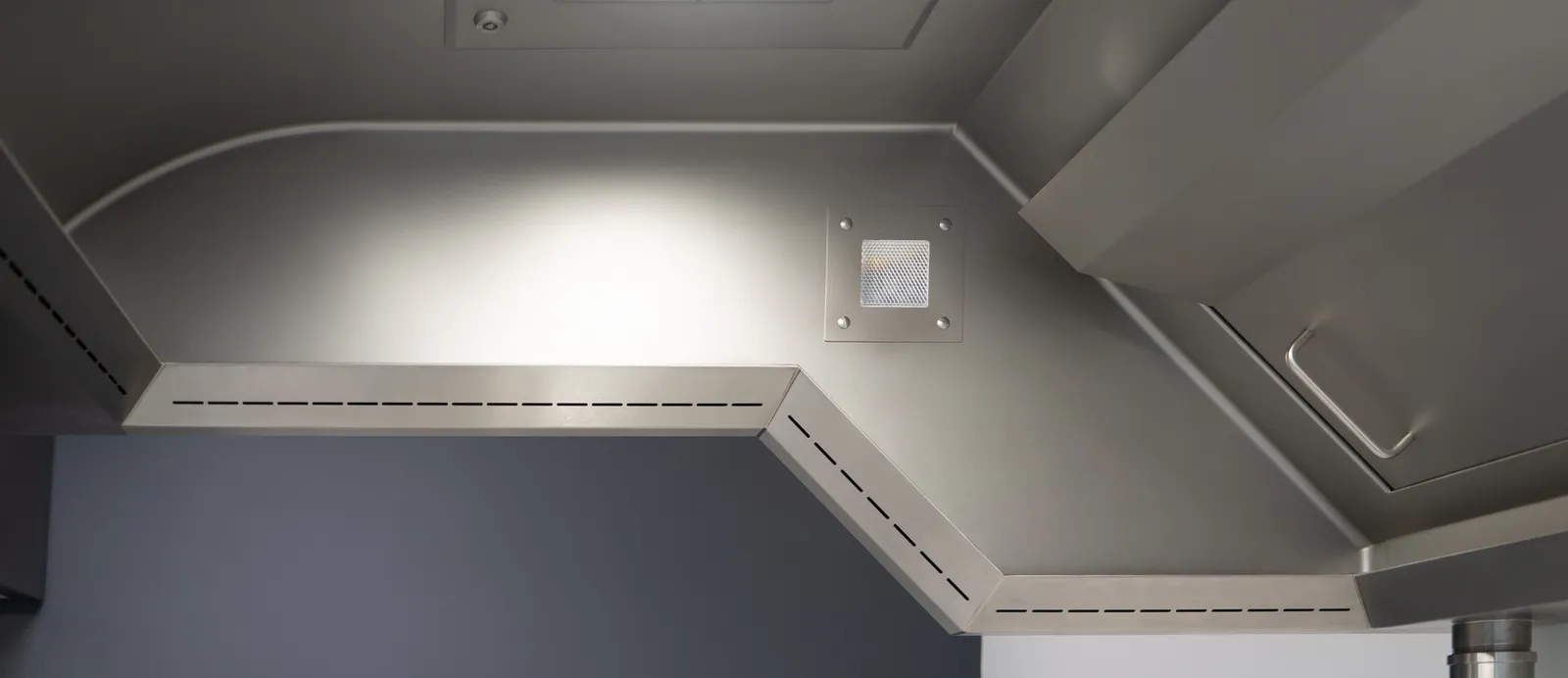
The Triple V approach shows that kitchen ventilation is about more than stainless steel: design, sensor technology and data work together. “The systems can be used individually, but the greatest benefits come when decisions are made at the design stage,” Janssen concludes. “If Vianen is involved early, you can plan for lower air volumes, more compact installation work and a control system that adapts
to the actual kitchen load. The result is a more efficient system and a kitchen that demonstrably uses less energy.”
Een zakelijke vraag aan Vianen KVS? Get in touch
Companies in this story
Keep following this
Get an email when a new story is published. No account needed.
- SubjectGeneral
- CompanyVianen KVS







