Decentralised ventilation for housing: a key to the energy transition
Text Chris ElbersImage ClimaRad/5d Architectuur & Fotografie
Affordable, versatile and future-proof
When it comes to combining decentralised ventilation with heating/cooling and heat recovery, ClimaRad of Oldenzaal occupies a unique position in the market. In fact, it is the only company in the Netherlands to offer this complete concept. With its recently launched Vita H1C-S decentralised ventilation unit, ClimaRad has a new sustainable asset that is likely to appeal particularly to housing associations. Or, as commercial director Ralph Liedenbaum puts it: “We see this product as an affordable, versatile and future-proof key to the energy transition.”
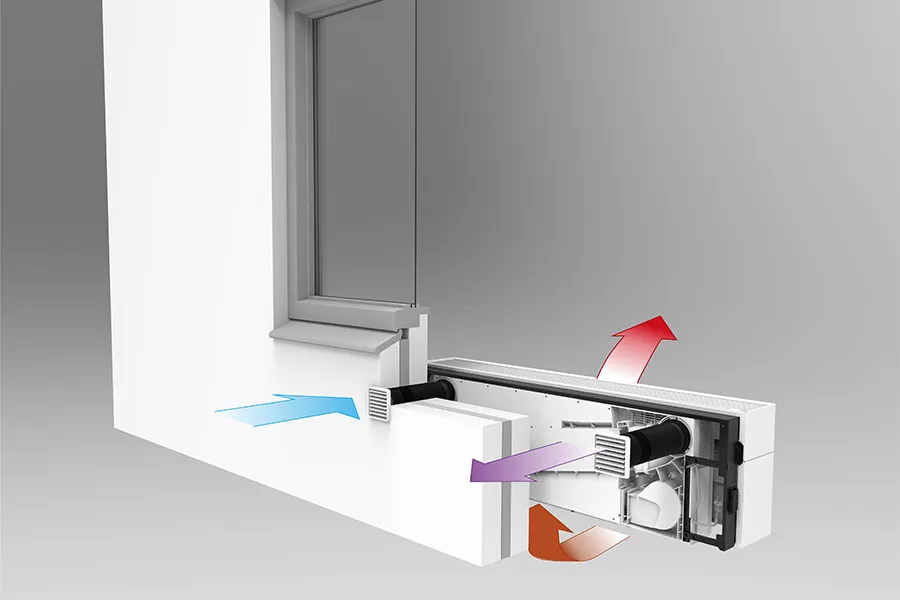
Launched earlier this year, the ClimaRad Vita H1C-S is equipped with a convector for active cooling and heating and has been designed specifically for low-temperature systems in housing. This is expected to make the new unit a popular choice with housing associations looking for a sustainable, affordable decentralised ventilation solution. It is also a solution that can keep pace with technological developments and is highly future-proof. These are welcome benefits when significant progress needs to be made as part of the energy transition. “As well as various sensors for measuring air quality, the unit has a built-in heat exchanger,” explains Liedenbaum. “This works in combination with a convector fitted to the front of the unit. The convector has additional fans, and depending on the heating/cooling requirements, up to three extra fan cassettes can be added.”
Zoning
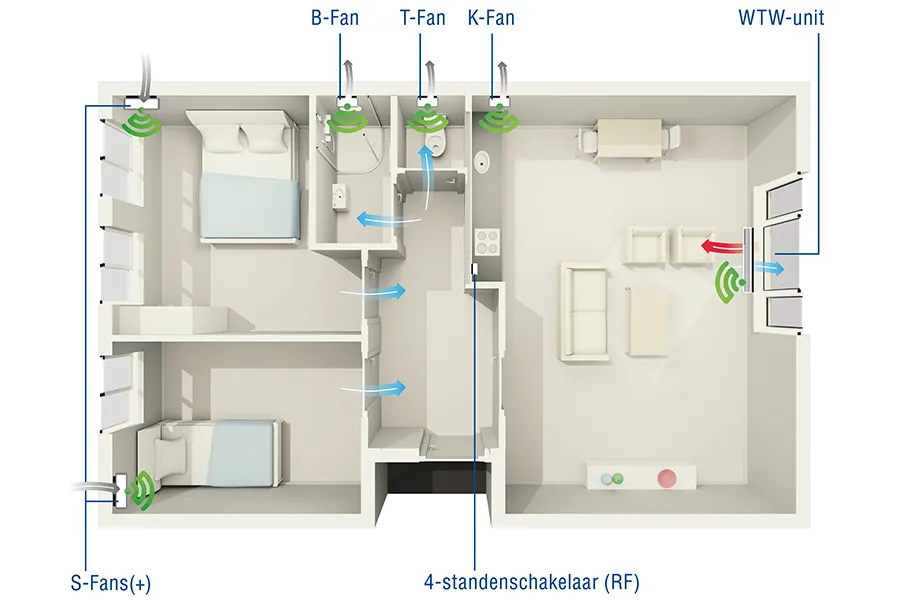
ClimaRad says the Vita H1C-S puts the key to the energy transition in its hands. Liedenbaum explains why. “In most homes, the radiators in bedrooms and other upstairs rooms are usually turned off. The living room is generally the only room where the heating is on. When you ventilate that room, you need to recover the heat from the ventilation air and return it to the room. That is exactly what the Vita does. The unit makes it possible to create separate zones.” This addresses the shortcomings of central ventilation with heat recovery. With this approach, warm air from the living room is mixed with cold air from the bedrooms, then returned to all the rooms connected to the system. “Yet in most cases, the living room is the only room that needs heating at that point,” says Liedenbaum. “So you need to avoid this situation. We therefore recommend using heat recovery in living areas and installing our supply-air units without heat recovery in bedrooms. The Vita H1C-S makes this possible. It is an affordable, sustainable system that also allows you to switch to other heat sources or systems in the future without any problems.”
Insight
These are features that are sure to strike a chord with housing associations. What’s more, using the ClimaRad Vita H1C-S in renovation projects can be combined with a clear picture of the TCO, or total cost of ownership. “We had a dedicated TCO tool developed for this purpose,” says Liedenbaum. “It gives housing associations a detailed insight into the savings they can achieve during renovations by switching to other ventilation equipment, heat emitters and heat generators. The savings can be substantial. Depending on which components are replaced, using the Vita H1C-S can cut heating costs by up to 40 per cent. That certainly makes it worth considering this solution, both in housing and in existing care facilities, where there is also considerable scope to improve sustainability.”
Question about this story? Ask your question
Keep following this
Get an email when a new story is published. No account needed.
- ThemeHealthy indoor air
- SubjectYearbook