Growing importance of safety standards for Ethernet cables
As more and more devices in buildings connect to the internet, demand is also growing for a robust backbone. Rexcom helps installers meet this need. “We explain the safe use of data cabling in simple terms.”
From temperature sensors and cameras to various types of access control systems and biometric door locks, the number of different devices in buildings connected to the internet is set to grow exponentially in the coming years. According to figures from German market and consumer data specialist Statista, this number is expected to rise from 13.1 trillion in 2022 to 19.1 trillion in 2025 and 29.4 trillion in 2030. As the number of connected devices grows, so too does the importance of having the right cabling infrastructure in buildings, says Jan Zeeman, account manager at cable supplier Rexcom. “From the patch cabinet, various cables connect lighting, Wi-Fi access points, ventilation and air conditioning, among other things, to an Ethernet network. These devices are powered via structured cabling, eliminating the need for separate adapters.”
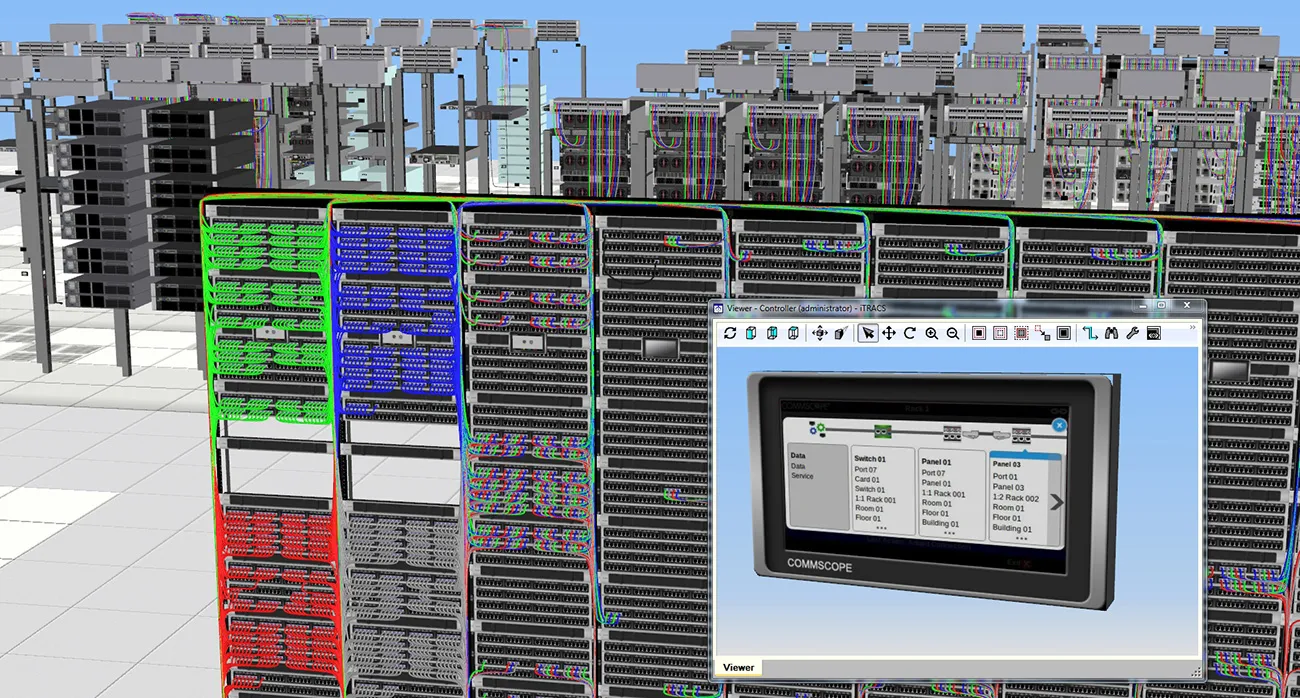
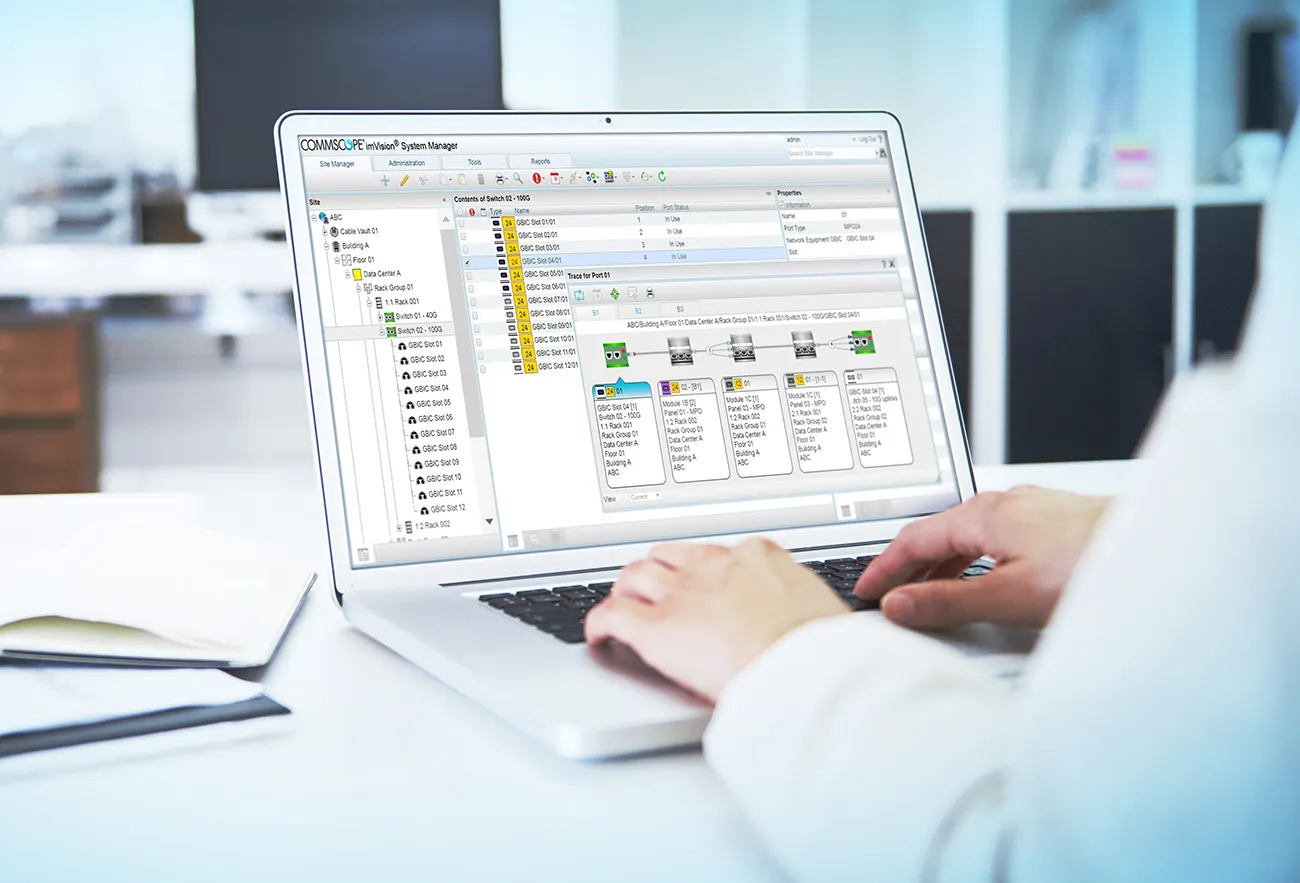
A structured data cabling network is needed to control all these devices effectively. Rexcom provides this, he explains. “The network cabling needs to be in good order. We supply it through certified installers. We have our own training centre to train technicians. Each year, around 100 technicians learn with us how to install a network that is suitable for a smart building. Our house supplier CommScope says that technicians working with its cabling should receive an update every three years.”
Rapid developments
Zeeman says that such an update is necessary. “Developments in this area are rapid. In 1999, devices were connected at around 10 watts, but by 2003 this had risen to 15 watts, and to 30 watts in 2009. We are now at 90 watts. This increase is possible because all eight conductors in the cables are now used. In the past, however, only four conductors were used. Using all eight conductors results in a higher cable temperature.”
This has implications for installers, he says. “When installing, an installer needs to check the specifications carefully. Cenelec says that, if no further details are specified, technicians may install the cabling as they did in the past. ISO, however, states that if no further details are specified, it must be installed in accordance with Power over Ethernet (PoE) Type 4. This means 90 to 100 watts. Specifications often refer to both standards, so the installer needs to check carefully which basis to work to.”
Both a higher cable temperature and a higher ambient temperature mean that the cable length needs to be reduced. “A cable at a temperature of 20 degrees can have a channel length of up to 100 metres,” Zeeman explains. “But if the temperature rises to, for example, 45 degrees, the channel length is reduced to 90 metres. This may mean that more patch cabinets need to be installed. For a technician, this means calculating the heat build-up at every point along a cable route, then adjusting the design accordingly. The CommScope website offers a way to calculate heat build-up.”
Standards
On behalf of Rexcom, Zeeman sits on the NEN ‘Smart Buildings’ committee, which has contributed to the current standards for PoE Type 4: the NEN-EN 50173 series and the NEN-EN 50174 series. He has found that these standards are still Greek to technicians at smaller installation companies in particular. “They all know the NEN 1010 standard, which sets out safety requirements for low-voltage installations. The PoE world is a specialised, self-contained field, where standards of this kind also apply. As heat builds up in bundles of network cables, it is becoming increasingly critical for technicians to familiarise themselves with safety standards such as the NEN-EN 50173 series and the NEN-EN 50174 series.”
Rexcom is working with CommScope to familiarise technicians with these safety standards and explain them in plain language. “We talk not only to installers, but also to consultants, end users and suppliers. We are in constant contact with everyone and know what is going on. That is where our added value lies. This is important, because data cables are only becoming more important,” says Zeeman.
Question about this story? Ask your question
Companies in this story

Keep following this
Get an email when a new story is published. No account needed.
- SubjectYearbook
- CompanySmart Buildings