Is four weeks of training enough?
Text Lieke BousemaImage Studium
‘A great initiative, but you can’t learn the trade in four weeks; you’ll only pick up some basic knowledge at most’, ‘Very attractive financially, but it comes at the expense of quality’, ‘Teaching a monkey a trick (…)’ and ‘And you can get your driving licence and VCA at the same time?’. The article about Studium’s Heat Pump Bootcamp, which trains career changers in four weeks to become certified heat pump installers, sparked considerable debate across the Dutch installation sector. Is four weeks of training enough?
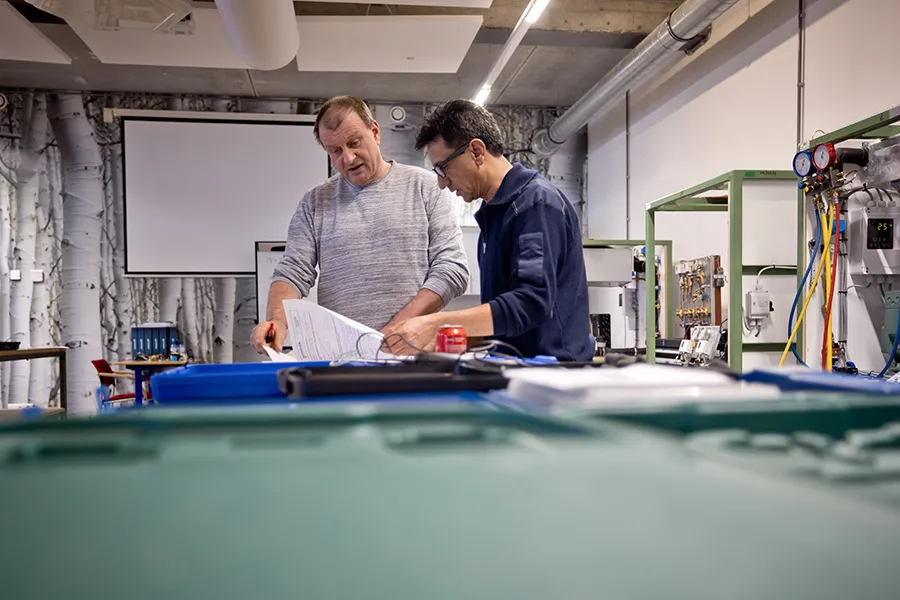
Studium is an accredited technical training provider with a wide range of accessible, practical courses, covering everything from refrigeration and climate control to heat pump technology. “The technical sector is crying out for new people,” says Peter Koelewijn of Studium. “In addition, current developments such as the gas boiler law and the heat pump requirement from 2026 onwards call for specific skills, which ideally need to be taught as quickly as possible. Most companies cannot afford to send employees back to the classroom for months, or even years. We respond to this need with a wide range of short, intensive, practical training courses, which help new entrants and career changers, for example, quickly master the key skills.”
Getting started without delay
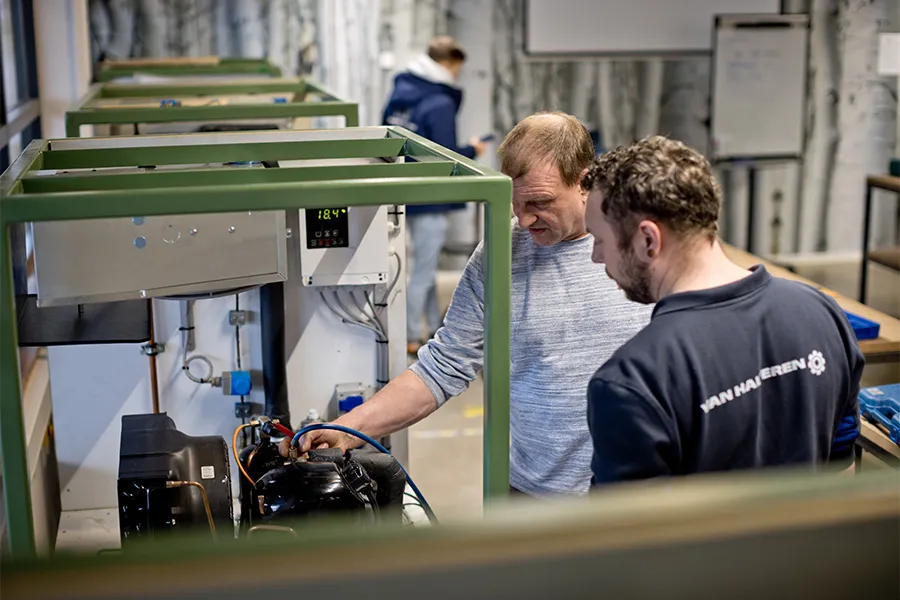
“Of course, four weeks won’t make you a fully qualified installer,” Koelewijn emphasises. “To suggest otherwise would do a disservice to all skilled technicians. But you will have the necessary knowledge and certificates to get started without delay.” He likes to compare this with a driving licence. “I think everyone would agree that you only really learned to drive once you had your licence in your pocket. That is exactly what our short courses aim to achieve. For example, under the new gas boiler law and BRL200 regulations, you have to be certified before you can even work on a heat pump installation or air conditioning system. That is what our training courses provide.”
From junior installer to fully qualified specialist
“Our own research showed that many technical courses are poorly aligned with real-world practice,” says Koelewijn. “That is why we offer training without unnecessary extras, focusing on the tasks you will carry out in the field and those currently most in demand. We don’t just hand out ‘certificates’; we prepare trainees at pace for an accredited STEK or InstallQ exam. If they pass, we always advise them to spend several months, or even longer, shadowing an experienced installer, so they can gain ample practical experience. This applies even if you are self-employed. We also offer a wide range of advanced modules, which trainees can take once they are ready. This enables them to develop step by step from junior installer to fully qualified specialist, exactly as the market demands and needs today.” Koelewijn cites the various Vakmanschapsroutes as an example. These were genuinely initiated by and for the installation industry and are structured precisely around the learning objectives.
Question about this story? Ask your question
Keep following this
Get an email when a new story is published. No account needed.
- ThemeGas-free heating and cooling
- SubjectYearbook