Market leader makes a strong case for green
Text Lieke BousemaImage WAGO
Introducing the first connectors made from recycled and biocircular plastic
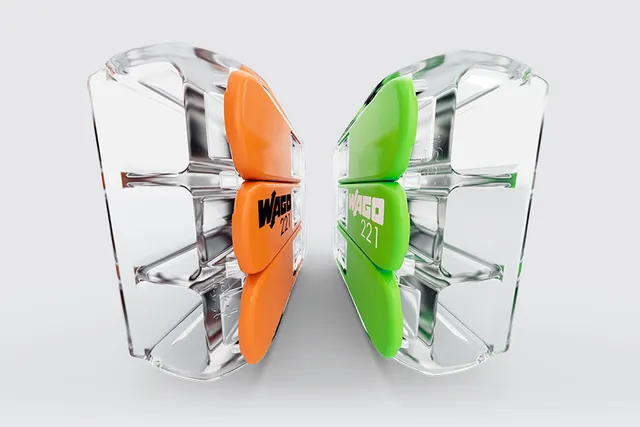
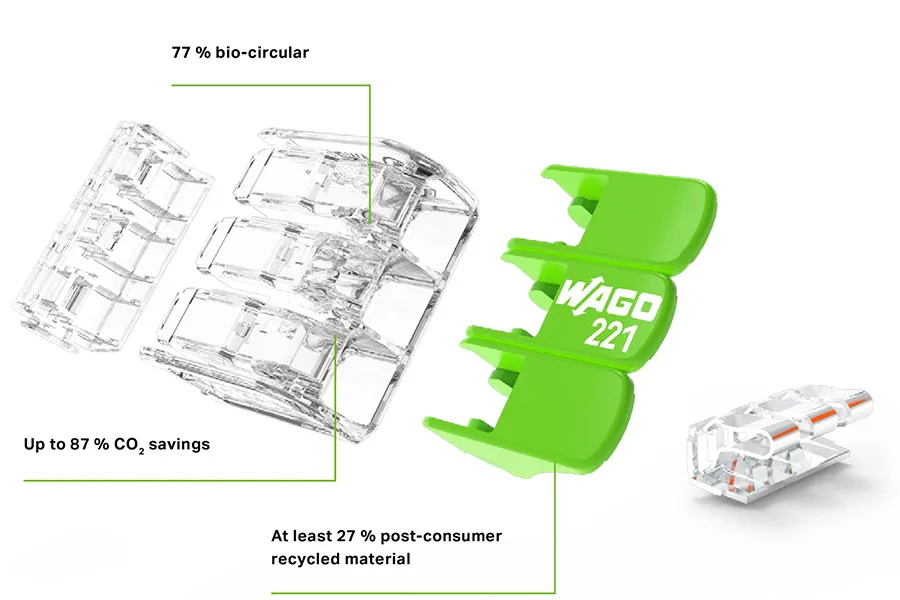
Even the smallest components can make a difference. Guided by this belief, WAGO, the market leader in spring clamp connection technology, is exploring ways to make its range of splice and connecting connectors more sustainable and environmentally friendly. A first step was recently taken with the launch of WAGO Green Range lever connectors, made from 77% biocircular material and reducing CO2 emissions during production by as much as 87%.
Annual plastic production has doubled over the past twenty years. Every year, we burden our planet with around 300 million tonnes of plastic waste, according to figures from the United Nations Environment Programme (UNEP). To turn the tide, everyone in the supply chain must do their bit. WAGO is taking responsibility by producing sustainable pluggable technologies that can easily be modified, dismantled and reused elsewhere. It has also launched a new range of green connecting connectors, marketed under the name Green Range.
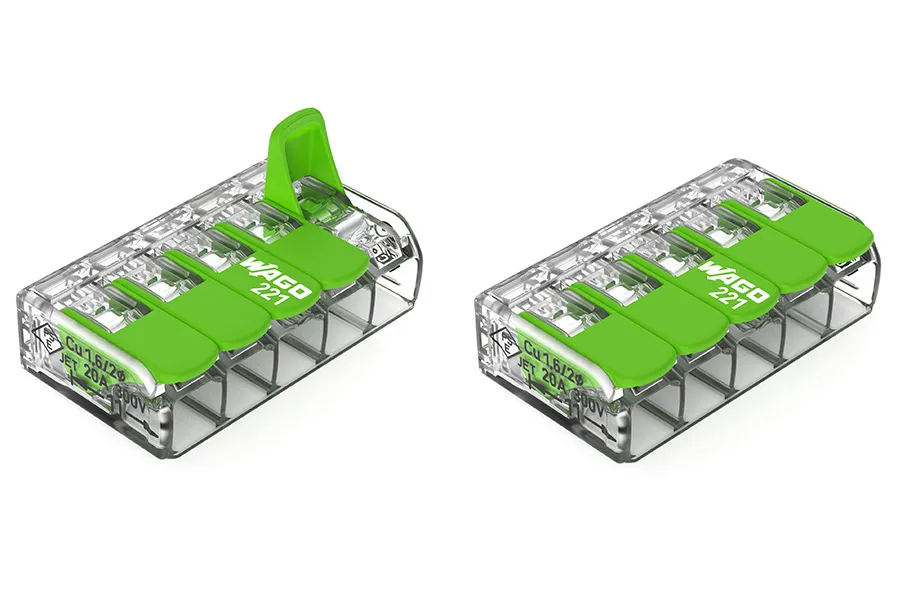
A biocircular foundation
“As an industrial manufacturer, we use a lot of energy and raw materials, such as plastic,” says Martin Brouwer, splice and connecting connector expert at WAGO. “Conventional plastics consist of carbon compounds, which are extracted, among other sources, from crude oil or natural gas. These are two non-renewable resources whose extraction pollutes our climate and environment. To reduce this impact, and therefore the need for new plastics, we have made one of our best-known products more sustainable and environmentally friendly.” The Green Range connectors are made from biocircular material, which combines the principles of bio-based and circular content, he explains. “The raw materials consist largely of waste or residual material that is not sent to landfill or burned in a waste-to-energy plant, but instead reused, put to further use or recycled in a closed loop without leaving the economy. Examples include bio-based residues from industry and households, as well as recycled plastics (post-consumer recyclate), with which we make a significant contribution to reducing the mountain of plastic waste.”
Green in every sense
As their name suggests, the Green Range connectors feature a green lever made entirely from recycled content. “More specifically, the levers (PBT) contain at least 27% recycled PET bottles,” says Brouwer. “The housing is made from 77% biological residues, such as tall oil, used fats and residues from edible oil production. Using advanced technical processes, these are turned into high-quality polycarbonate, reducing the use of fossil-based raw materials. This is achieved without compromising the familiar quality, certifications and performance, including the simple, quick and safe installation of solid, fine-stranded and stranded conductors. Our connectors produce up to 87% less CO2 during manufacture, making WAGO Green Range a sustainable, environmentally friendly alternative to the well-known 221 Series lever connectors.”
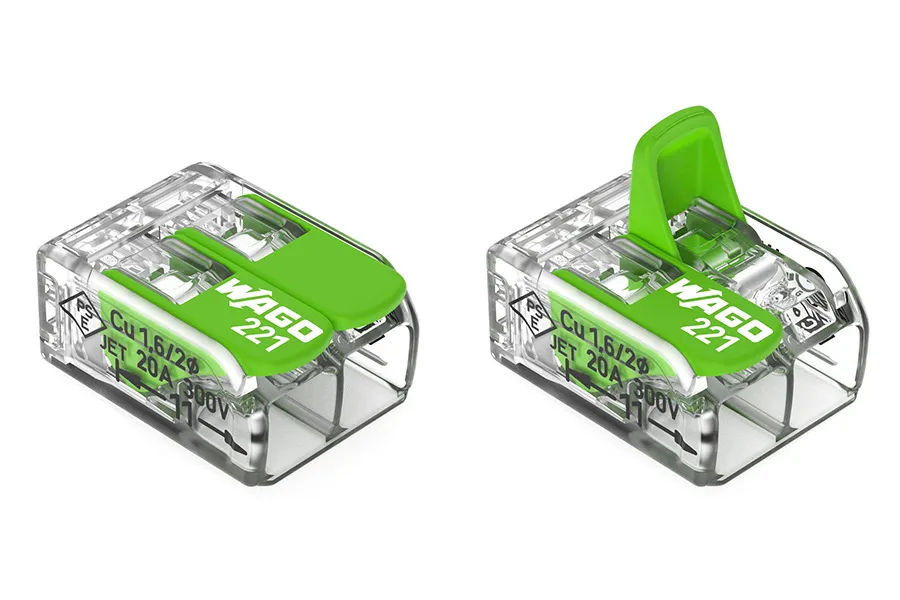
Packaged in grass paper
Following the launch of its connectors, WAGO has also made their packaging more environmentally friendly. Green Range lever connectors are supplied in grass paper packaging containing up to 30% grass fibres and around 70% recycled paper. “Producing grass paper results in 5.6% lower CO2 emissions and 11% less water consumption than producing paper made entirely from recycled paper,” says Brouwer. “It also has 28% less impact on biodiversity, because the grass fibres come from compensation areas designated for construction or from fallow agricultural land, which by law must be mown several times a year anyway. So, in every respect, we make a strong case for green.”
Have a business enquiry for WAGO? Get in touch
Companies in this story
Keep following this
Get an email when a new story is published. No account needed.
- SubjectYearbook
- CompanyWAGO