Compact MVHR ventilation system for homes
Text and images Alklima
Almost everyone regularly opens a window to air the living room or bedroom. Ventilation is important: if humidity levels are too high, for example, mould can develop and may lead to health problems. Today, however, many homes are so well insulated that simply opening a window is no longer enough to maintain constant, healthy and clean indoor air quality. What’s more, this wastes a lot of heat during the heating season. The solution? Alklima/Mitsubishi Electric’s residential Lossnay.
“This mechanical ventilation with heat recovery (MVHR) system is compact, quiet and easy to expand with other sensors, such as a CO2 meter,” says Peter Muizebelt, consultant at Alklima. Good ventilation refreshes the air and removes excess moisture, polluted air and odours. The required ventilation rate depends on the size of the home. The Lossnay range now comprises three models that provide optimum air quality with low energy consumption. The system is also available in mirrored versions, with left- and right-hand configurations. Airflow can be adjusted using the different settings. “So there is a suitable model for every new-build home.”
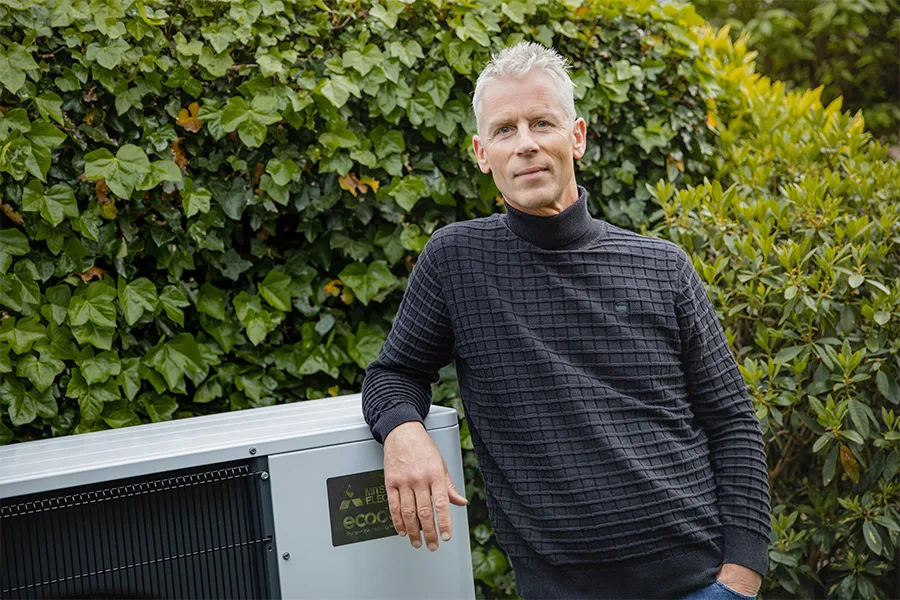
Fresh, filtered outdoor air
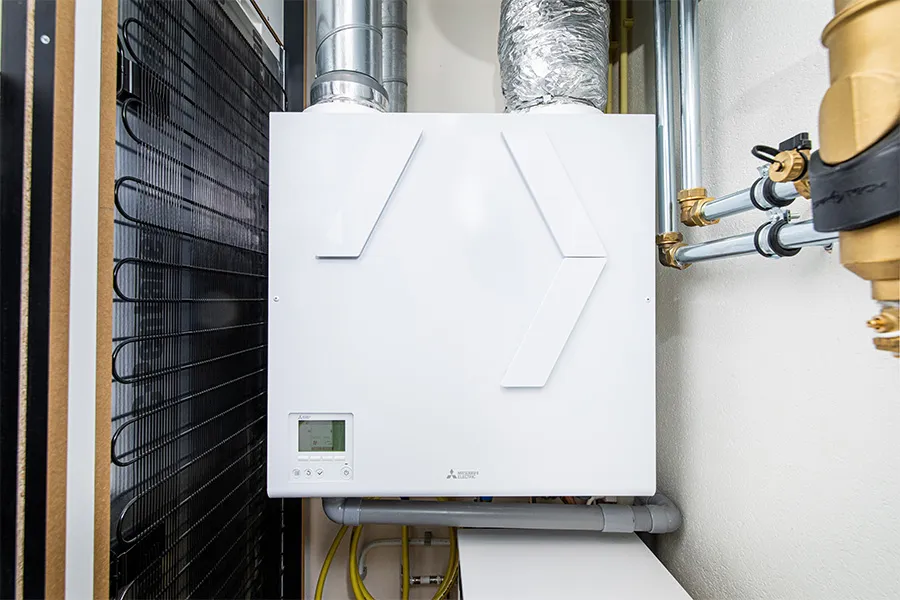
The Lossnay ventilation unit consists of a square box measuring approximately 70 centimetres wide and 50 centimetres deep. It can therefore be easily installed in a plant room or utility room. Four ducts connect to the unit, two of which lead outdoors. The two fan motors in the MVHR unit ensure that fresh, filtered outdoor air enters through one duct, while polluted air is discharged outside through the other. Another advantage is that the two fans can be adjusted independently, allowing the supply and extract ducts to be set for optimum performance. The other two ventilation ducts serve the home, either supplying fresh air to the living room and bedrooms or extracting polluted (and humid) air from the toilet, bathroom and kitchen.
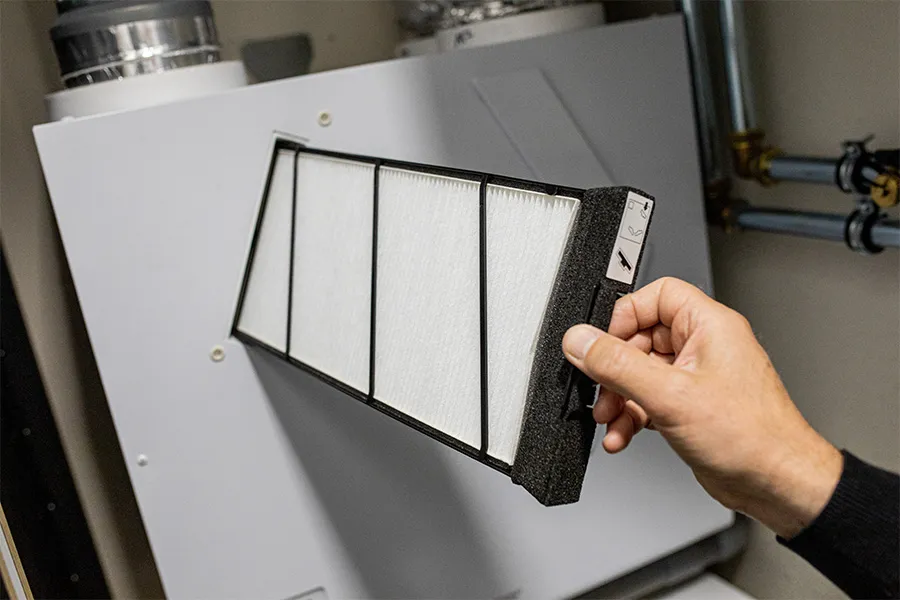
Controlled ventilation
“When you open a window, you lose all the heat energy that has already been generated,” says Muizebelt. “What’s more, you let humid air in. The major advantage of this MVHR system is that it supplies fresh, filtered air to your home in a controlled way, while most of the heat from the extract air is reused. This takes the Lossnay system beyond, for example, mechanical extract ventilation, where vents at the sides of windows supply fresh air which is then extracted at a central point. Heat recovery keeps indoor temperatures more even, so you need less heating to maintain a comfortable temperature in your home. There are also no perceptible cold draughts, which adds to comfort.” Thanks to efficient heat recovery, up to 90 per cent of that heat can be reused, he says. “That’s because the ducts are installed so that the airflows cross inside the MVHR unit, effectively acting as a cross-flow heat exchanger.”
Muizebelt often meets with consultants to share his knowledge of solutions for commercial and residential buildings. Ard Gijsendorffer of DENK! installatieadvies is one such consultant and specialises in energy-saving building services concepts. He describes the residential Lossnay as ‘almost silent’. “The Lossnay MVHR system is the most compact and easiest to install compared with other residential ventilation units. It offers effective air renewal and filtration, low noise levels and a range of connection options, depending on the mounting position. And, of course, it delivers maximum energy savings on ventilation.”
Bypass for free night-time summer ventilation
In winter, heating the air through the MVHR function is a major advantage, but in summer residents do not want this. In that case, the MVHR system can operate in reverse. “The incoming warm air is then cooled using the cooler air being discharged outside,” says Muizebelt. “The units also have an additional option for cooling the air in the home using a flap (bypass). This bypass prevents cooler outdoor air from flowing through the heat exchanger at night. As a result, no heat is recovered and the home is cooled (free of charge) with cool outdoor air.”
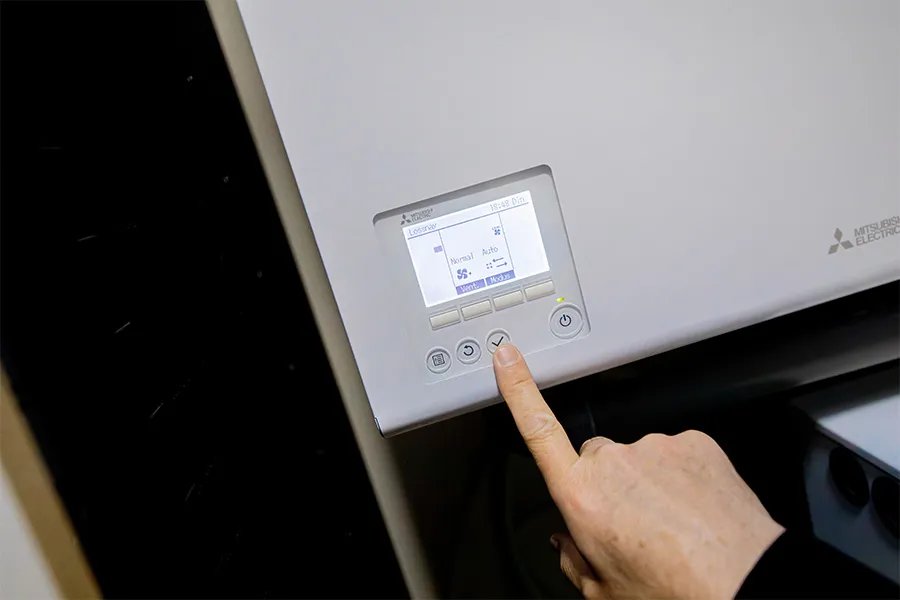
After purchase and installation, a technician balances the MVHR system to suit the different rooms in the home. A toilet is smaller than a kitchen, after all, and therefore needs less extract ventilation. The technician sets up the system so that each room receives the required airflow. “Sensors, such as a CO2 sensor, also ensure consistently optimum air quality. In principle, that is enough for a healthy and energy-efficient indoor climate,” says Muizebelt. “Still, many people like to be able to adjust it themselves too, for example by turning the system up a setting or using a boost button linked to the light switch. The Lossnay can also be controlled via an app using a Wi-Fi module.”
Question about this story? Ask your question
Keep following this
Get an email when a new story is published. No account needed.
- ThemeHealthy indoor air
- SubjectIndoor climate