Dry air in buildings makes people ill!
Text Lieke BousemaImage Condair
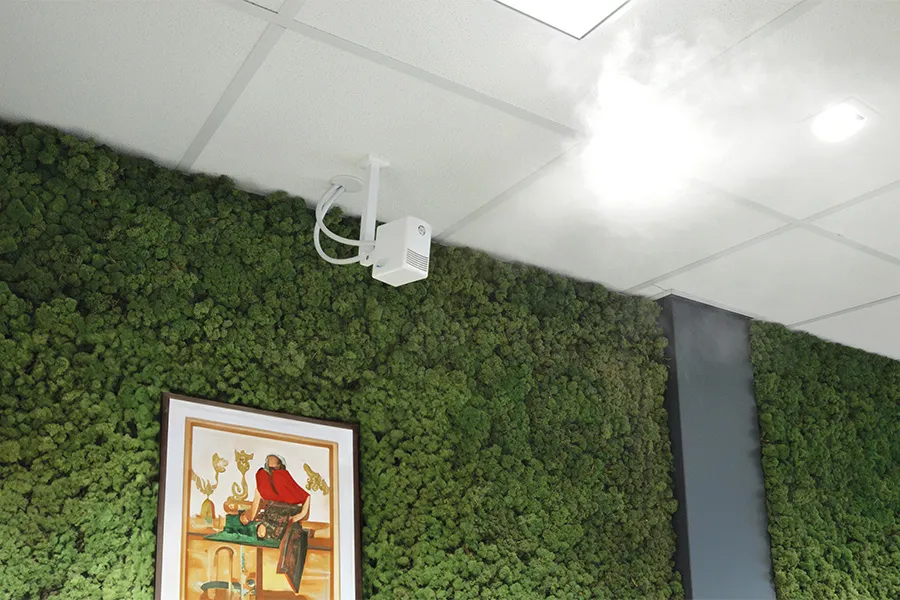
Suffering from a dry throat, burning eyes and irritated mucous membranes?
Every year, the onset of winter brings an increase in sick leave. This is particularly true in office buildings, where employees increasingly suffer from dry throats, burning eyes, irritated mucous membranes, hoarseness and dry skin. Bacteria and viruses can also spread more easily. The main cause is (overly) dry air. In this article, Condair Account Manager Ton Burgers and Marketing Manager Stefan Rijsmus explain what causes dry air in our buildings and how maintaining the right humidity can significantly reduce sickness absence.
In winter, and also during periods when our buildings are cooled, humidity is often far too low (<40%), Burgers explains. “This means bacteria and viruses can remain airborne for longer and infect us, especially as low humidity also weakens our immune systems. Independent studies, including research by Yale University, have now shown that the transmission of airborne viruses such as flu is significantly higher in environments where the air is too dry (<40%). Other negative effects of dry air include dry, itchy skin, contact lenses drying out, sore and tired eyes, discomfort and a dry, sore throat. These symptoms can easily be prevented by improving humidity (40-60%).”
How does dry air develop?
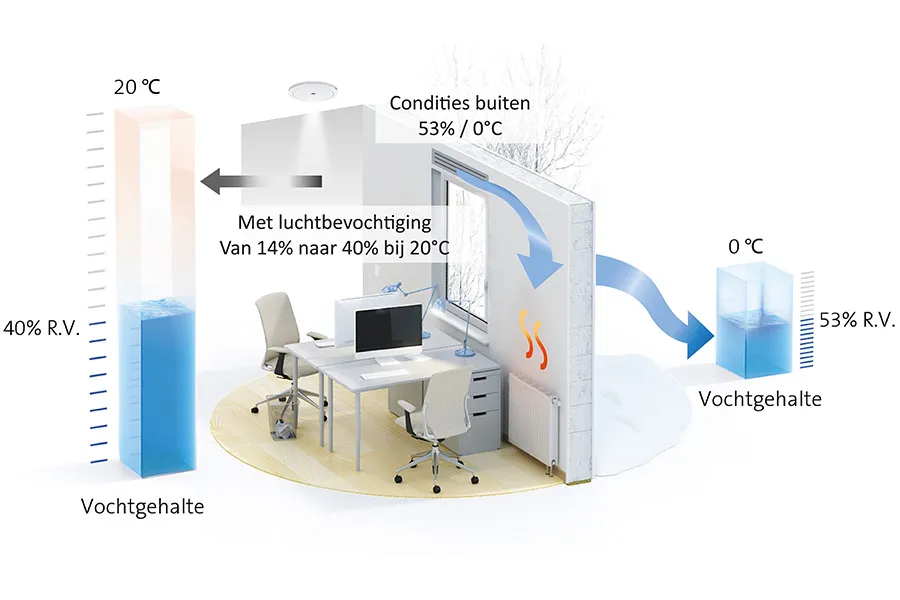
“Cold air can hold or absorb less moisture than warm air,” Rijsmus explains. “That is why washing on the line dries indoors in one to two hours in summer, while in winter you can wait until the cows come home. Applied to our buildings, this means indoor relative humidity drops as soon as cold outdoor air is brought in.” Burgers adds: “The cold outdoor air drawn in by the ventilation system is relatively humid. But when you heat or pre-treat it in the air handling unit, it expands. This leaves proportionally less moisture in the warm air, making it too dry. Relative humidity can even fall below 20%. The overly dry air supplied to the room then draws moisture from all the materials, objects and people in it, causing them to dry out as well. This leads to discomfort, respiratory complaints and a significantly higher risk of infection, including flu. For example, dry aerosols remain airborne for longer and can spread further. Electrostatic effects are also a risk, causing sheets of paper to stick together, jumpers to crackle and door handles to give an unpleasant shock.”
What role does humidification play?
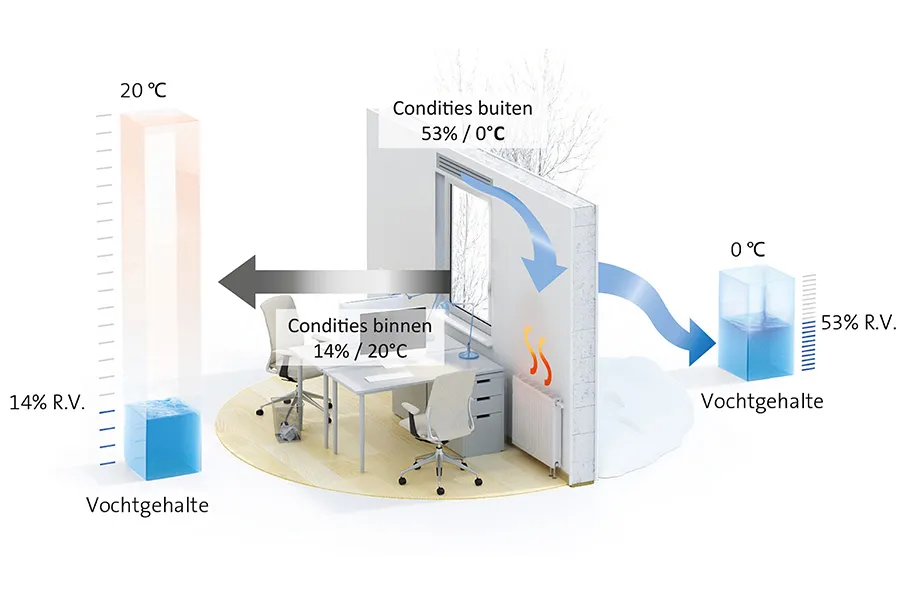
During the winter months, humidity in office buildings can easily fall below 20%, Burgers emphasises. “And yet humidity in buildings should be between 40-60%! This can only be achieved with a humidification system.” Contrary to popular belief, heat recovery wheels with moisture recovery do not have sufficient capacity to guarantee this target, he explains. “What is not in the air cannot be recovered. Investing in good humidification is therefore essential.” Condair addresses this need with an extensive range of (hybrid) adiabatic humidifiers, electric steam humidifiers and direct room atomisation systems, all of which operate entirely without gas. Condair’s account managers will be happy to advise you on the right humidification solution for your buildings, tailored to your requirements for energy consumption, hygiene, investment and maintenance costs.
Een zakelijke vraag aan Condair BV? Get in touch
Companies in this story

Keep following this
Get an email when a new story is published. No account needed.
- SubjectIndoor climate
- CompanyCondair BV