Effective and efficient cooling for computer rooms and data centres
Text Lieke BousemaImage UniCool
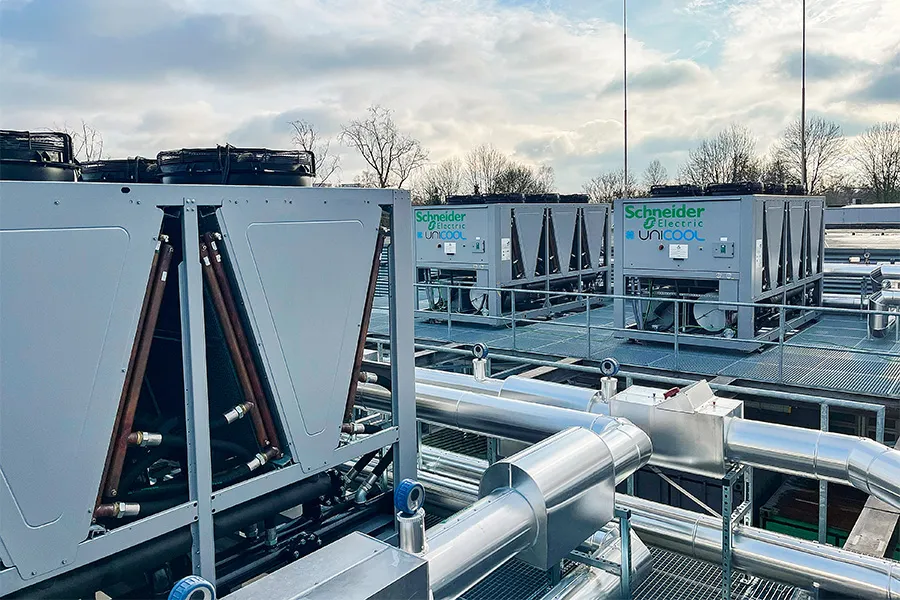
Computer rooms and data centres are at the heart of modern organisations, housing critical IT equipment. These spaces generate significant amounts of heat, making it challenging to maintain an optimal operating temperature, for example, to prevent performance losses and faults caused by overheating. In this article, Martijn Kolk, Sales Manager at UniCool, explains the need for cooling computer rooms and data centres. He also outlines the various cooling solutions available for efficiently removing the heat generated.
UniCool creates a healthy environment in data centres and server rooms. “We provide sustainable air conditioning, cooling, dry cooler and heat pump solutions from leading, innovative brands such as Schneider Electric,” says Kolk. “We focus not only on ensuring the IT infrastructure operates optimally, but also on people and the environment.”
The need to remove heat
A computer room, also known as a server room, is a dedicated space housing servers, storage equipment and network components. The continuous processing and high processing capacity of these systems generate significant amounts of heat. “This is particularly true of today’s graphics processing units (GPUs) for AI,” says Kolk. “This heat must be removed effectively and efficiently to ensure equipment performance and prevent faults caused by overheating.”
The temperature in a computer room must be carefully controlled, he stresses. “If the temperature gets too high, the servers can overheat, leading to reduced performance, faults or even permanent damage. Cooling is therefore an essential part of computer room design. The aim is to remove the heat generated by the equipment effectively without compromising operational efficiency or increasing energy consumption.”
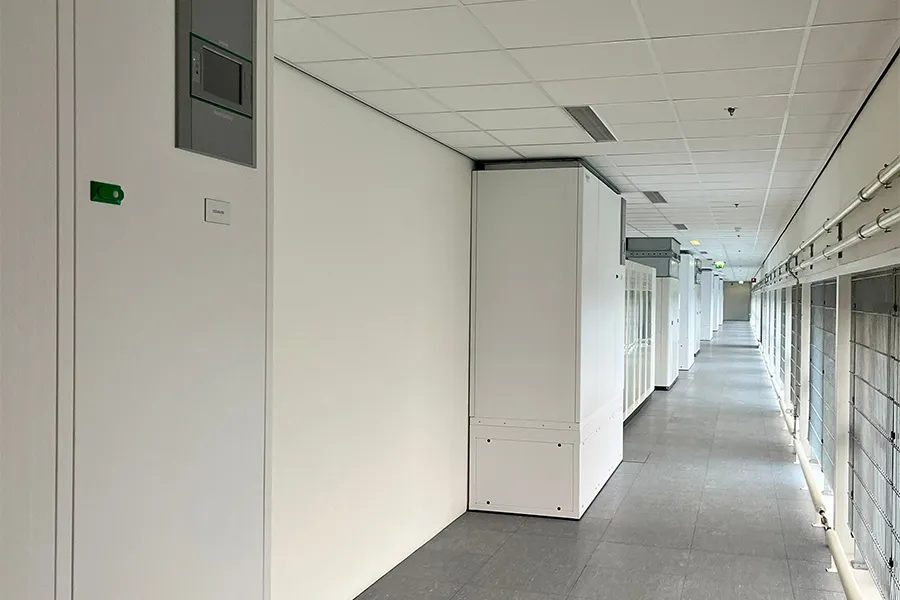
Key factors for efficient cooling
The amount of heat generated and the best method for removing it depend on several factors, including:
- Equipment power: the more powerful the server or device, the more heat it generates. Modern high-performance servers often consume a lot of energy and produce significant amounts of heat.
- Number of devices: larger data centres can have thousands of servers running simultaneously, significantly increasing total heat output.
- Room layout: the way equipment is positioned and airflow is designed affects cooling efficiency.
A wide range of cooling solutions
There are several ways to cool computer rooms and data centres, each with its own benefits and applications. UniCool’s partner Schneider Electric offers a comprehensive portfolio:
- Computer Room Air Conditioners (CRACs DX) are designed specifically to cool small to medium-sized computer rooms and use direct expansion. The units operate continuously, 24 hours a day, 365 days a year, and ensure precise temperature and humidity control.
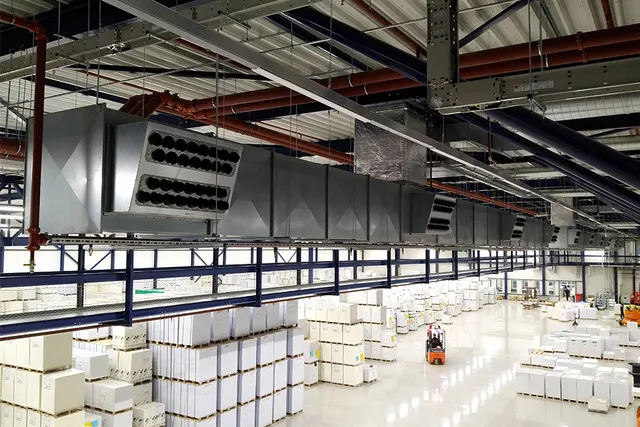
- Computer Room Air Handlers (CRAHs CW) are designed specifically to cool medium-sized and large computer rooms. The units operate continuously, 24 hours a day, 365 days a year, and ensure precise temperature and humidity control. These systems use water as the cooling medium and are connected to chillers with free cooling and/or dry coolers.
- Free cooling uses outside air to cool the computer room. It is particularly effective in climates with low outdoor temperatures. The outside air is filtered and used directly to cool the indoor air or to cool the water.
- Liquid cooling uses liquids such as water or non-conductive fluids to remove heat. This system is highly efficient and is used particularly in high-density data centres (AI).
“The choice of cooling system depends on the cooling capacity required,” says Kolk. “CRAC units are often sufficient for small computer rooms, while large data centres may need more advanced systems, such as chilled-water systems with free cooling or liquid cooling.”
Power Usage Effectiveness (PUE)
Cooling data centres is not only a technical challenge, but also a challenge in terms of energy consumption and sustainability, he stresses. “Cooling data centres requires significant amounts of energy. That is why there is an increasing focus on energy efficiency and the use of sustainable energy sources. Power Usage Effectiveness (PUE) is a widely used measure of data centre energy efficiency. It indicates the ratio between the total energy consumed by a data centre and the energy actually used by its IT equipment. The lower the PUE, the more energy-efficient the data centre.”
Modern data centres use energy-efficient cooling systems, including intelligent controls, EC fans, variable-speed pumps and advanced cooling technologies such as liquid cooling. They are also increasingly using 100% renewable energy sources, such as solar or wind power, to meet the energy needs of cooling systems and IT equipment.
Een zakelijke vraag aan UniCool? Get in touch
Companies in this story

Keep following this
Get an email when a new story is published. No account needed.
- SubjectIndoor climate
- CompanyUniCool
- CompanySchneider