Green underfloor heating systems, Made in Holland
Text Lieke BousemaImage Magnum Heating
MAGNUM Heating manufactures and assembles almost all its products in-house, in its own production facilities. “This allows us to coordinate and monitor the process from start to finish, ensuring optimum quality control,” says Stefan de Graaf, Sales Director Netherlands at MAGNUM Heating. “Our underfloor heating systems have a very long service life and are ideally suited to the fundamental transition from fossil fuel heating sources to sustainable climate solutions. We are continually refining our production and logistics processes, with the aim of making our carbon footprint as small as possible.”
HeatBoard dry construction system
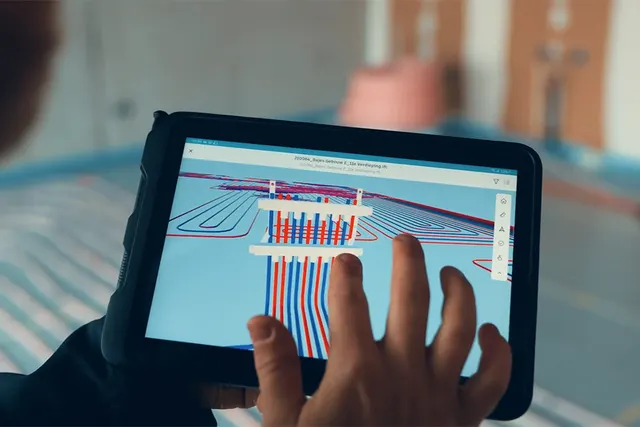
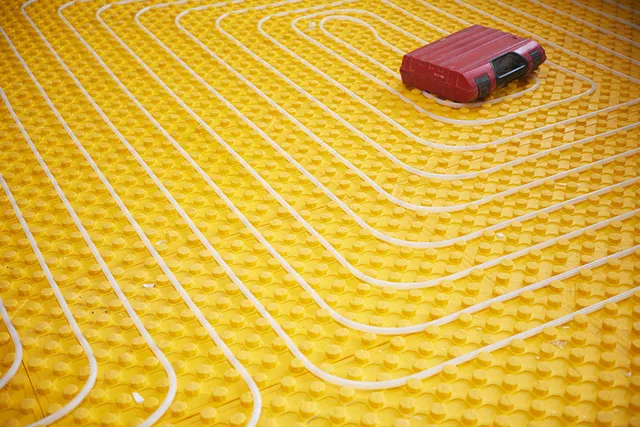
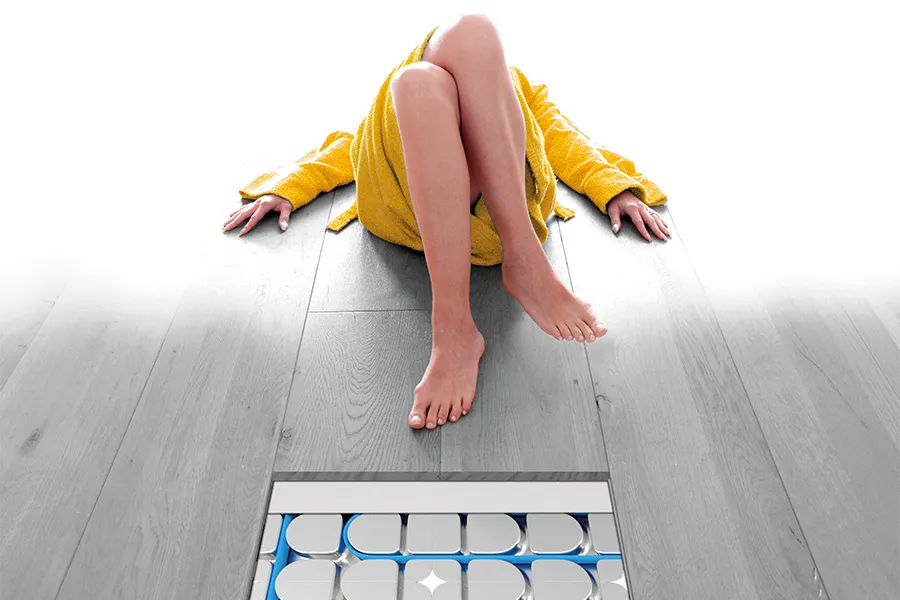
MAGNUM HeatBoard plays an important role in this, and is available in both hydronic and electric versions. “The system is based on a high-density EPS panel with an aluminium top layer, which helps distribute heat more evenly,” says De Graaf. “The system panels can be laid quickly and easily on the dry floor, fitting together like puzzle pieces, after which underfloor heating pipes or cables can be clipped into the pre-formed channels. A major advantage of our panels is that they can be installed on any subfloor, even a rough one. This makes Magnum HeatBoard particularly suitable for the renovation market. When underfloor heating can be combined with solar panels, self-sufficient living also becomes possible.”
Microwaves instead of gas
“With energy challenges in mind, we have actively looked for new technologies, for example, to produce our EPS,” says De Graaf. “Sustainability and efficiency were our priorities. We aim to manufacture our products as sustainably as possible. For example, while our current machines use gas in the production process, our latest machine uses microwaves to fuse the EPS. This fully electrifies the production process. As we no longer need gas, our CO2 emissions are significantly reduced.”
The new production method also makes it possible to process 50 per cent recycled material, De Graaf emphasises. “This allows us to make an important contribution to closing the materials loop. It also improves the compressive strength of the insulation panels. We aim for win-win outcomes by developing and offering green, innovative products that meet our customers’ needs, including those related to the energy transition, without compromising on the ease of installation and effective heat output that customers have come to expect from MAGNUM Heating.”
Making production more sustainable
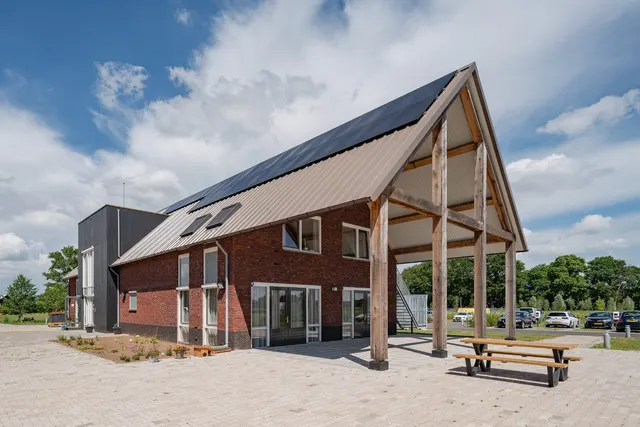
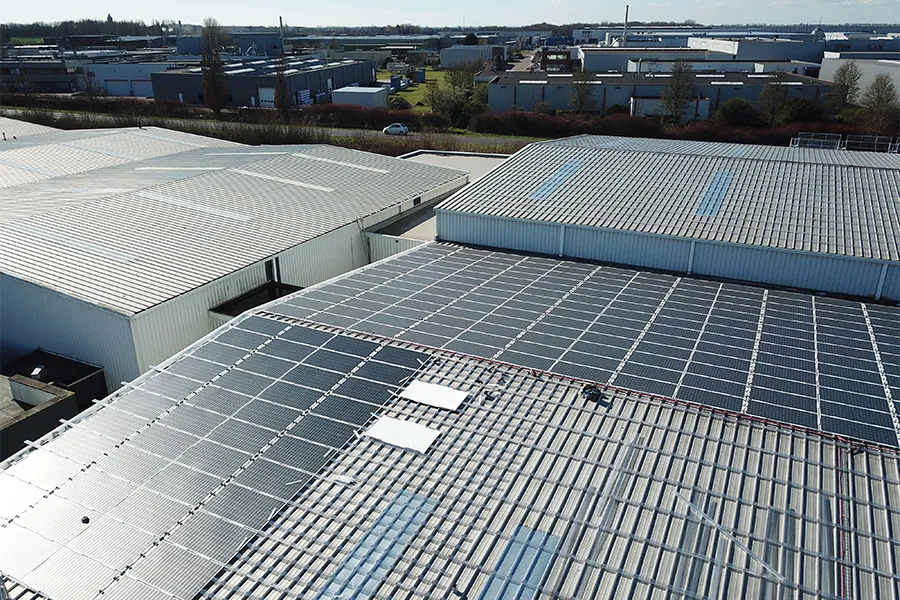
Special lightweight solar panels were installed at MAGNUM Heating’s production site last summer, placing minimal load on the roof structure. “The number of panels was calculated to make the best possible use of all the energy generated in the production of underfloor heating pipe,” says De Graaf. “By now, panels cover about half of our available roof area. This was a deliberate choice, because the lack of capacity in the electricity grid in Tholen/Zeeland currently makes it impossible to feed surplus electricity back into the grid. Hopefully this will change in the future, but in the meantime we are exploring the possibility of storing our own energy in batteries. Plans are already well advanced, which would allow us to install more panels on our roofs.”
New logistics hub
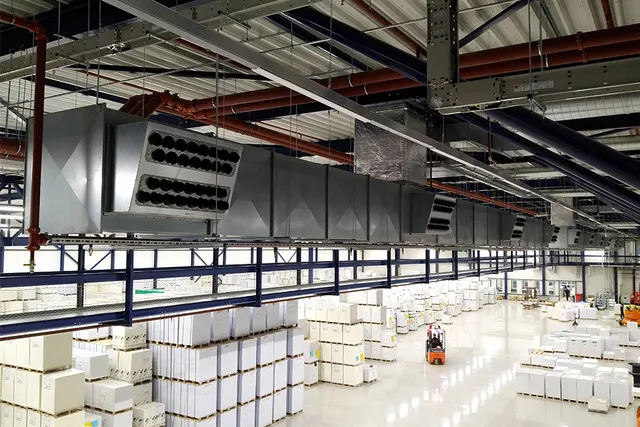
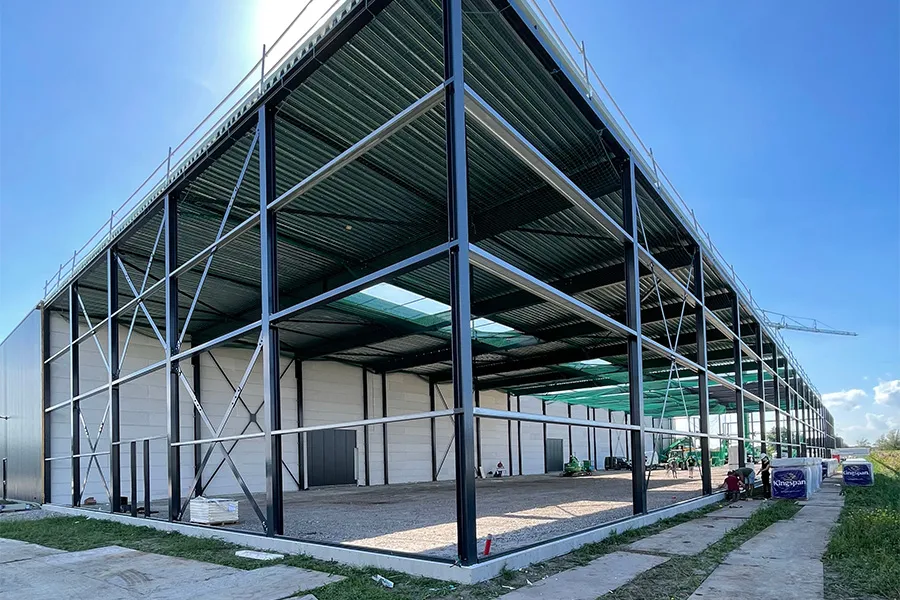
A new logistics hub behind MAGNUM Heating’s current premises on Stevinweg is due for completion at the end of December. “With a floor area of 3.430 m2 and three loading docks, our new facility will provide space for 3,400 pallet locations,” says De Graaf. “This expansion is necessary in view of the expected growth in production and sales of underfloor heating systems, driven in particular by the energy transition. The construction of the hub also symbolises our ambition to play a leading role in making our energy supply more sustainable.”
Question about this story? Ask your question
Keep following this
Get an email when a new story is published. No account needed.
- ThemeGas-free heating and cooling
- SubjectIndoor climate