INSULATING = VENTILATING
Text Lieke BousemaImage Ned Air
Buildings cannot be made more sustainable without good ventilation
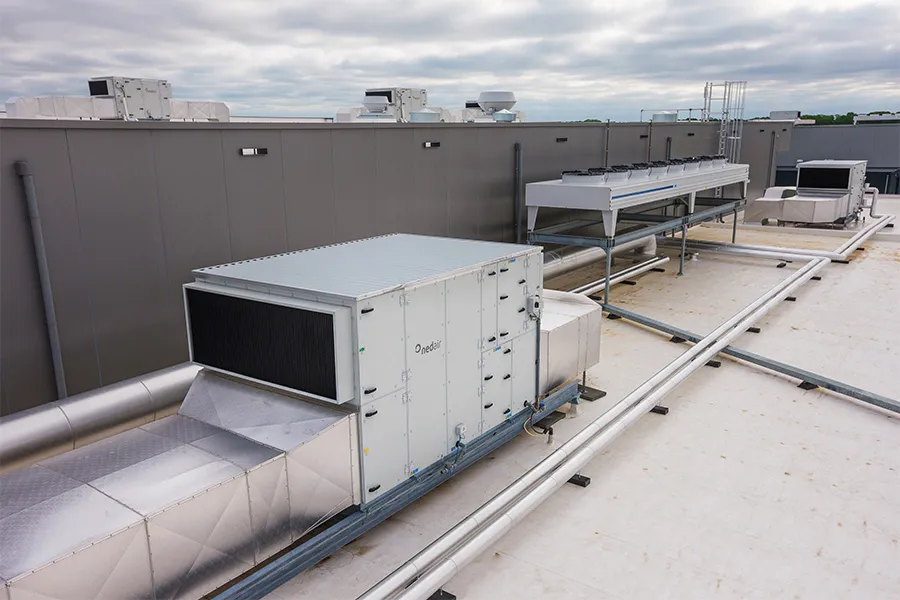
Improving the sustainability of buildings is high on the agenda for companies and institutions. Driven by rising energy costs and the 2030 climate targets, they are switching from gas-fired to sustainable heating and cooling systems. Significant investment is also being made in insulating walls, floors and roofs, sealing gaps and cracks, and installing insulating glazing. “Good ventilation must be part of any insulation plan,” stresses Marco Scholten, Area Manager at Ned Air. “For example, to prevent the build-up of CO2, moisture and mould. Only when insulation and ventilation are perfectly balanced can a healthy, comfortable and energy-efficient working environment be achieved.”

Scholten says that most buildings being made more sustainable date from the 1970s and 1980s. “When the building envelope of these buildings is insulated, more heat stays inside. At the same time, however, natural ventilation through gaps and cracks is lost. As a result, the capacity of the ventilation system has to be increased to ensure good indoor air quality.” Current ErP legislation also calls for higher airflow rates, he explains. “Most existing air handling units do not have enough spare capacity to handle these volumes, making replacement necessary. An added benefit for building owners is that they can immediately take advantage of heat recovery, which is mandatory under the European Ecodesign Directive for new air handling systems supplying more than 90% outside air.”
Working with the client, consultant and installer
Ned Air is happy to play a part in replacement projects, working closely with the client, consultant and installer. “The consultant will often have already carried out a site survey, after which we select the right air handling unit or units based on factors such as airflow rates, external pressures and the temperature range of the heat source, whether a heat pump or central heating boiler,” says Scholten. “If there is no consultant, we carry out the survey ourselves. We always take into account the building’s content and function, the number of people present each day, the technical and aesthetic requirements, and any user preferences.”
The right solution for every situation
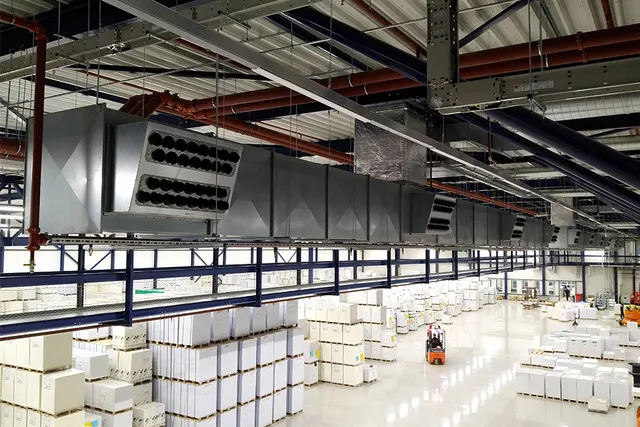
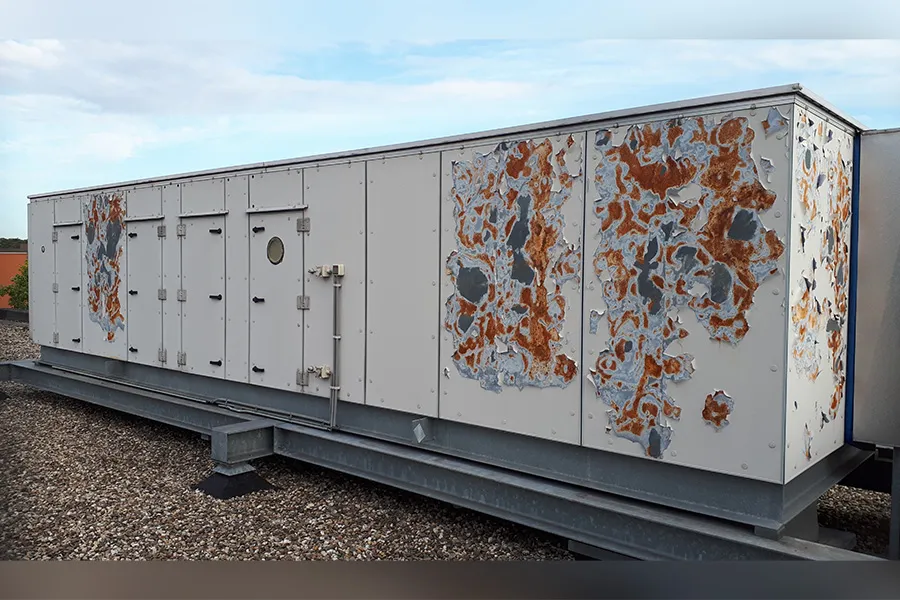
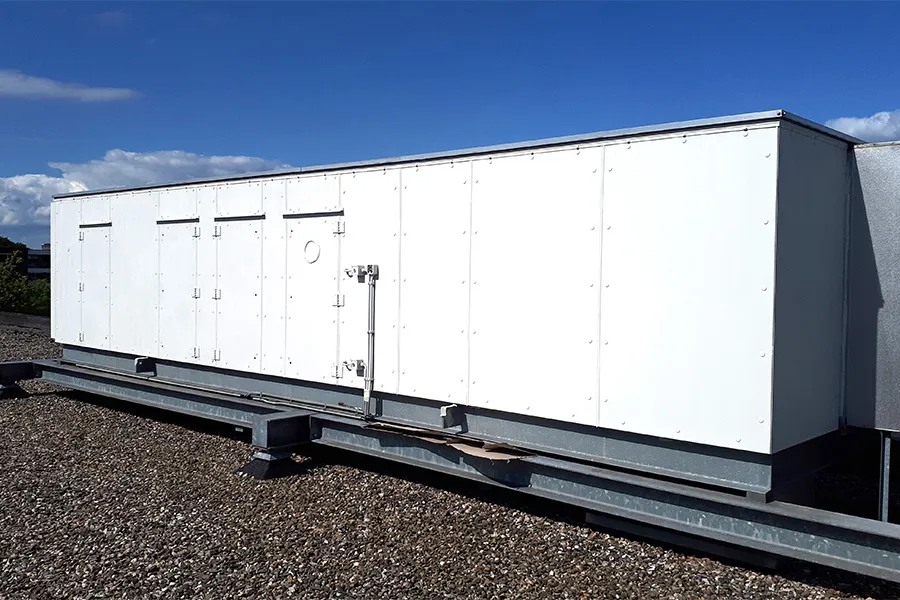
During the survey, Ned Air checks whether a heat source is already available. Does the air handling unit need to be installed inside the building or on the roof? What are the maximum dimensions? And does moisture, as well as heat, need to be recovered from the extract air? “As we supply air handling units with both rotary heat exchangers and plate heat exchangers, with capacities from 800 to 20,000 m3/h, we can meet every requirement,” Scholten stresses. “It is often better to install several smaller units rather than one large air handling unit. In this case, the ductwork is easier to handle. It also delivers significant energy savings.” As an example, he cites a multi-purpose building where, on Ned Air’s advice, the rooms along the north and south façades are conditioned separately. In a project for a technology company, the new air handling units use plate heat exchangers to actively recover heat, while odour transfer has been eliminated. The indoor temperature is also now constant in both summer and winter, Scholten says. “This makes working much more pleasant for all employees and considerably extends the service life of the machinery. We always aim for the most effective solution.”
Revitalising existing units
When the budget for improving sustainability is limited, Ned Air can also revitalise existing air handling units. “For example, old belt-driven fans can be replaced with plug fans, significantly reducing the current draw (amperage),” says Scholten. “Old cooling and heating coils are replaced with new ones, and, where possible, a plate heat exchanger is also added, with the aim of saving as much energy as possible. Without compromising on an adequate supply of fresh air.”
A business enquiry for Ned Air? Get in touch
Companies in this story
Keep following this
Get an email when a new story is published. No account needed.
- ThemeHealthy indoor air
- SubjectIndoor climate
- CompanyNed Air