Ventilate first, insulate afterwards!
Text Chris Elbers/Brink Climate SystemsImage Brink Climate Systems
Prompted by high energy prices and the climate targets set for 2030, more and more people are switching their heating and cooling systems from gas-fired to all-electric or hybrid. These innovations often deliver the highest efficiency at the lowest water temperature. It is therefore vital to assess the building envelope properly, so that the system can perform optimally and residents are not still left with a hefty energy bill. Fortunately, this is driving substantial investment in insulating walls, floors and ceilings, sealing joints and gaps, and installing energy-efficient glazing. These are hugely important measures to make homes more sustainable. But there is one more essential step. It must be mentioned in the same breath as insulation: ventilation.
Asked what sealing a home means for indoor air quality, Vincent Clausen, product manager at Brink Climate Systems, gives a clear-cut answer. “If you don’t think carefully about ventilation beforehand, homes won’t get enough fresh air. As a result, moisture, dust, particulate matter and CO2, for example, quickly build up indoors. Aside from being unpleasant to breathe in, these pollutants can also cause health problems. A CO2 concentration that is too high, for instance, can cause headaches, fatigue and drowsiness. That is far from pleasant or healthy. To avoid a major renovation, opening the windows may seem to be the resident’s only option. But that would obviously waste all the effort put into insulation. What’s more, you would be letting in not only healthy air, but also air polluted by traffic, industry or wood smoke, for example. Good ventilation can prevent all of this. Ideally, choose a ventilation unit with heat recovery (HRV, ed.), so the home can be ventilated much more intelligently.”
A solution for existing homes
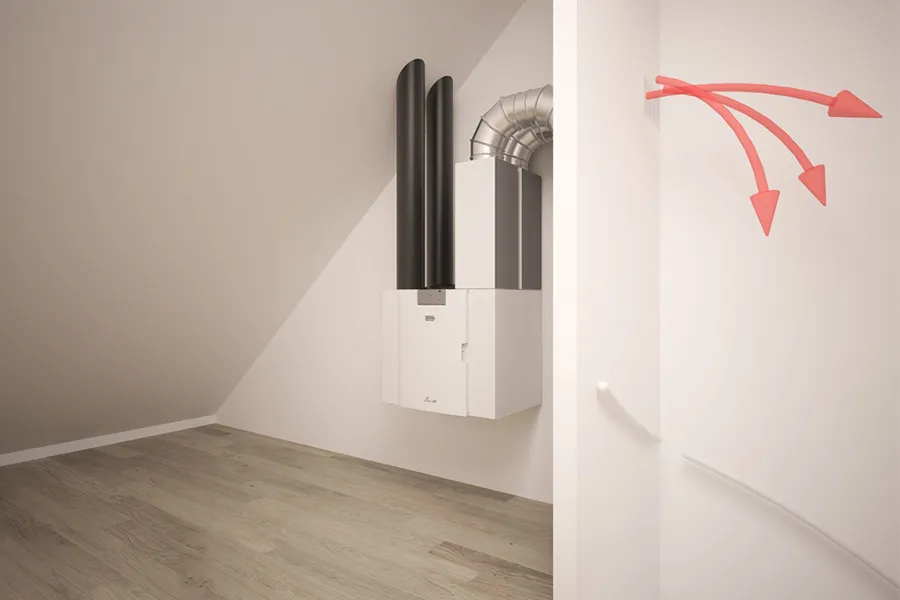
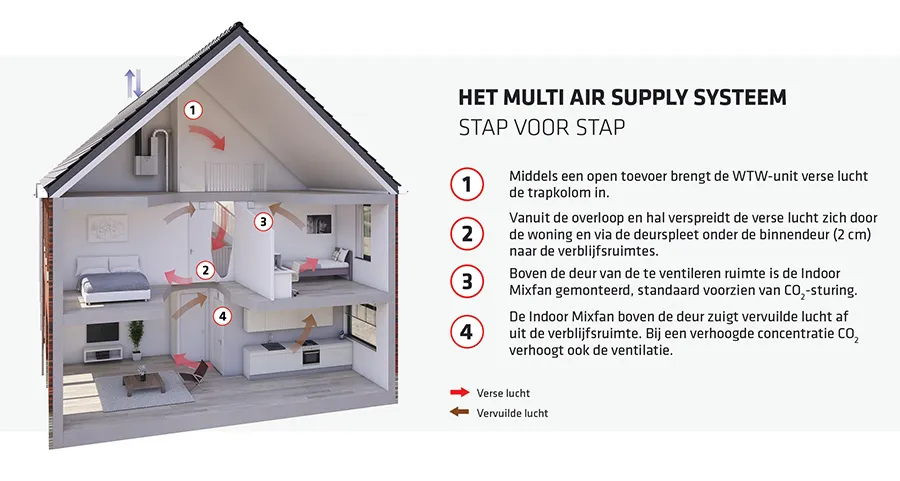
To support residents through the energy transition and create a healthy indoor climate, Brink Climate Systems has developed the Multi Air Supply system specifically for existing homes. This CO2-controlled ventilation system comprises an HRV unit (such as the Flair) and several smaller fans (Indoor Mixfans) that can be installed in living areas.
No supply duct required
This solution not only creates a better, more comfortable indoor climate. Choosing this ventilation system also means there is no need to install a supply duct. “That makes it possible to install a complete HRV ventilation system in existing homes quickly and easily, without major alterations,” says Clausen. “The extract ducts often already present in the bathroom, toilet and/or kitchen are sufficient. In short, this system makes it possible for everyone to benefit from the energy transition. At the same time, we are actively contributing to residents’ health and wellbeing. These aspects are also firmly at the heart of Brink Climate Systems.”
Een zakelijke vraag aan Brink Climate Systems? Get in touch
Companies in this story

Keep following this
Get an email when a new story is published. No account needed.
- ThemeHealthy indoor air
- SubjectIndoor climate
- CompanyBrink Climate Systems