Advanced energy supply keeps Saxenburgh Medisch Centrum powered
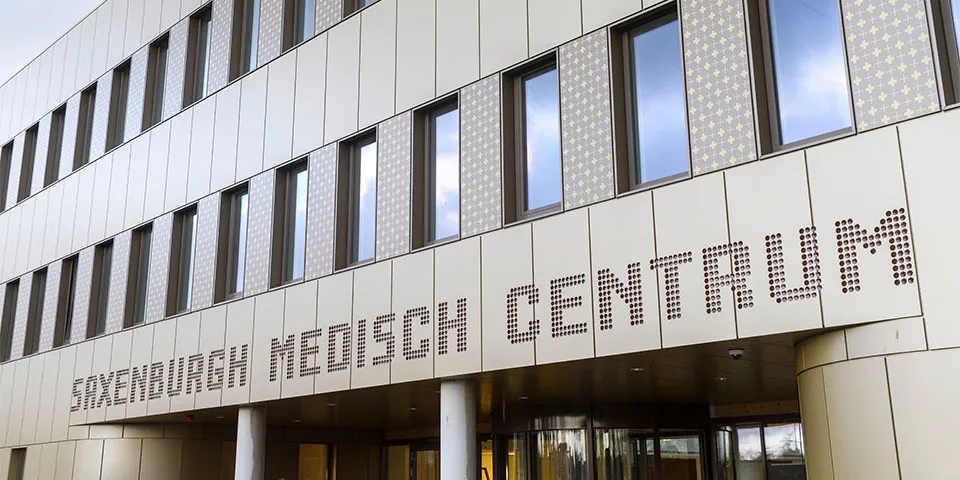
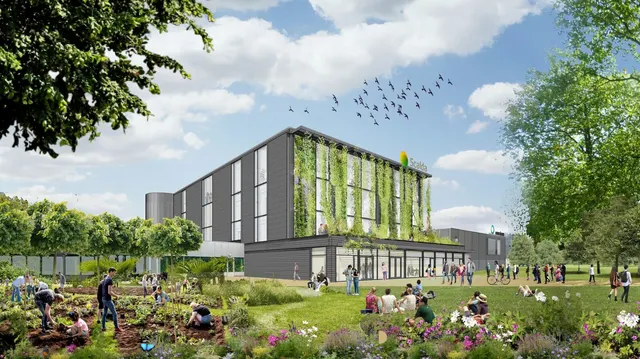
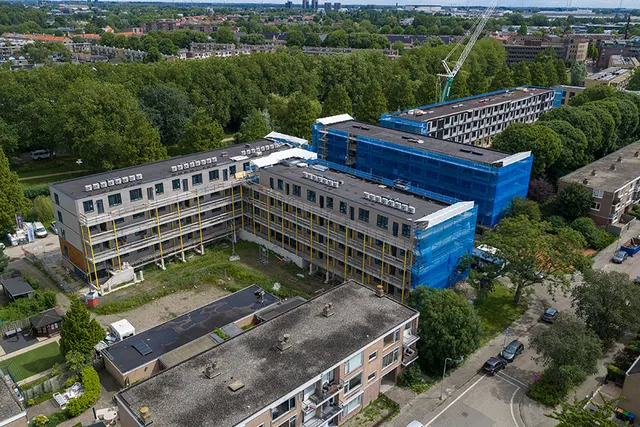
Saxenburgh Medisch Centrum was completed in Hardenberg at the end of March. The new hospital on Jan Weitkamplaan is set to replace the existing Röpcke-Zweers Ziekenhuis. Built in 1969, the hospital no longer meets today’s requirements. The client, Saxenburgh Groep, opted to create a compact and sustainable building. The number of beds is being reduced from 176 to 130. In addition, the new medical centre has 30% less floor space than the old hospital. After the new facility opens in May, the old building will be demolished and replaced with parking facilities. However, some of the outpatient clinics will remain, as will the ambulance station, family chalet, psychiatry department and energy centre.
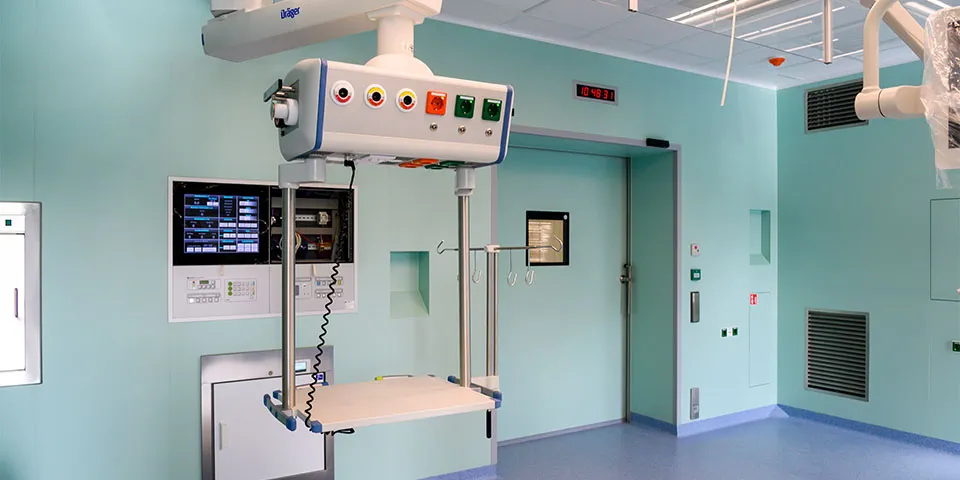
If the mains power supply to Saxenburgh Medisch Centrum should fail, Hager’s PLC control system ensures that the emergency generator starts within 15 seconds and that all critical installations remain powered. (Image: Anton van Daal / HOMIJ Technische Installaties).
IAA Architecten in Enschede designed the new hospital. Dura Vermeer and Goossen Te Pas Bouw were responsible for construction, while HOMIJ Technische Installaties was responsible for all building services, from climate control and energy supply to access control, data and security systems, as well as measurement and control technology. “All the building’s installations are designed to save energy and reuse it,” says Hennie van Hunen, technical inspector at HOMIJ Technische Installaties. “We installed a radiator-based heating system for the hospital. The system operates at low temperatures, up to 55°C, which allows the rooms to be heated more evenly and consistently, and more sustainably, than with a ‘traditional’ central heating system. Fourteen air handling units on the roof supply the hospital with sufficient fresh air.”
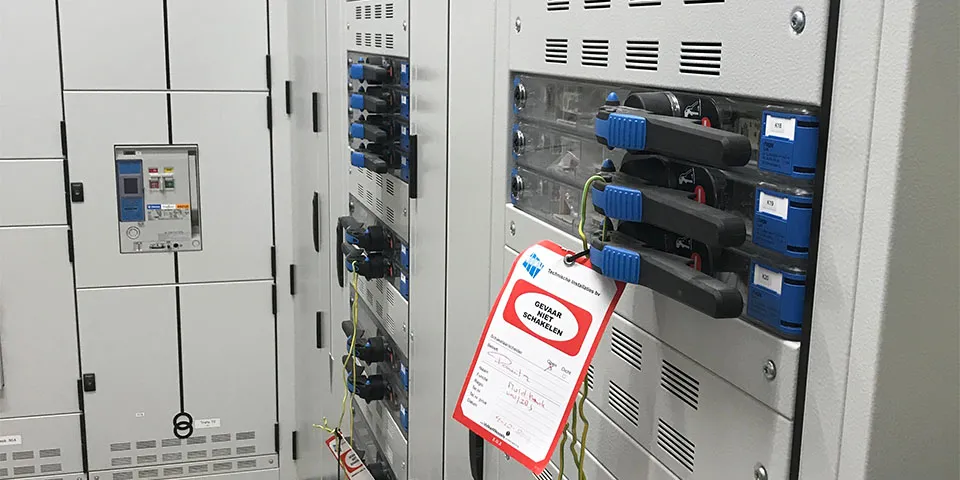
“To ensure an optimal connection between the two buildings, we recommended Unimes main distribution boards with automated, integrated PLC control, built and programmed in-house.”
Optimal connection
A 10kV connection has been installed on the site for power distribution. “We installed two transformers in the new building,” says Van Hunen. “We also laid a cable to the old energy centre, where a third transformer has been installed. We disconnected the existing emergency generator in the energy plant from the old building, serviced and tested it, and connected it to the new installation. A temporary emergency generator keeps the old building operational.” Hager main distribution boards have been installed both in the energy centre and in the new building. HOMIJ Technische Installaties regularly works with Hager, particularly on large projects. “The main challenge on this project was the distance between the existing energy centre and the new building, which are more than 300 metres apart,” says Daniel Leermann, project manager at Hager. “To ensure an optimal connection between the two buildings, we recommended Unimes main distribution boards with automated, integrated PLC control, built and programmed in-house. The distribution boards communicate via a fibre-optic cable. If this cable should accidentally be severed, all switching operations are automatically ‘frozen’, preventing any power outage.”
Priority and non-priority circuits
“The PLC control system not only provides an optimal connection, but also ensures excellent priority switching,” says Van Hunen. “If the mains power supply to Saxenburgh Medisch Centrum should fail, the PLC control system ensures that the emergency generator starts within 15 seconds and all critical installations remain powered. These include the operating theatres, access control systems and the priority green sockets in the patient rooms.”
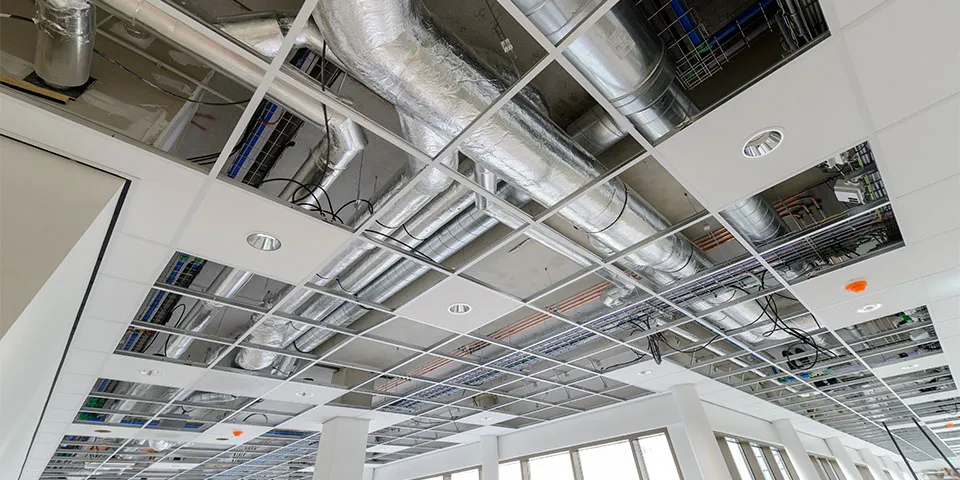
All the building’s installations are designed to save energy and reuse it.
(Image: Anton van Daal / HOMIJ Technische Installaties).
KNX control
The main distribution board for the new building has been installed in the ground-floor plant room. “Because space was limited, we designed and built this main distribution board in a U-shaped configuration,” says Leermann. “On the floors, 19 Univers sub-distribution boards from Hager have been installed, built by our panel-building partner PS Nederland. The sub-distribution boards also have priority and non-priority sections and are controlled from the main distribution board. They are also equipped with Hager KNX control, configured by HOMIJ Technische Installaties. KNX control not only enables excellent lighting control, but also ensures that the non-priority installations restart when the mains power supply is restored.”
High praise
Before leaving Hager’s Service & Competence Center Verdelertechniek in Coevorden, the main distribution boards underwent a Factory Acceptance Test (FAT), attended by HOMIJ Technische Installaties and the technical services team at Saxenburgh Medisch Centrum. “After installation, a Site Acceptance Test (SAT) of the emergency generator and an Integrated Site Acceptance Test (ISAT) of the complete energy supply were also carried out. All possible faults were simulated and the operation of the priority installations was checked,” says Van Hunen. “All the installations were then commissioned.” Three days before the ISAT, HOMIJ Technische Installaties decided to add some maintenance data to the control software, enabling all transformer installations to be switched off at the touch of a button so that maintenance could be carried out. “Hager handled this additional work very efficiently. All the tests were also completed without any problems. An excellent achievement by Hager’s project team, which deserves great praise.”
A business enquiry for Hager? Get in touch
Companies in this story

Keep following this
Get an email when a new story is published. No account needed.
- SubjectProjects
- CompanyHager