Plug-in installations in concrete? It’s possible at Lage Bothof!
More and more installers are using plug-in products. It’s hardly surprising when you consider the benefits, including a significant reduction in failure costs, minimal installation time and substantial savings on skilled labour on site. Lammerink Installatiegroep has been aware of these benefits for many years. One of the first in the market, the installer from Ootmarsum embraced plug-in installation. It deliberately chose WAGO’s WINSTA® system, which, according to Electrical Installations Engineer Arjan Snippert, “ensures high quality and is also readily available with short lead times”.

“We have fitted part of the WAGO cable with flexible installation conduit, then mounted it in a PVC T-piece and installed it on the formwork deck.”
“The 100% plug-in system is compatible only with WAGO, ruling out combinations with other brands. This means it always complies with the NEN 1010 standard,” Snippert emphasises. “Installation simply involves connecting the correct plug-in connectors. WAGO WINSTA® also has distribution blocks, so our installers no longer even need to make any circuit connections on site.” He says that contact with WAGO’s account managers is very good and efficient. “Questions are answered quickly, and they are always willing to think things through with us, so we can make the right product choices for every project.”
A range of projects in housing and non-residential construction
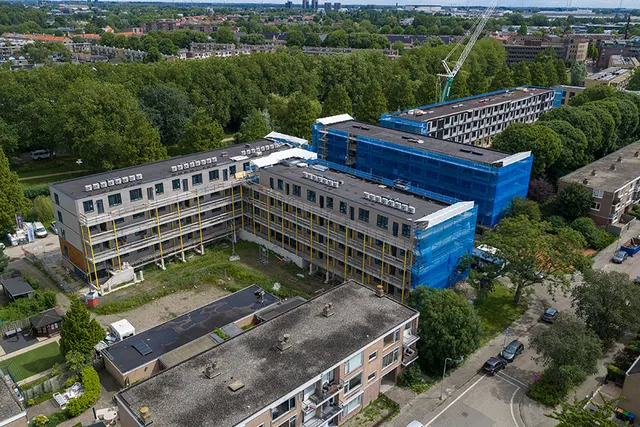
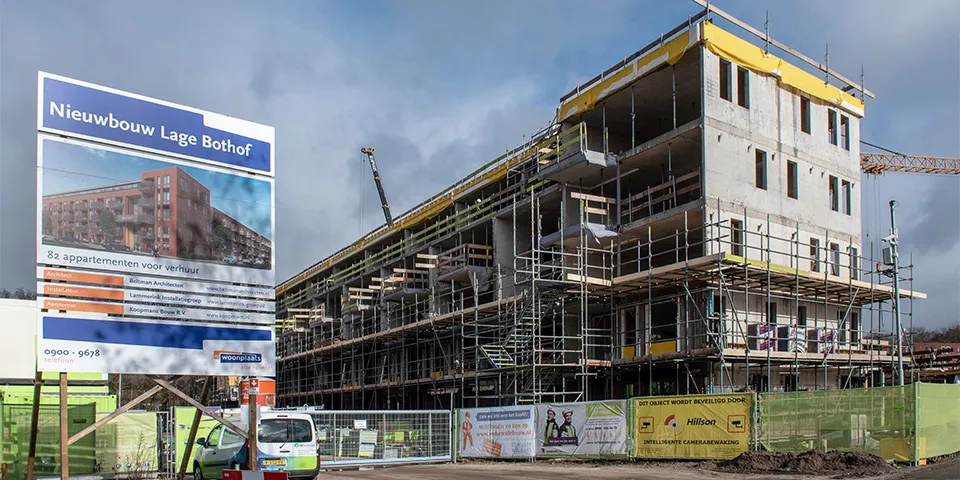
Lammerink Installatiegroep first used WAGO WINSTA® at the Van der Valk hotel in Veenendaal, which was completed in December 2014. “Since then, we have used WAGO’s plug-in systems at the Faculty of Geosciences, the Minnaert Building and the Earth Simulation Lab at Utrecht University, among other projects. We are currently working on the plug-in installation for a new apartment block with 100 homes on Lage Bothofstraat in Enschede.”
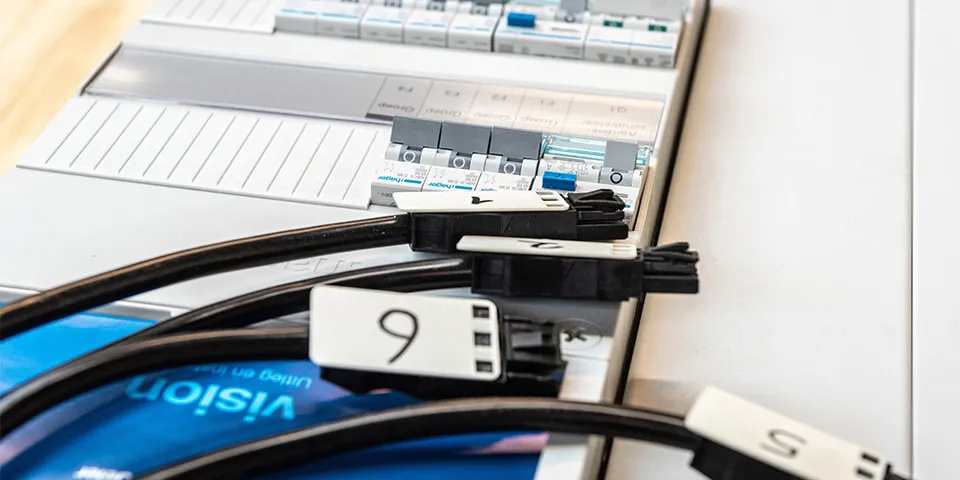
The project team deliberately chose WAGO’s WINSTA® system, which, according to Electrical Installations Engineer Arjan Snippert, “ensures high quality and is also readily available with short lead times”.
Lage Bothof was initially planned as a fully conventional build, Snippert explains. “However, the contractor was facing long lead times for the wide slab floors, putting the schedule at risk. These are now being replaced by table formwork, with the contractor installing the reinforcement and pouring the concrete on site. This meant extra work stages to install the services. To minimise these, we decided in consultation with WAGO to use plug-in installations alongside conventional drainage materials. We built one trial apartment, then proceeded with the prefabrication of the installations for the remaining homes. All prefabricated sets are delivered to site just in time. The same applies to the prefabricated packages from Technische Unie, which supplies all the materials.”
Plug-in cabling
The project has retained the ceiling rose boxes so residents can install their own lighting, Snippert explains. “Pass-through boxes are fitted above the metal stud walls, allowing us to connect the WAGO WINSTA® installations easily. We use WAGO cables with a plug at one end and bare wires at the other. The wires are connected in the ceiling rose boxes, and the cables are prefabricated in our workshop. We have fitted part of the WAGO cable with flexible installation conduit, then mounted it in a PVC T-piece and installed it on the formwork deck. The WAGO cables are 30 centimetres longer, so the plugs can easily be pulled out of the floor once the formwork has been removed.” Once the wall contractor has installed the metal stud framework, the plugs from the T-piece are connected to WAGO connection cables, which bridge the gap between the concrete floor and the prefabricated switchgear.
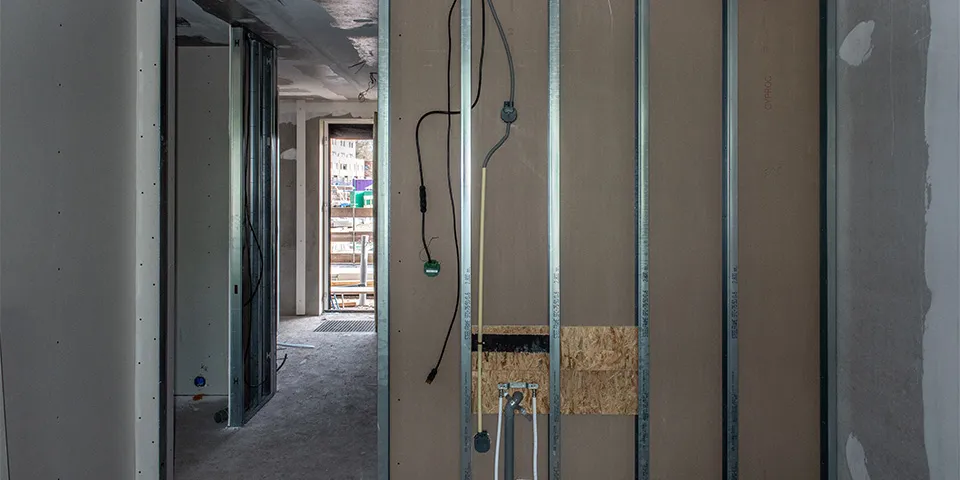
Once the wall contractor has installed the metal stud framework, the plugs from the T-piece are connected to WAGO connection cables, which bridge the gap between the concrete floor and the prefabricated switchgear.
Plug-in meter cabinets
As well as the cabling, Lammerink Installatiegroep also prepared the homes’ meter cabinets for plug-in installation. “We used wooden meter cabinet boards, to which the cabinets are screwed,” Snippert explains. “On site, our installers only need to fit the boards and connect the plugs for the final circuits. The connecting plugs also come from a prefabricated PVC T-piece in the concrete floor, keeping installation time to a minimum.”
Have a business enquiry for WAGO? Get in touch
Companies in this story

Keep following this
Get an email when a new story is published. No account needed.
- ThemeBuilding electrical systems
- SubjectProjects
- CompanyWAGO