The underground section of SPOT’s ATES system presents a range of challenges
Text Desiree PenningsImage Tjaden
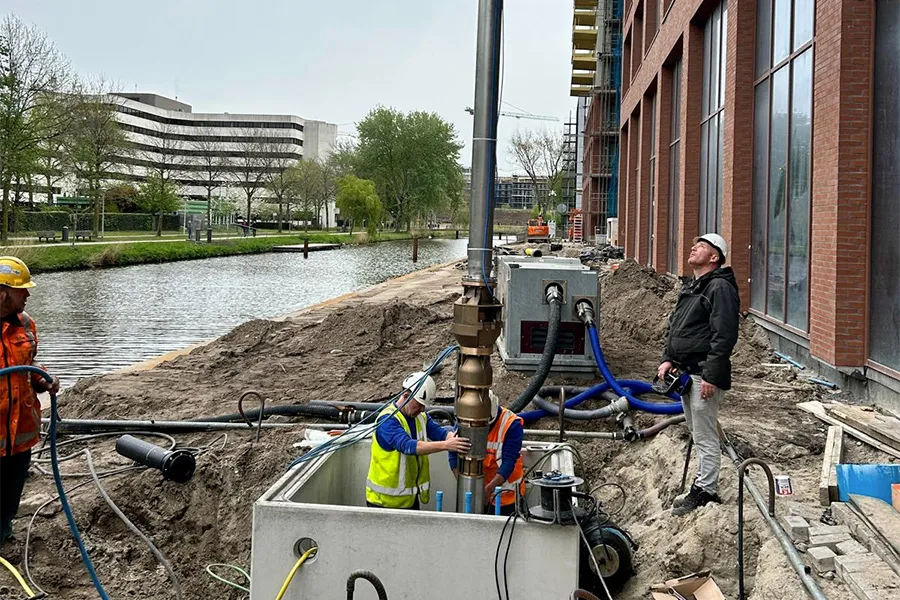
Dewatering and drilling contractor Tjaden knows all there is to know about groundwater and geothermal energy. The company offers a comprehensive range of services: dewatering, well drilling, water treatment, fire water supplies and systems, ground energy systems and geohydrology. At the SPOT project in Amsterdam, it installed the underground section of the ATES system.
The ATES system comprises a warm well and a cold well. Drilling reached a depth of 170 metres, with a diameter of 700 millimetres. Heat and cold are injected into and extracted from the groundwater here. Both wells have a capacity of 250 m³/h. The system achieves a 47% reduction in primary energy demand, equivalent to 14,000 GJ per year and around 580 tonnes of CO2. It does so by moving approximately 1.5 million m³ of water per year.
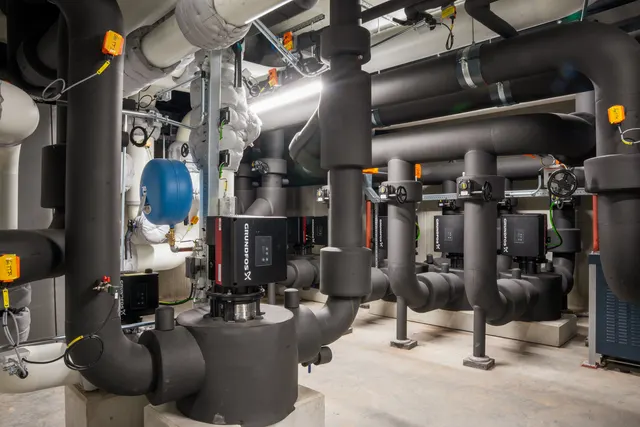
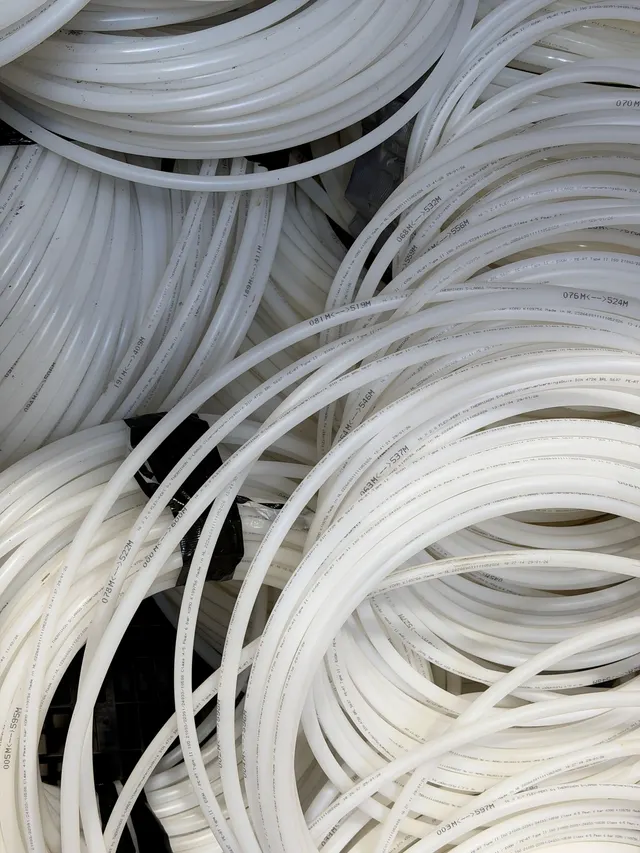
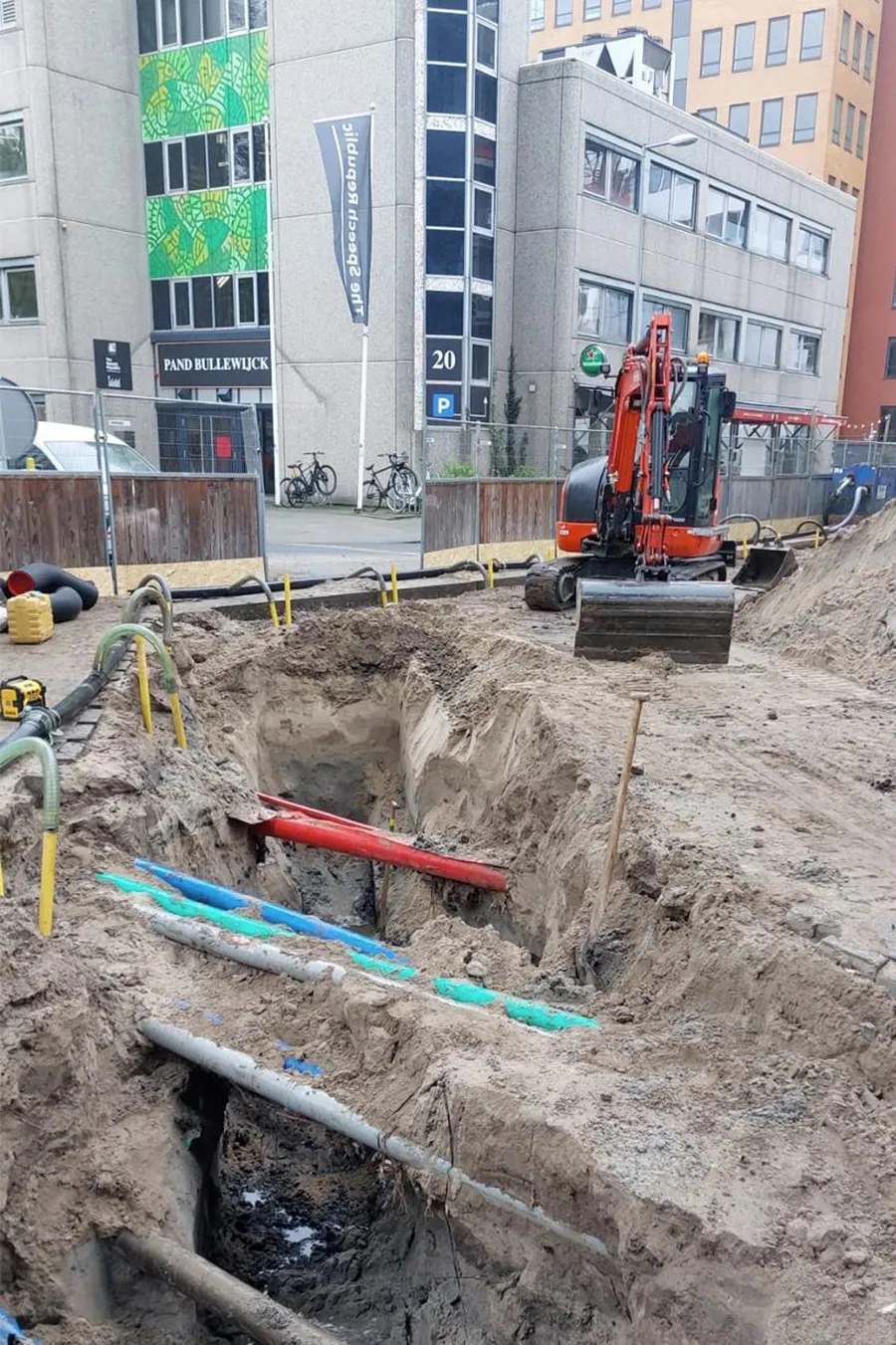
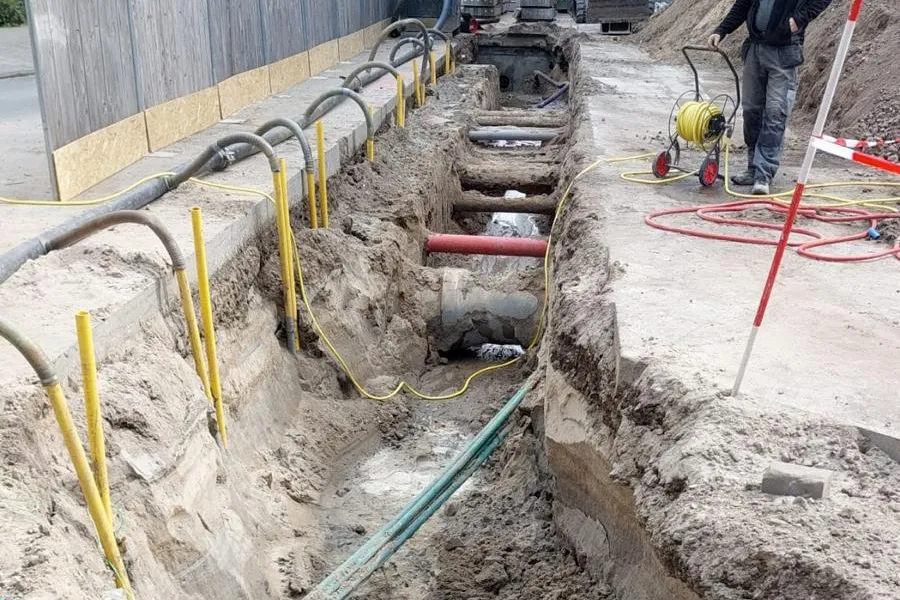
“We supplied the wells, including their finishing, the route and the pipework up to the façades,” says Jeroen Beulink, project manager at Tjaden. “The heat exchanger (counterflow unit) is located inside the building, in the plant room. It separates the underground and above-ground sections of the ATES system. The well water is saline and must not come into contact with other parts of the system. Plastic pipework was used to prevent corrosion.”
Artesian water
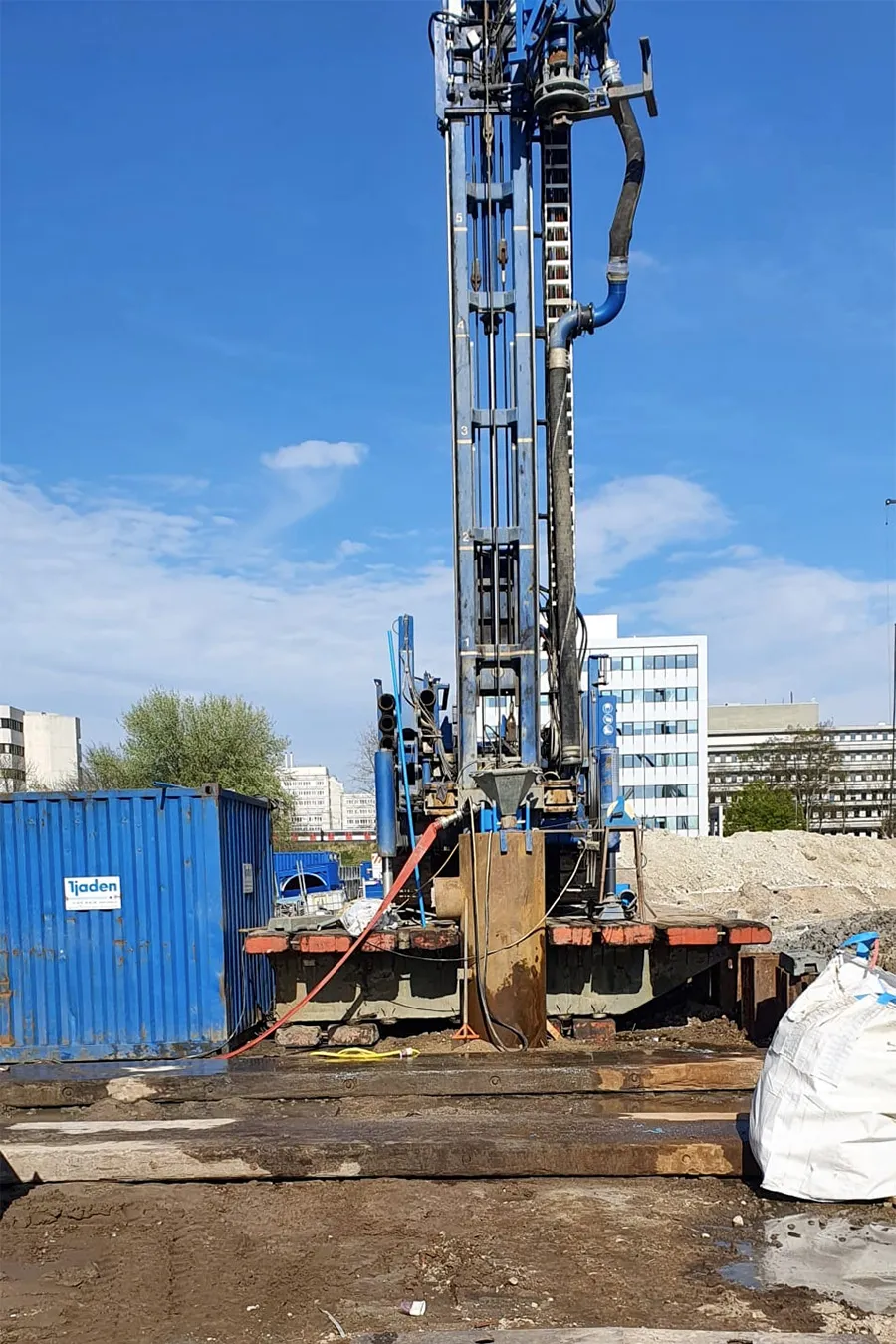
The pipes had to be laid across three plots to seven residential buildings. The route for the warm well runs partly through public space, making close coordination with the municipality essential. Drilling the wells also posed challenges, Beulink explains. “We drilled them from a raised platform, two metres above ground level. We installed the well screens from a depth of 100 metres. Artesian water is found there, and at rest it rises above ground level. We kept the borehole open using overpressure.” The location also raised questions. The cold well, for example, is in the middle of the construction road. It was therefore drilled at an early stage and only excavated later for further finishing. “We recently developed the well and installed a concrete chamber around it. We were then able to install the equipment. It now has a plastic hatch, so the chamber is always accessible.”
Purge filter
The ATES system is serviced twice a year. The wells are purged during each service visit. “Purging is difficult in areas where saline water is pumped, because it can only be discharged in small quantities,” says Beulink. “That is why a permanent purge filter was installed. During purging, the well water can be pumped inside the building through this filter to the other well. This avoids the need for discharge while still allowing the wells to be cleaned during servicing.” Client Roodenburg supplied the purge filter, which Tjaden connected. “Roodenburg was our point of contact throughout the project, and we have a good working relationship. Both our companies are no-nonsense and practical.”
The system is now mechanically complete. The team is waiting for the utility companies to connect the transformer to its permanent power supply. Once that has happened, Tjaden can commission the wells.
Question about this story? Ask your question
Who worked on SPOT
- Purge filterRoodenburgIn this story
- supplier of sustainable heatEteckMentioned in SPOT residential towers to be equipped with complete ATES system
- control system cabling
 PMDKMentioned in Reliable building solutions through expert installation of control systems
Keep following this
Get an email when a new story is published. No account needed.
- ProjectSPOT
- ThemeGas-free heating and cooling
- SubjectBuilding services engineering
- CompanyRoodenburg