‘Happy with charging cabinets: they prevent fires and theft’
Text Ramona KezerImage Weener XL
Staggered charging to prevent peak loads
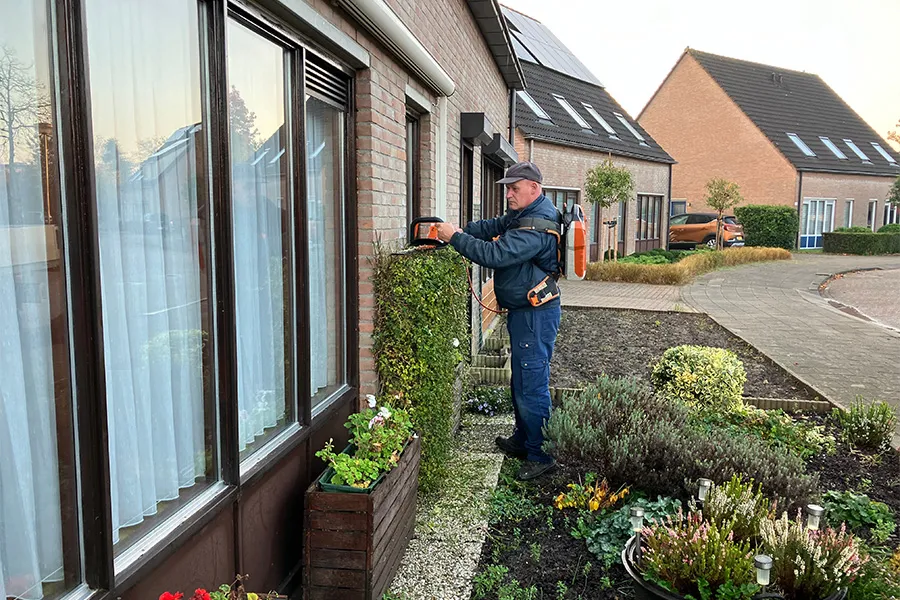
Weener XL is responsible for, among other things, maintaining public and other green spaces and sports grounds in the municipality of ’s-Hertogenbosch. Last year, the organisation bought eight charging cabinets from Seefion to charge and store its many tool batteries safely.
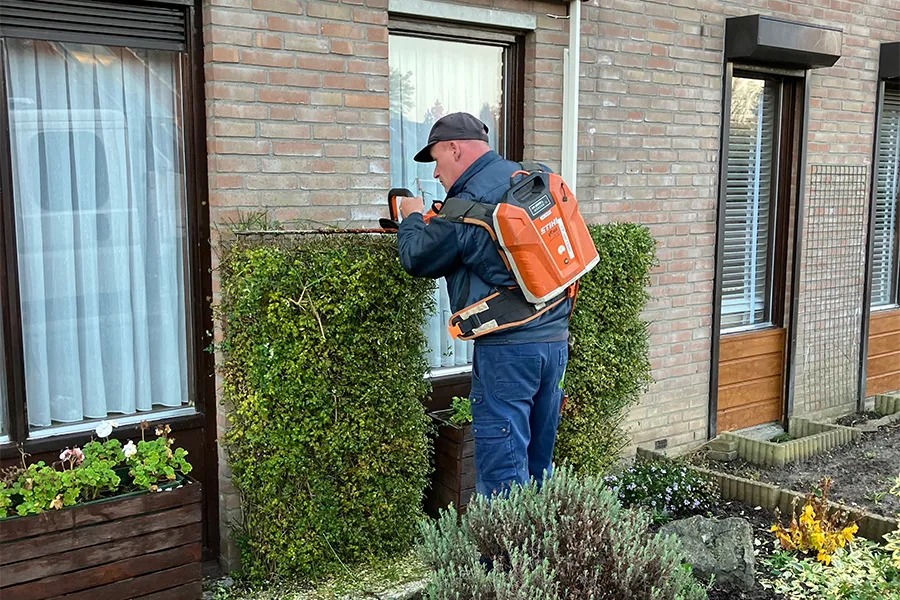
Weener XL team leader Peter van Uden: “Our unit has 250 employees working in green-space maintenance. The department I manage mainly focuses on maintaining green spaces for businesses and other organisations. Around 60 per cent of our 180 Stihl garden and park machines are now electric.”
A lot of electric equipment also means a lot of batteries. Van Uden says they used to be stored in the warehouse. “There were no regulations yet on storing and charging batteries. When we started building a new site, we decided to get it right from the outset. Poel, our long-standing supplier of garden and park machines, put us in touch with Seefion. They gave us good advice on what we needed, including how to accommodate more batteries in the future.”
‘All the batteries are fully charged again by morning’
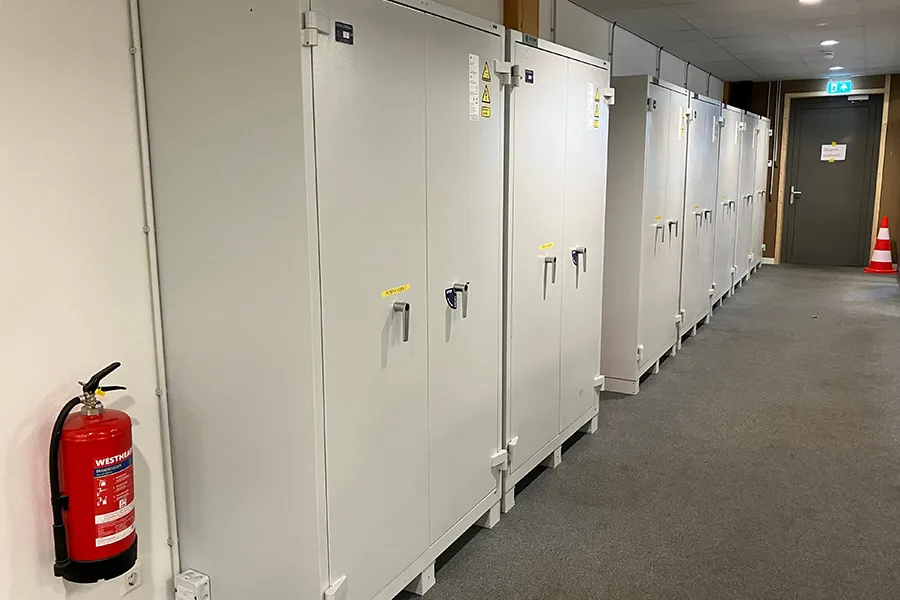
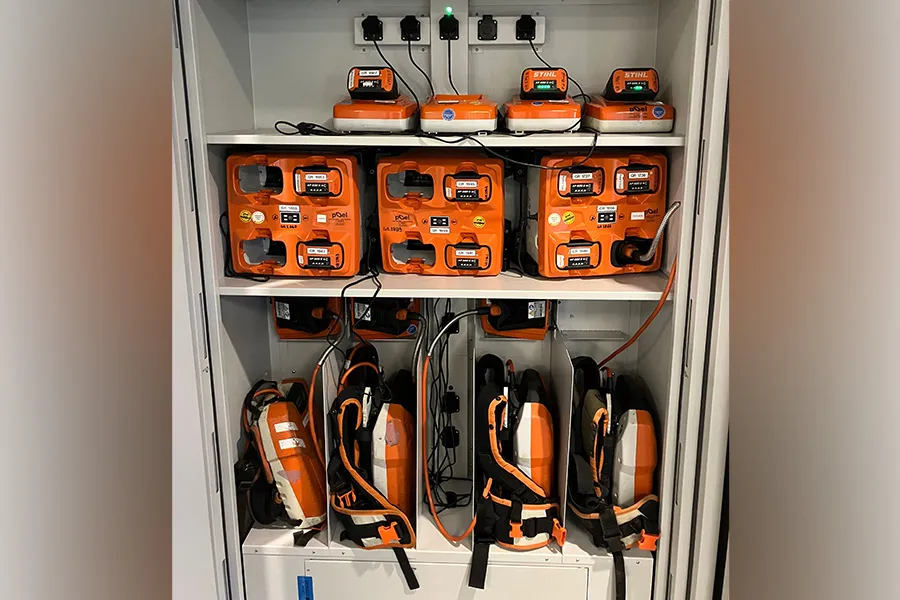
Weener XL bought eight charging cabinets in three different configurations: cabinets for backpack batteries only, cabinets for block batteries, and cabinets that can hold both backpack and block batteries. Van Uden says: “All seven team leaders have different requirements when it comes to charging cabinets, which is why we chose these models. We’re pleased with them. The batteries are stored safely, and the risk of theft is zero. We put the batteries in the cabinet and lock it. Charging then starts, one cabinet at a time. After an hour and a half, the batteries in the first cabinet are fully charged and the second cabinet starts charging. They can’t all charge at once, as that would create too high a peak load. But this way, all the batteries are fully charged again by morning.”
Weener XL is still working hard to electrify its fleet of machinery. In principle, every fuel-powered machine that is decommissioned, such as a brushcutter, hedge trimmer or chainsaw, is replaced with an electric one. The only exception is backpack blowers, for which there is not yet an electric model with the required capacity.
Good advice
Van Uden is very satisfied with the partnership with Poel and Seefion. “We’ve had a few minor issues, and Seefion has always responded immediately. They also put a lot of effort into advising us. Poel steps in too when needed. The municipality of ’s-Hertogenbosch also has its own public-space department, and it is now interested in buying charging cabinets as well.”
Seefion developed the charging cabinets several years ago, using a valuables cabinet with locking hardware guaranteed not to spring open if an explosion occurs inside. The cabinets are fitted with twenty standard 230 V sockets and a smoke detector. They can be configured flexibly: they accommodate both large and small batteries, up to a maximum of 48 if multi-chargers are installed. There is also room for larger backpack batteries. The cabinets have been tested by the renowned German testing institute MPA Dresden and carry CE marking.
Question about this story? Ask your question
Keep following this
Get an email when a new story is published. No account needed.
- SubjectElectrical engineering