Why expansion is crucial in closed heating and cooling systems
Text Lieke Bousema en Wouter PolspoelImage Spirotech
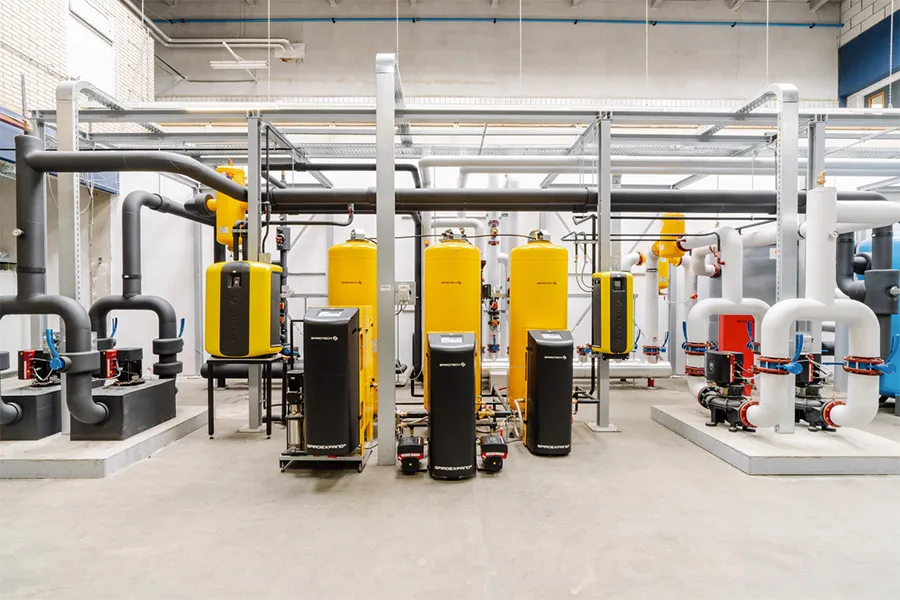
Closed heating and cooling systems always require an expansion system. “Because they are always pressurised,” explains Martijn Worst, area sales manager for commercial buildings & industry at Spirotech, which develops and manufactures expansion vessels and other pressurisation systems. “Without optimum pressure build-up, the performance of a heating or cooling system declines and its service life is significantly reduced.”
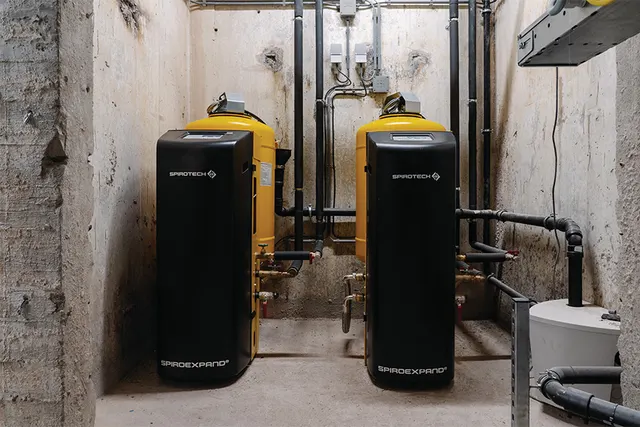
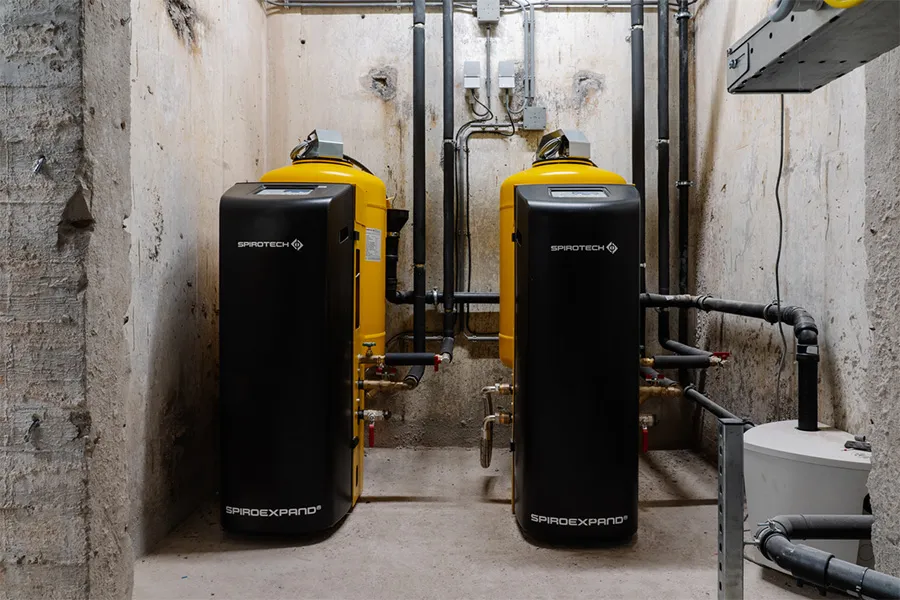
Under the SpiroExpand name, Spirotech offers a wide range of pressurisation systems, from compact expansion vessels to advanced pressurisation units. Worst explains the difference between an expansion vessel and a pressurisation unit: “An expansion vessel passively separates water and gas using a membrane, while a pressurisation unit actively regulates pressure by adding or removing water using pumps and valves. Vessels are suitable for homes and smaller buildings. For larger or more complex systems of around 1,000 litres or more, we recommend a pressurisation unit. It keeps the pressure constant, accommodates temperature fluctuations and degasses the heating and cooling system as standard, preventing corrosion and ensuring efficient system operation.”
Compact and efficient
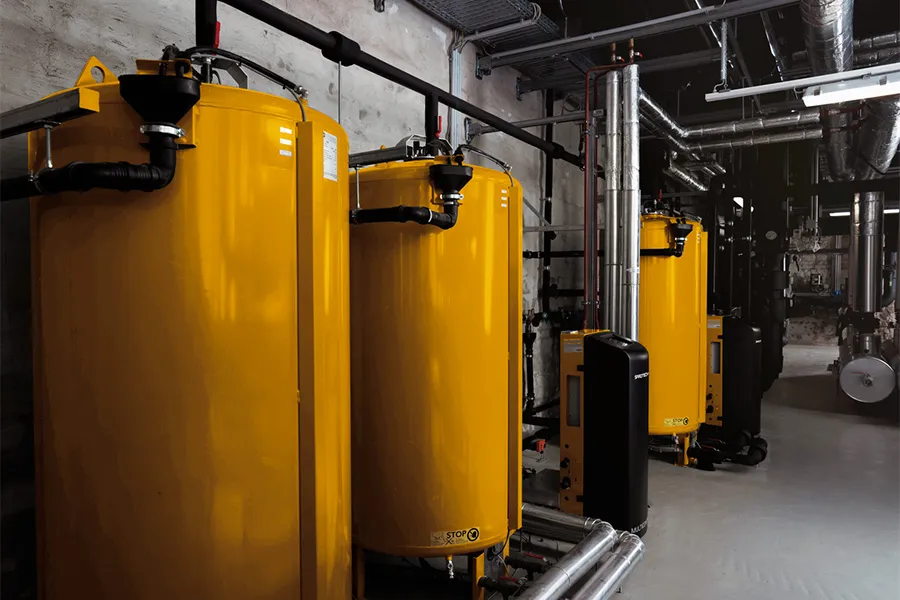
The area sales manager explains why pressurisation units are better suited to large buildings. “These buildings often have large heating and cooling systems with a high fluid capacity. Accommodating expansion would require enormous expansion vessels, sometimes with a capacity of up to 10,000 litres. Given the demands on floor space and the cost per square metre, a pressurisation unit, which takes up much less room, is therefore the recommended option.”
“Another major advantage of a pressurisation unit is that it automatically and controllably replenishes the heating or cooling system via the drinking water connection. If the pressure drops, the unit corrects it automatically. This means less frequent maintenance is needed.”
Quiet and safe
“There are compressor-controlled and pump-controlled pressurisation units,” Worst continues. “The latter have the advantage of not requiring a separate air chamber. The entire tank is used as the expansion volume. This makes a pump-controlled unit even more compact, so it fits more easily into the plant room.” Partly for this reason, Spirotech only supplies pump-controlled pressurisation units. “Pump-controlled units also have several other advantages over their compressor-controlled counterparts. They operate considerably more quietly and accurately, and have a modular design. This makes them plug-and-play, so they are quick and easy to install. And thanks to spring-loaded rather than electric valves, a new feature we recently introduced, the pressurisation unit continues to operate safely even during a power cut.”
Smart monitoring
Every SpiroExpand pressurisation unit has a multilingual, user-friendly control panel. Connecting it to a building management system enables remote monitoring. “Any deviations or faults are then reported automatically, allowing prompt action. This not only improves comfort, but also extends the service life of the installation,” says Worst.
An investment that pays off
An expansion vessel lasts seven years on average, while a pressurisation unit lasts fifteen to twenty years. “Thanks to this longer service life and the additional benefits mentioned, investing in a pressurisation unit more than pays for itself,” the area sales manager concludes.
White paper
Spirotech recently published a white paper on pressurisation in heating and cooling systems in commercial buildings. The publication, entitled ‘Sustainability in commercial buildings through innovative system management: pressurisation in heating and cooling systems’, can be downloaded from the Spirotech website via the dropdown menu under ‘About us’.
A business enquiry for Spirotech? Get in touch
Companies in this story

Keep following this
Get an email when a new story is published. No account needed.
- SubjectWater treatment
- CompanySpirotech