Protect hot water storage tanks against implosion
Text Lieke BousemaImage Caleffi

Vacuum breaker for potable water systems
Heat pump installations include various safety devices, such as frost protection valves. However, when a domestic hot water cylinder or storage tank is added, the vacuum breaker is still often overlooked. Floris van ’t Verlaat of Caleffi is keen to change this. After all, damage caused by negative pressure in the cylinder or storage tank can be prevented easily, for just a few tens of euros.
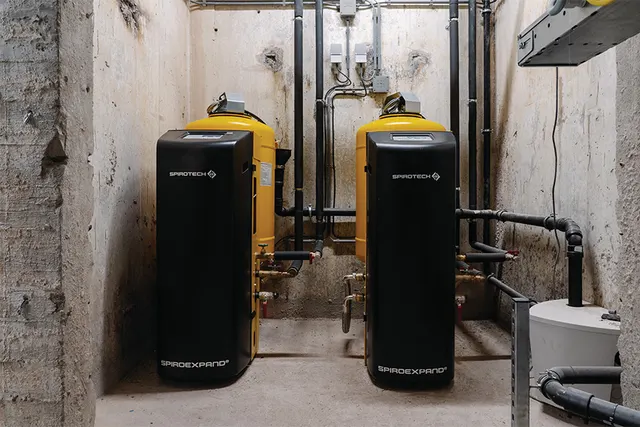
An implosion is the opposite of an explosion: a hollow space rapidly collapses under negative pressure. Van ’t Verlaat often compares it to a cola bottle, which is very strong when pressure is applied from the outside. “If we blow into the bottle, nothing really happens. But as soon as we suck the air out, the bottle quickly becomes a vacuum and shrivels up. Domestic hot water cylinders and storage tanks react in much the same way, and this must be prevented at all times.”
Total loss
Implosion is a risk, for example, if the water supply to domestic hot water cylinders and storage tanks is interrupted, says Van ’t Verlaat. “For instance, if the main stopcock or shut-off valve is closed. If someone then opens a hot water tap located lower in the building than the cylinder or storage tank, the vessel will be subjected to a vacuum and implode.” Implosion can also result from the water in the cylinder or storage tank cooling down too much. “Cold water is denser than warm water, so it has a smaller volume. The water work sheets also clearly describe this risk. This is hardly surprising, because if a cylinder or storage tank implodes, it is immediately a total loss. With a welded cylinder, there is also a risk of water damage.”
According to Van ’t Verlaat, the risk of a cylinder or storage tank imploding is not very high. “That does not mean that appropriate precautions are unnecessary. Think of a pressure relief valve in a central heating boiler or a frost protection valve for a heat pump: in principle, you never need those either. But if a problem does arise, the modest investment pays for itself many times over. The same applies to vacuum breakers.”
A forgotten safety accessory
Until the 1990s, many people had a gas-fired water heater in the loft to provide domestic hot water. “These were fitted with a vacuum breaker as standard,” says Van ’t Verlaat. “But when combination boilers were introduced, this type of vacuum breaker was no longer needed. I think the safety function of the vacuum breaker has therefore faded from memory somewhat. With the introduction of our heat pumps with cylinder units, this technology is once again highly recommended.”
3040 series vacuum breakers
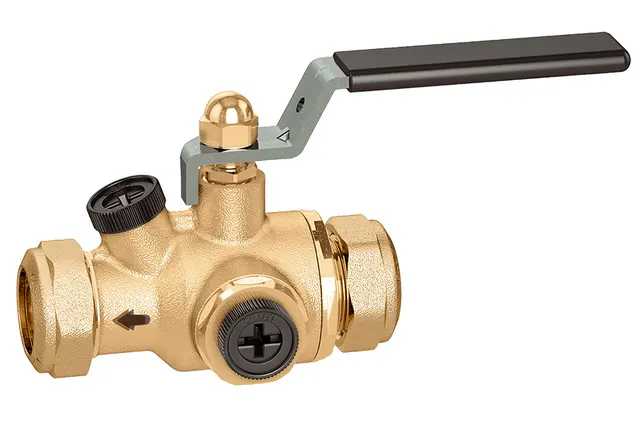
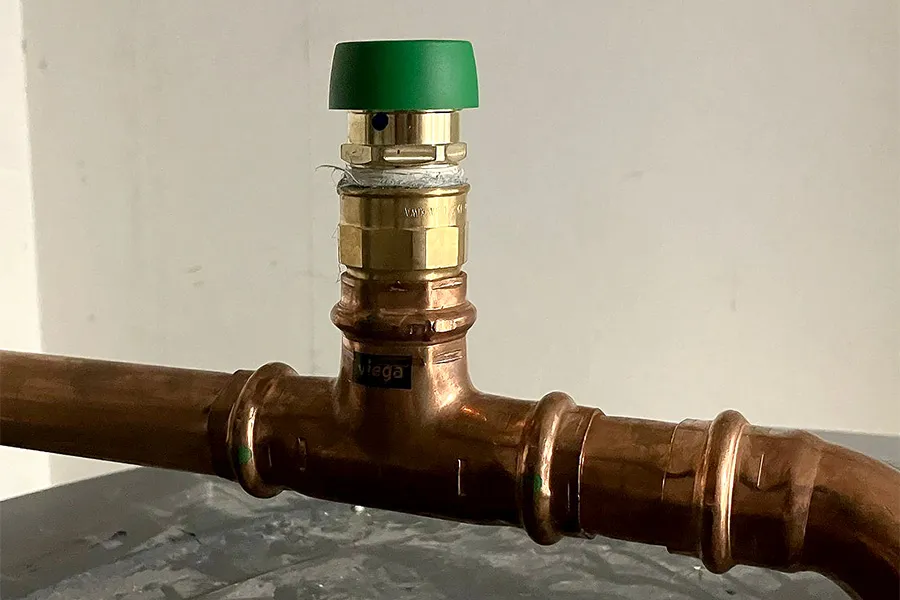
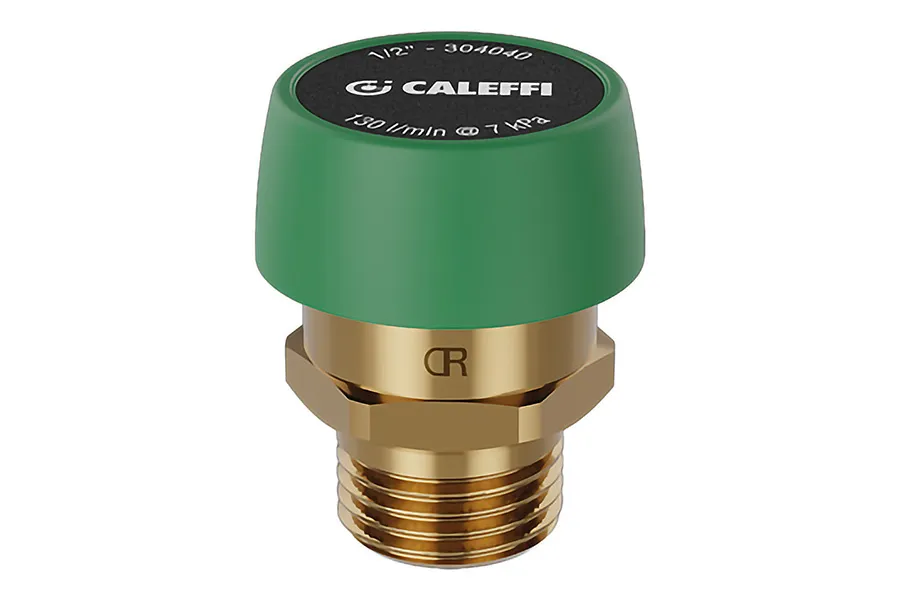
Caleffi offers the 3040 series of vacuum breakers specifically for domestic hot water cylinders and storage tanks, available in half-inch and three-quarter-inch sizes. “The vacuum breakers can be fitted on top of the cylinder or on the cold water pipe, as required. As soon as negative pressure relative to atmospheric pressure is detected, the vacuum breaker immediately draws in air, providing lasting protection for the vessel.”
Dezincification-resistant brass and low lead
The 3040 series vacuum breakers are made from dezincification-resistant, low-lead brass, making them suitable for potable water applications and fully compliant with current and future regulations. “The vacuum breakers open at a pressure differential of just 1 kPa relative to atmospheric pressure. In addition, the cap through which air is drawn in is designed to make the risk of drawing in dirt almost negligible. This provides maximum protection for the domestic hot water cylinder or storage tank.”
Een zakelijke vraag aan Caleffi International N.V.? Get in touch
Companies in this story

Keep following this
Get an email when a new story is published. No account needed.
- ThemeGas-free heating and cooling
- SubjectWater treatment
- CompanyCaleffi International N.V.